



Top speed has always been a bragging right for manufacturers as much as it has been for fans of specific brands. Initially the numbers simply climbed as a function of power and better aero, then the wars started. We take a look at the fastest car from each decade starting in the 1950s.
Follow Double Apex on Facebook and Instagram, where we share more car content.
The 1950s: Mercedes-Benz 300SL ‘Gullwing’
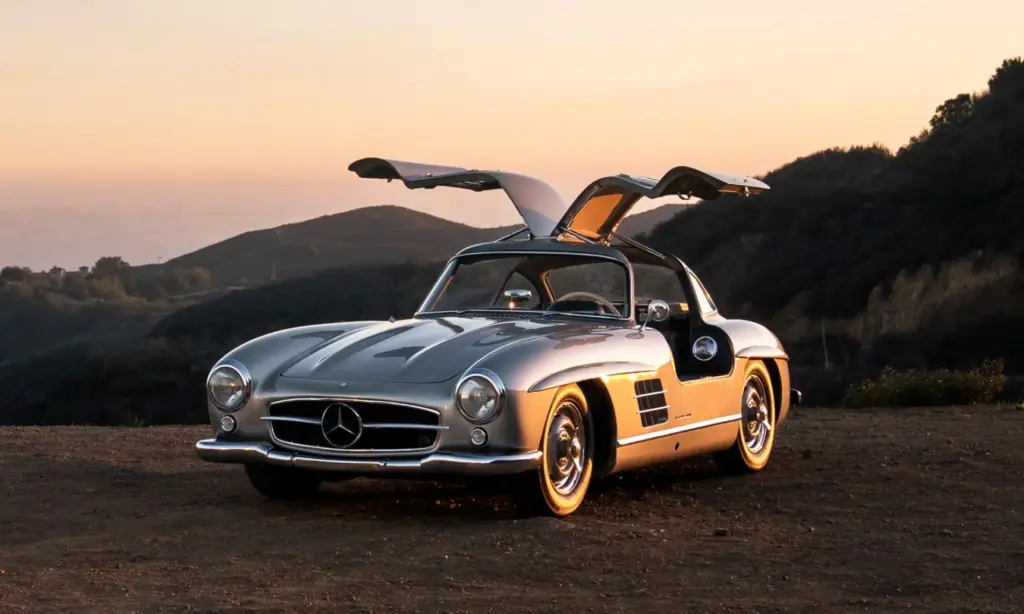
The Mercedes-Benz 300SL ‘Gullwing’ is on our eyes, one of the most beautiful cars ever made. Looks aside, it was a serious performer, too. Its M198 inline-six displaced 3,0-litre and was fed by Bosch mechanical direct injection, a first for production vehicles. Output was, by today’s standards, a paltry 158 kW with 275 N.m of torque. The sprint to 100 km/h took roughly eight seconds; pretty extraordinary back then. Final drive ratios varied, but the Gullwing could push to north of 260 km/h where the road allowed. Nothing else on sale at the time came within breathing distance.
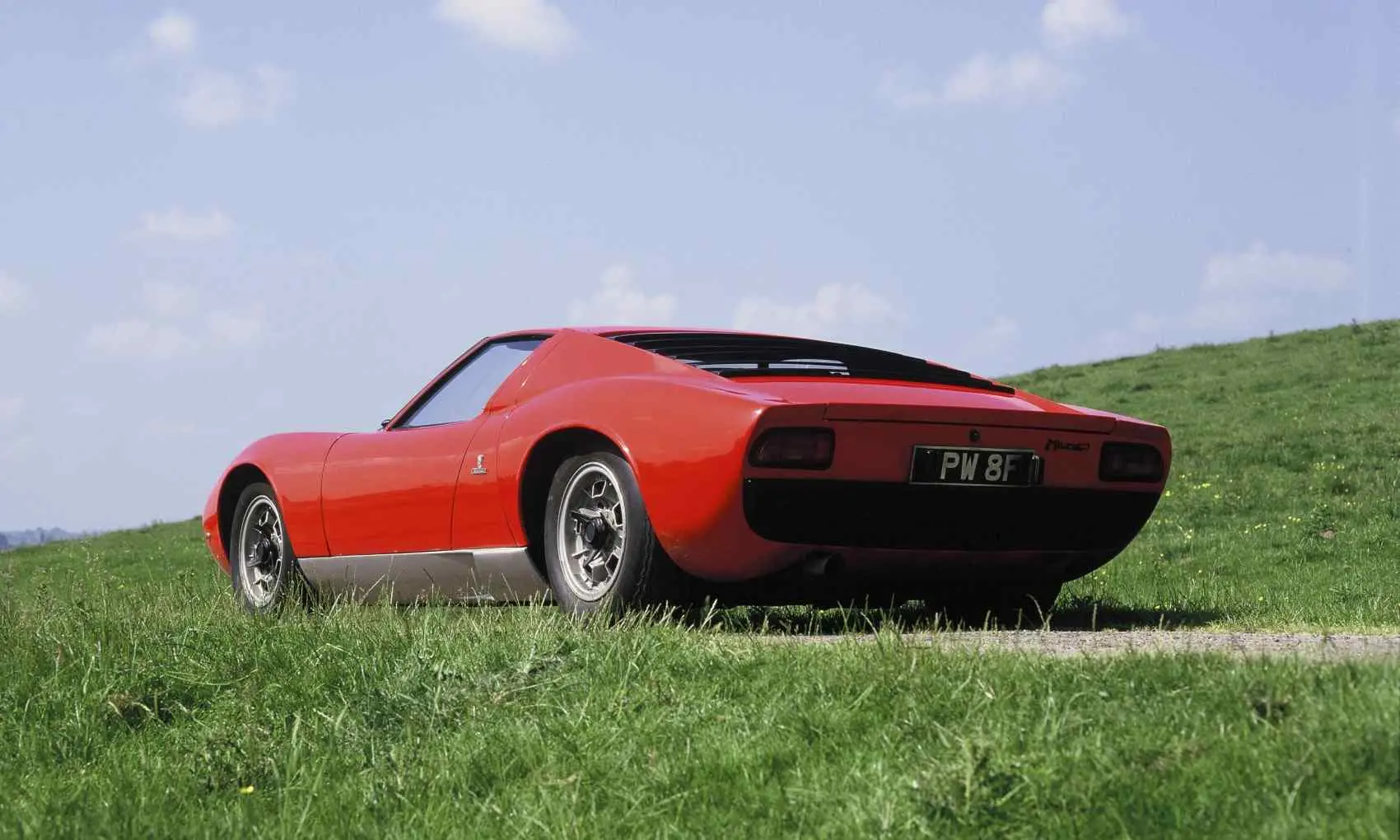
The 1960s: Lamborghini Miura P400
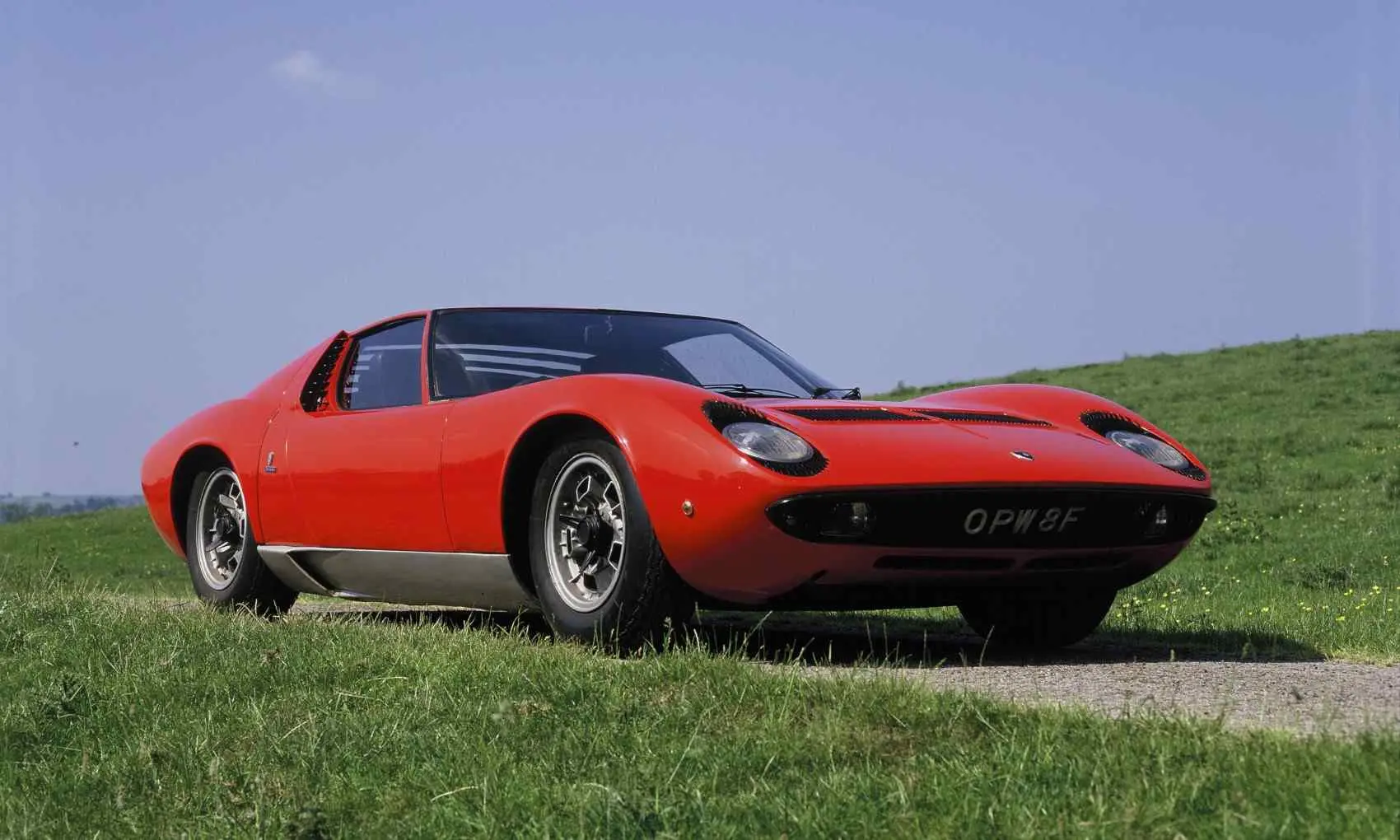
By the late 1960s, the conversation had shifted from front-engine grand tourers to something more radical. Ferruccio Lamborghini, whose name still graced tractors, commissioned a rolling rebuke to Enzo’s dominance. The Miura placed its 3,9-litre V12 transversely behind the cockpit, a layout that prioritised weight distribution over luggage space and permanently changed supercar architecture.
The P400 developed about 260 kW. Zero to 100 km/h fell in approximately 6,7 seconds, and the top speed climbed to 280 km/h. Marcello Gandini’s bodywork supposedly brought you closer to god with its hairy high-speed handling. Lamborghini built a car around the idea that the driver sat forward of the powerplant, rewriting the supercar rulebook forever.
The 1970s: Lamborghini Countach LP400

Lamborghini held onto the crown into the 1970s, though the Miura’s successor abandoned subtlety entirely. The Countach LP400 debuted in 1974 with a 3,9-litre V12, its carburettors fed by a prominent roofline intake that made rear visibility an afterthought. Power stood at 276 kW with peak torque at 355 N.m.
Acceleration to 100 km/h took around 6,0 seconds, and the top speed was about 290 km/h. Later models were claimed to be able to reach 300 km/h but no independent test ever verified the claim. The wedge shape, scissor doors, and tyre widths that seemed borrowed from agricultural equipment made the Countach a poster fixture for a generation. It seemed top speed had now become a marketing weapon rather than a secondary characteristic.
The 1980s: Ferrari F40
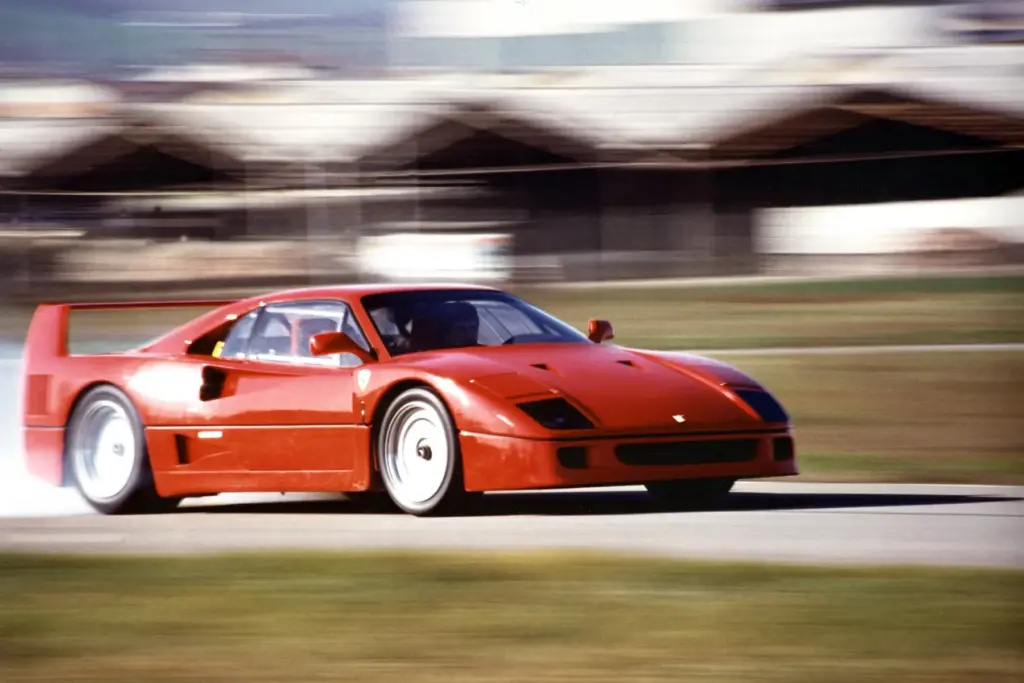
The 1980s brought complexity and a heated battle between Germany and Italy. Porsche’s 959, launched in 1986, was all-wheel drive, twin-turbocharged, and filled with materials and electronics that had no business in a road car of that era. It was developed for Group B homologation that never fully materialsed, then sold to customers anyway. It’s 2,85-litre flat-six, force-fed by sequential KKK turbos, produced 331 kW. The verified top speed was 317 km/h.
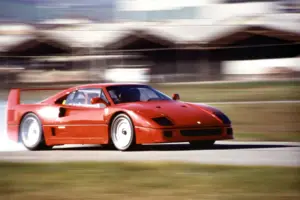
But a playboy from Italy was not letting Stuttgart have the title that easily. Enter the F40 a year later. It was far less complex and more synthesized than its rival. The Italian also had a twin-turbo V8 but it produced more power it a far more instantaneous manner. Its low slung shape and power drove it north of the magical double ton (imperial) as it reached 202 mph or 324 km/h. Click here to read our F40 driving experience
The 1990s: McLaren F1

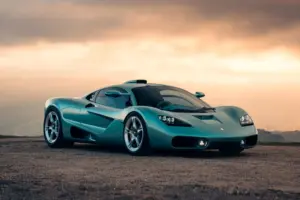
The top speed wars waged on each successive car adding a few km/h to the 300+ mark, until a serious challenger arrived from an unlikely place… McLaren. Gordon Murray’s brief was specific: no forced induction, no all-wheel drive, no excess weight. The McLaren F1 emerged in 1992 as a three-seat carbon fiber monocoque powered by a 6,1-litre V12.
The BMW-built (S70/2) engine delivered 461 kW. Nail the launch and it could zip from zero to 100 km/h in 3,2 seconds. The top speed, verified without the rev limiter that governed standard customer cars, was a two-way average of 386,39 km/h (240,1 mph) with a peak of 391 km/h in 1998. That figure stood as the production benchmark for over a decade, and the F1 remains the fastest naturally aspirated production car to this day.

The 2000s: Bugatti Veyron 16.4

Volkswagen Group’s resources produced something that made the F1 look almost restrained. The Veyron, finally delivered in 2005 after development struggles that nearly killed the project, paired an 8,0-litre W16 with four turbochargers and all-wheel drive. Senior management called for a car that could: exceed 400 km/h in a car that could idle through Paris traffic without overheating. Easy peasy…
Output totaled 736 kW (1 000 hp) and 1 250 N.m. The sprint to 100 km/h took a blistering 2,5 seconds. The verified top speed of 407 km/h required a second key to unlock maximum velocity, a theatrical touch that matched the car’s scale. A road car had finally broken through 400 km/h. Click here to read about Giniel de Villiers’ experience driving a Bugatti Veyron after winning the Dakar Rally.
The 2010s: Bugatti Chiron

Bugatti retained the record into the following decade with the Chiron, introduced in 2016. The W16 architecture carried over from the Veyron, but virtually every component was revised. Larger turbos operated in two-stage sequencing to reduce lag, and the carbon fiber monocoque was stiffened to handle outputs that strained even the Veyron’s foundations.
Power rose to 1 103 kW with torque peaking at 1 600 N.m. The 0-100 km/h sprint was dispatched in roughly 2,4 seconds. Initially top speed was electronically limited to 420 km/h for tyre preservation. But with several challengers nipping at its heels, Bugatti uncorked the Chiron. Its true capability was hinted at by later variants that surpassed 490 km/h. The production record as commonly defined remained contested ground between Bugatti and subsequent challengers from Koenigsegg and SSC, but the Chiron’s breadth of engineering kept it the definitive hypercar of its era.
The 2020s: BYD Yangwang U9 Xtreme
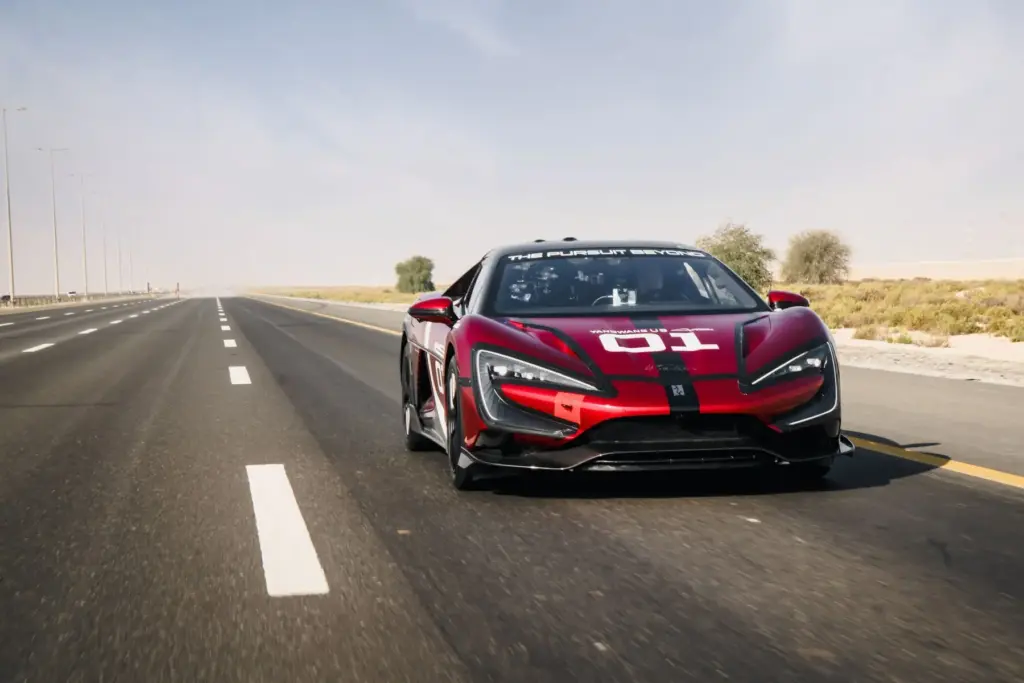
Many automakers have take a crack at the record in recent years. Rimac’s Nevera, Koenigsegg’s Jesko Absolut, and Bugatti’s own Chiron Super Sport 300+ have all claimed or approached figures beyond 450 km/h. For a while, Bugatti claimed the top spot with a figure of 490 km/h (see above).
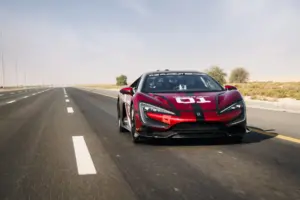
However, a newcomer to the game in the form of BYD, or more specifically Yangwang, blew away the competition with its U9 Xtreme. With over 2 200 kW the Chinese EV has been steadily chipping away at Bugatti’s headline figure. BYD wowed the world when it blasted through the 500-km/h mark. The FIA recognised record was recently set on a public road in Abu Dhabi.
There may be some debate about the speeds attained by cars in the earlier decades as timing/measuring equipment simply was not as accurate as it is today. Also, some OEMs were a bit more ‘optimistic’ with their claims than some others. However, with independent testing of cars by third parties, top speed figures have been pretty accurate since the 1980s onwards. Although, now that BYD has blasted through a, once thought impossible, barrier we can’t help but wonder what comes next…

Have your say
Got thoughts on this?
No feedback yet on The Cars That Set The Fastest Production Speeds in Each…. Kick the conversation off.
Free. Email link only — no password.