




In an era where many halo cars arrive with their spec sheets as the headline, the Nichols N1A genuinely aims to place the driver as the centre of attention. The company, founded by CEO John Minett and Steve Nichols, the F1 designer whose name is forever linked to McLaren’s MP4/4, has moved the N1A from prototype to customer production.
Beginning production of our first N1A customer cars is hugely significant for everyone at Nichols. The development process has been deeply rewarding, not least because we’ve shared the car openly with customers, race drivers, and the media throughout. The response has been overwhelmingly positive, and that feedback has played a valuable part in refining the prototype into the supercar we’re now building
– John Minett, CEO Nichols Cars
A Storied Lineage
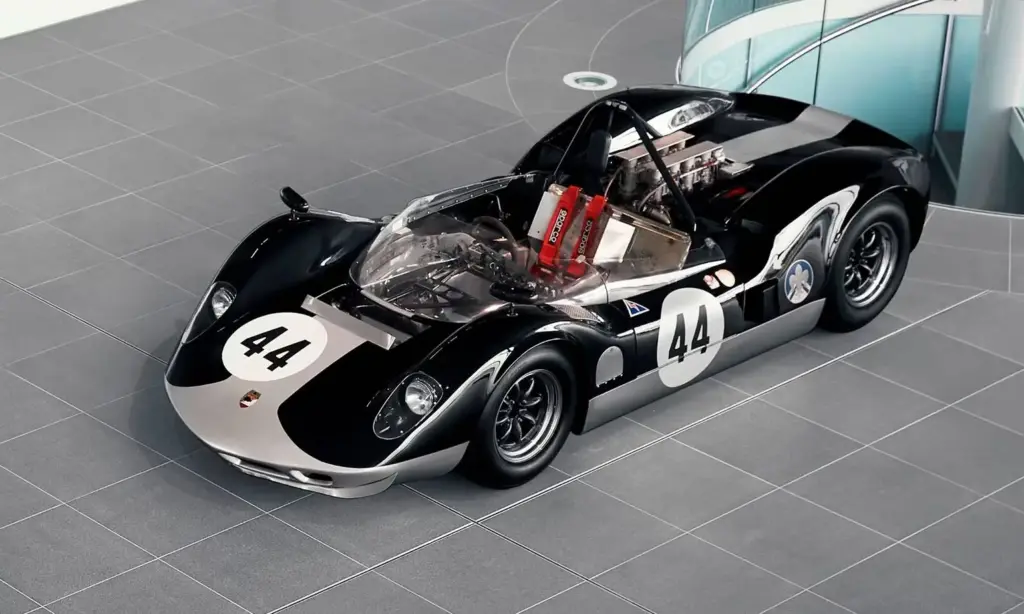
The N1A draws inspiration from the McLaren M1A (black car in gallery), one of those clean early sports-racing shapes that still looks right because it was uncluttered. Nichols has updated this basic idea with modern materials and engineering, but the goal remains old school: keep mass down, response sharp, and the driver engaged.
This philosophy aligns with Steve Nichols’ background. He made his name in Formula One during a time when a designer could still alter a car’s character by making it lighter, neater, and better balanced, rather than simply layering software on top of hardware. The N1A embodies that mindset.
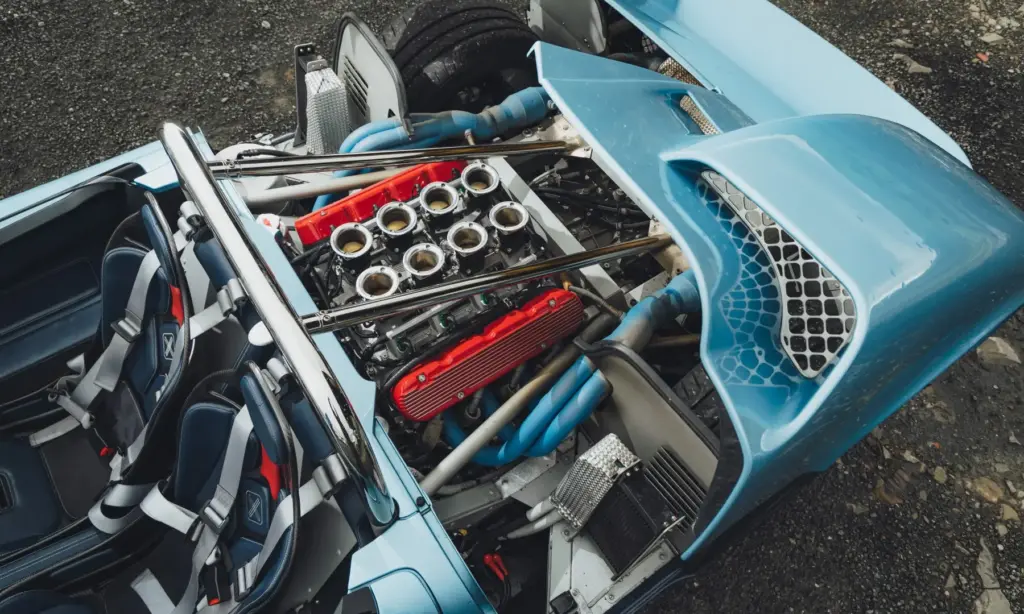
Nichols Cars states the final production weight stays below 900 kg. That is very lean for a road supercar, especially one available with a large naturally aspirated V8. The standard engine is a 6,2-litre Chevrolet V8 with 355 kW and 637 N.m. A higher output unit is a hand-built, dry-sump 7,0-litre LS7-derived V8 producing 522 kW and 813 N.m. With that motor, the N1A claims a 0 to 100 km/h time of 3,5 seconds.
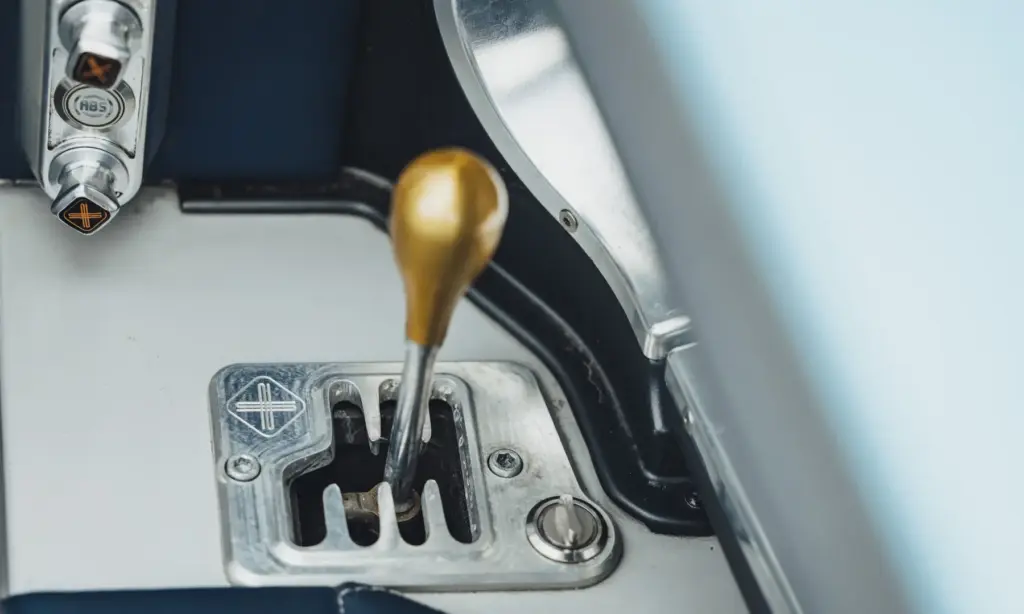
A six-speed manual gearbox keeps the car pure. There is no clutch-by-wire drama, no paddles, and no digital cleverness masquerading as involvement. Just a proper manual transmission in a car designed to reward drivers who want to work for the result.
Production has started
Nichols has officially begun building customer cars, moving the N1A from glossy renders into the much more challenging world of consistently delivering a low-volume supercar. This process is supported by RML (of the modern-day SWB fame), or Ray Mallock Ltd, whose experience in low-volume engineering and motorsport-grade manufacturing provides the backbone these niche machines require.


The final development phase focused on connection. ECU mapping was revised for cleaner road and circuit behavior. Brake balance was improved for stronger, more confidence-inspiring deceleration. New four-way adjustable dampers were added to sharpen feedback and give owners more scope to tailor the car. Spring rates were reworked so the suspension would remain predictable under load without becoming punishing on public roads.
Nichols also fitted a wider radiator, a new rear diffuser, and a revised rear valance. These changes rarely make headlines, but they are crucial for a car like this. Stability, cooling, and high-speed composure are not glamorous until you drive a car hard enough to find its limits; then they become everything.
Built for drivers
The N1A’s make-up consists of bonded aluminum and carbon-fibre, with carbon-fibre body panels. Suspension is independent front and rear, using double wishbones and anti-roll bars. Steering is rack and pinion, and the brakes are motorsport-derived multi-piston units. Michelin Pilot Sport Cup 2 tyres, with 245-section fronts on 19-inch wheels and 305-section rears on 20-inch rims, complete the package.
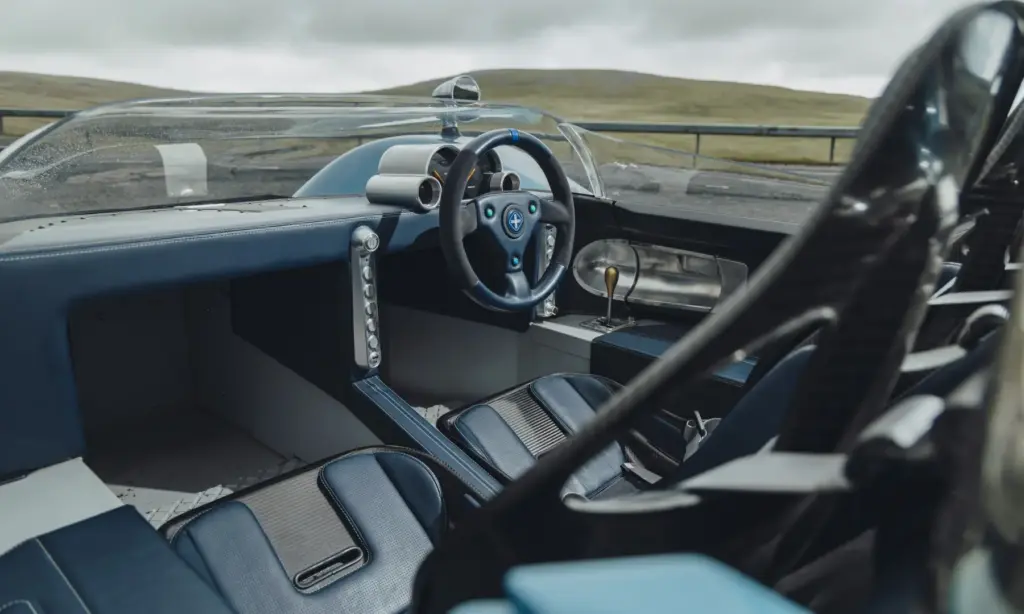
Glance at the cabin and you will notice how spartan it is. The steering has just a trio of buttons, not a dozen. There is a quartet of analogue gauges and there is no massive touchscreen interface, just a physical button for each function placed alongside the steering wheel. A Bluetooth connection to your mobile phone is likely to be pretty useless.
Optional traction control, optional power steering, and optional switchable ABS tell you almost everything about the target audience. Nichols does not force a layer of electronic insulation between the driver and the car. If you want assistance, it is available. If you want the machine closer to the bone, the N1A is happy to oblige.
Small numbers, serious money
Nichols will build no more than 150 N1As. Prices start at £450 000 (about R9,8m) before taxes. The launch edition, called the Icon 88, is limited to 15 cars at £500 000 (R10,9) before taxes. The name is a nod to one of McLaren’s 15 victories in the 1988 Formula One season, the year Nichols was chief designer on the dominant MP4/4.

![The Lego Koenigsegg Sadair’s Spear Sets a New Speed Record [w/video]](https://doubleapex.co.za/wp-content/uploads/2026/06/LEGO-Technic-Koenigsegg-Goodwood-Track_6-300x180.webp)










Have your say
Got thoughts on this?
No feedback yet on Steve Nichols’ N1A Supercar Delivers Analogue Driving Purity. Kick the conversation off.
Free. Email link only — no password.