
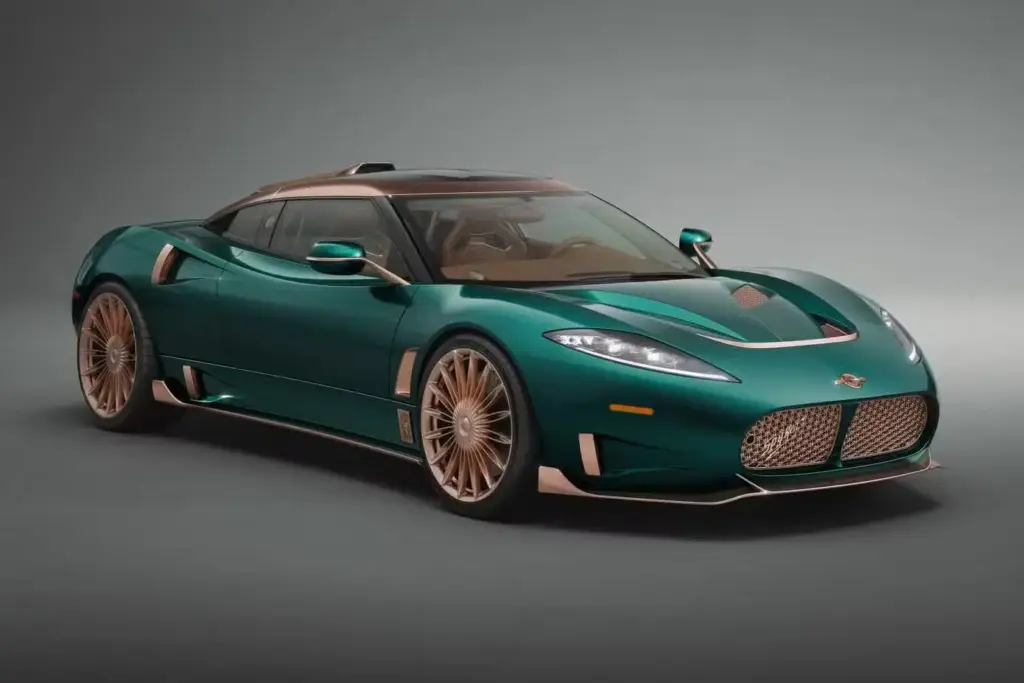
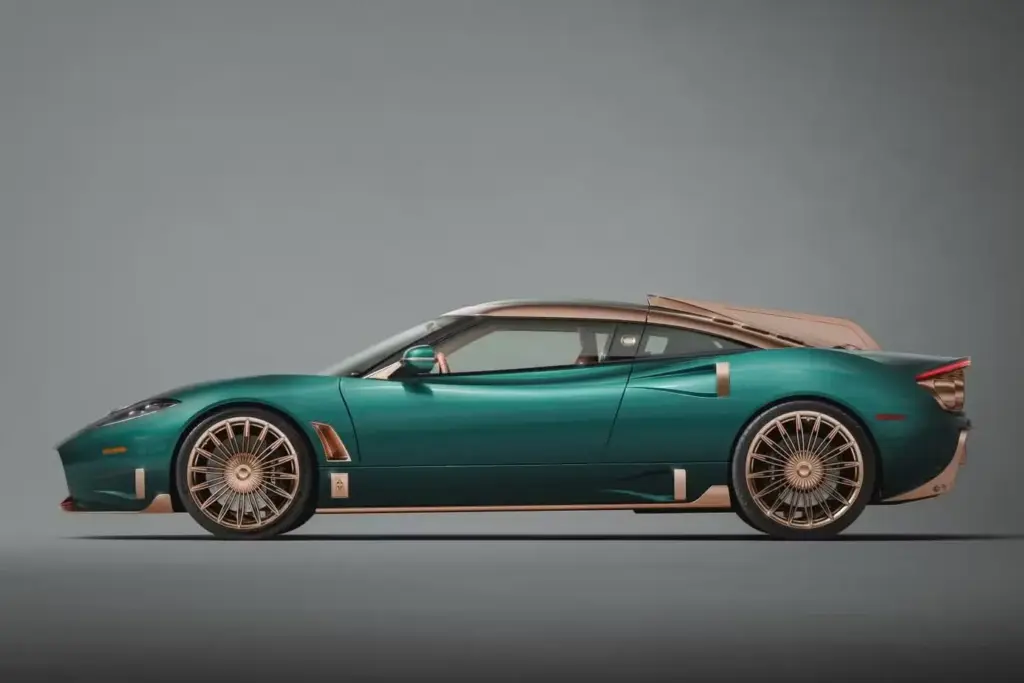
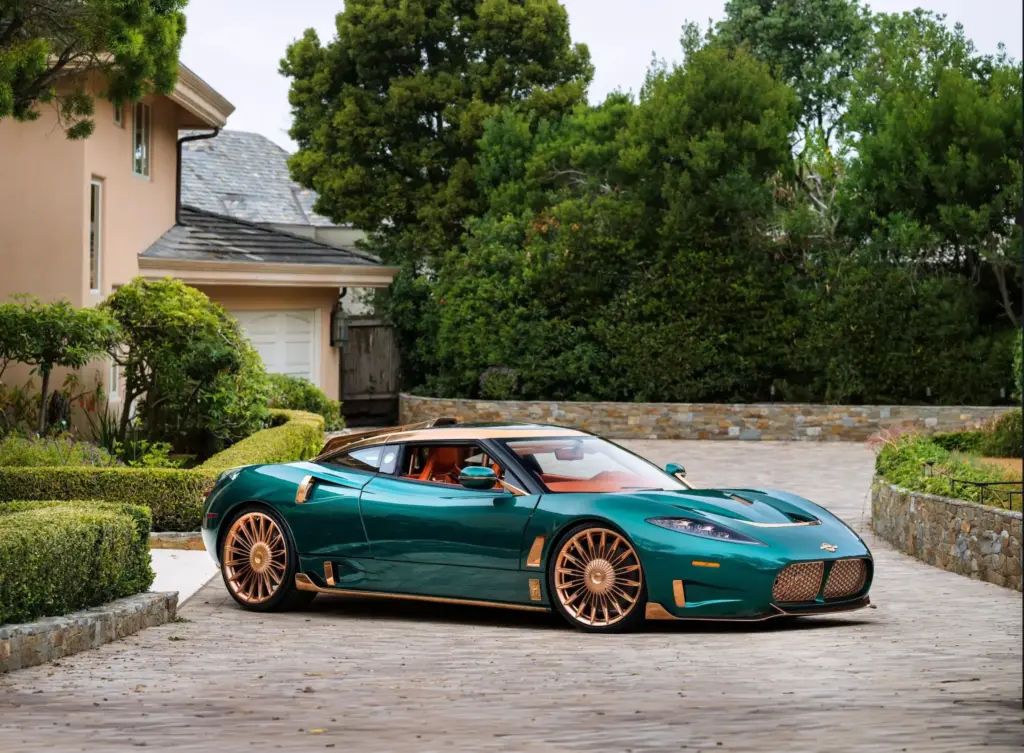
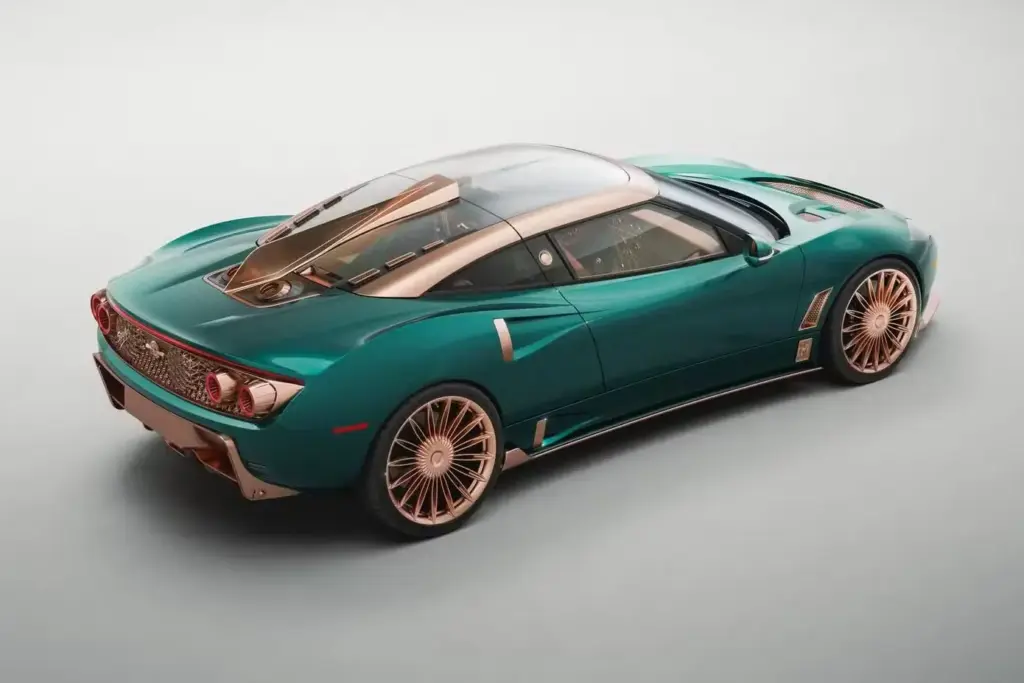


Spyker pulled the wraps of the C8 Preliator XXV Coupé as the Dutch firm has been revived. Spyker is calling this a new era. The C8 Preliator XXV Coupé is a clean-sheet car, not a warmed-over update. This car has no carbon shell, no wall of screens, and no paddles behind the wheel. Instead, it features a hand-shaped aluminum body, a proper manual gearbox, and an interior that seems as though it was designed by people who still prefer a pen, record players, a lathe, and a good fitting rather than over-the-air updates.
A Dutch marque back on its feet
The company says the Preliator XXV Coupé was conceived from scratch, with its own spaceframe and bodywork. The chassis structure was engineered in-house and then reworked specifically for this model. Coventry Prototype Panels in England shaped every exterior panel by hand in aluminum. This is not the usual hypercar production story, where a supplier does the hard work and the brand sells the mystique.
Spyker has always leaned on aviation as part of its identity, and the new car keeps that link. The shapes are meant to feel like an aircraft adapted for the road. In a segment obsessed with lap times and screen real estate, Spyker has gone the other way and doubled down on human hands.
Built the slow way on purpose
A single C8 Preliator XXV Coupé takes about 2100 hours to complete. The build is still a sequence of skilled jobs, not a production line. This also explains why no two cars can be exactly identical, even before a customer starts choosing trims and finishes.
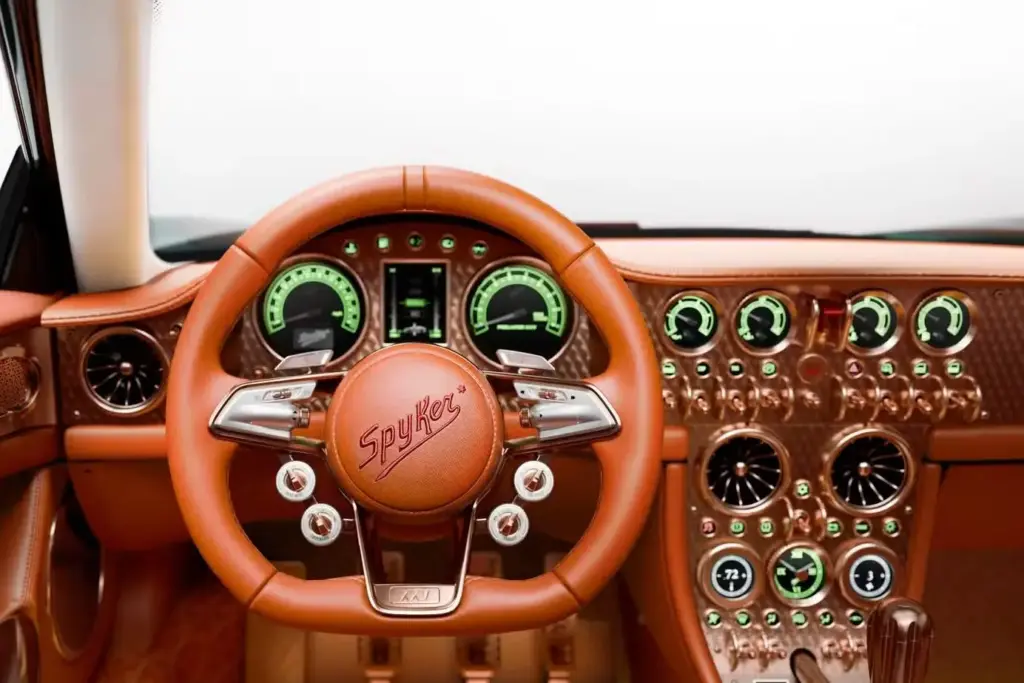
The details are the sort of things obsessive collectors notice immediately. One craftsman stitches the steering wheel with two needles at once, a job that takes four hours. The dashboard is turned aluminum, a nod to pre-1925 Spykers. It is milled by a workshop that has been finishing automotive parts since the 1880s, the same decade Spyker was founded. Even the screw heads inside the cabin are lined up by hand so they all face the same direction.
Then there is the VIN itself. Each one is stamped manually into the aluminum spaceframe, so every impression carries its own slight variation. This is a small detail until you realize the company is making a point about identity. This is not a plate hidden under plastic. It is a visible mark of who built the car and how.
Spyker’s insistence on aluminum instead of carbon-fibre follows the same logic. Aluminum can be shaped, worked, and polished by hand in a way that suits the brand’s philosophy. The goal is not to chase the lowest possible mass number. The goal is to preserve the craftsman’s touch and let each car wear the evidence of its making.
While carbon fiber is rightfully celebrated for its technical virtues, we have always preferred aluminum, a living metal that can be shaped by the hand of an experienced craftsman, polished to perfection, its beauty only deepening with age, like a fine cabernet. For Spyker, this is what modern ultra-luxury should feel like: rare, personal, and made by human hands
– Victor Muller, Spyker CEO.
A proper drivetrain
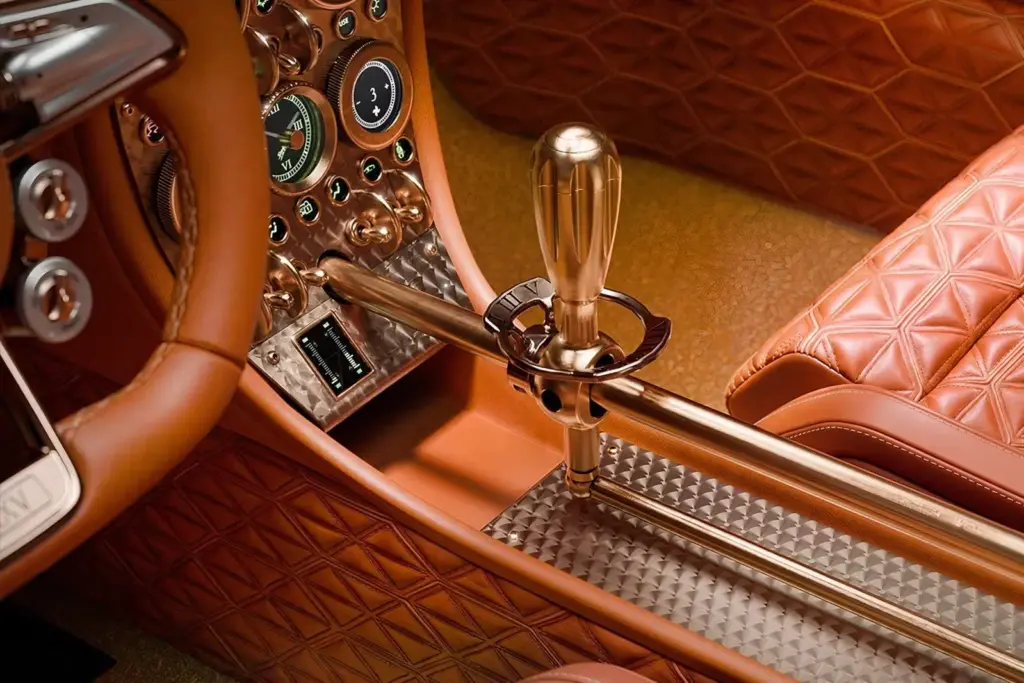
Power comes from a 4,0-litre twin-turbo V8 with about 600 kW and 1 000 N.m of torque. Performance credentials are pretty impressive with a 0-100 km/h time of just 2,9 seconds and a top speed of 350 km/h. Spyker still chose to pair the pure ICE with a true manual gearbox, without shift paddles and without an automated stand-in pretending to be involvement.
The gear change is not hidden behind a controller or handled by a computer in milliseconds while the driver watches. It is a mechanical action, one that asks for timing, commitment, and a bit of skill. For collectors who still care about the act of driving rather than merely arriving in style, that is the whole point.
The cabin follows the same philosophy. Digital interfaces are kept to a minimum, and the only screen in view is a head-up display. Everything else is intentionally analog and tactile, built to be operated rather than stared at.
Twenty-five cars
Production will be capped at 25 hand-built hypercars, and each one will be individually commissioned. This turns the Preliator XXV Coupé into more than a limited run. It becomes a commissioned object, closer to a coachbuilt artifact than a standard model with a scarcity badge.
Chassis 270, the car shown at The Quail, gives the idea a face. The Quail Green paint, the rose gold details, and the Tuscan Saddle leather are not there to match a trend board. It is brutally old-fashioned in the way it is made. It is a fresh flagship, built by hand, stamped by hand, and driven by a manual gearbox. This makes it feel less like a revival and more like Spyker reminding the industry that some customers still want a machine with a pulse.














Have your say
Got thoughts on this?
No feedback yet on Spyker C8 Preliator XXV Coupé Champions Hand-Built Hypercar Tradition. Kick the conversation off.
Free. Email link only — no password.