
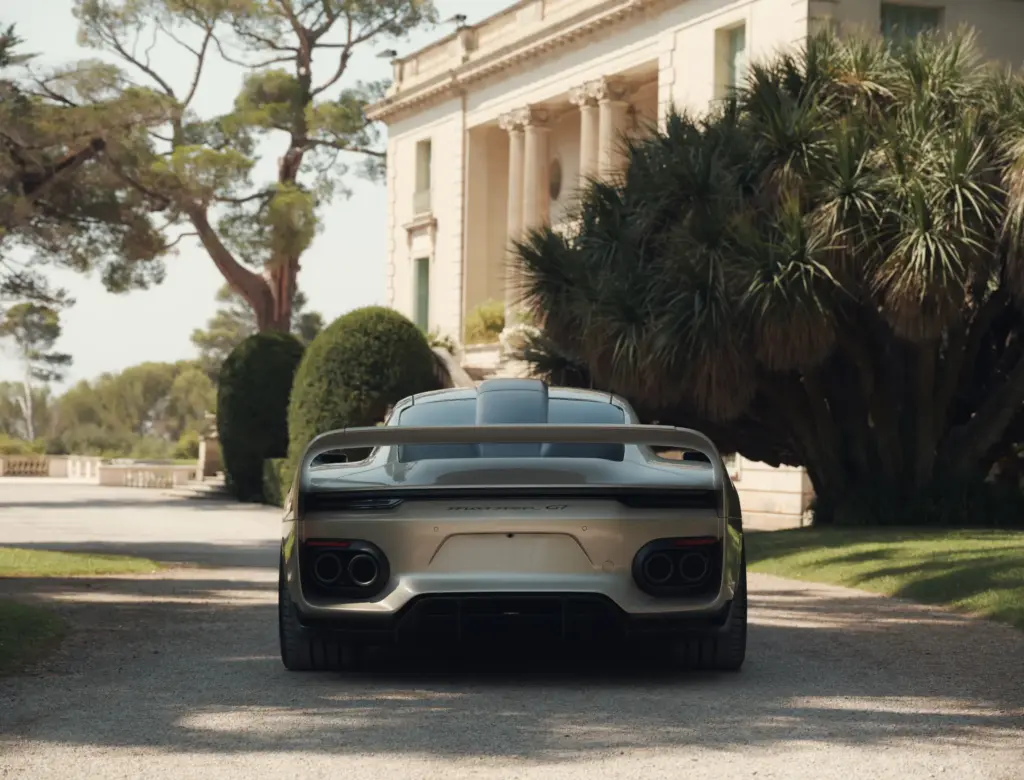
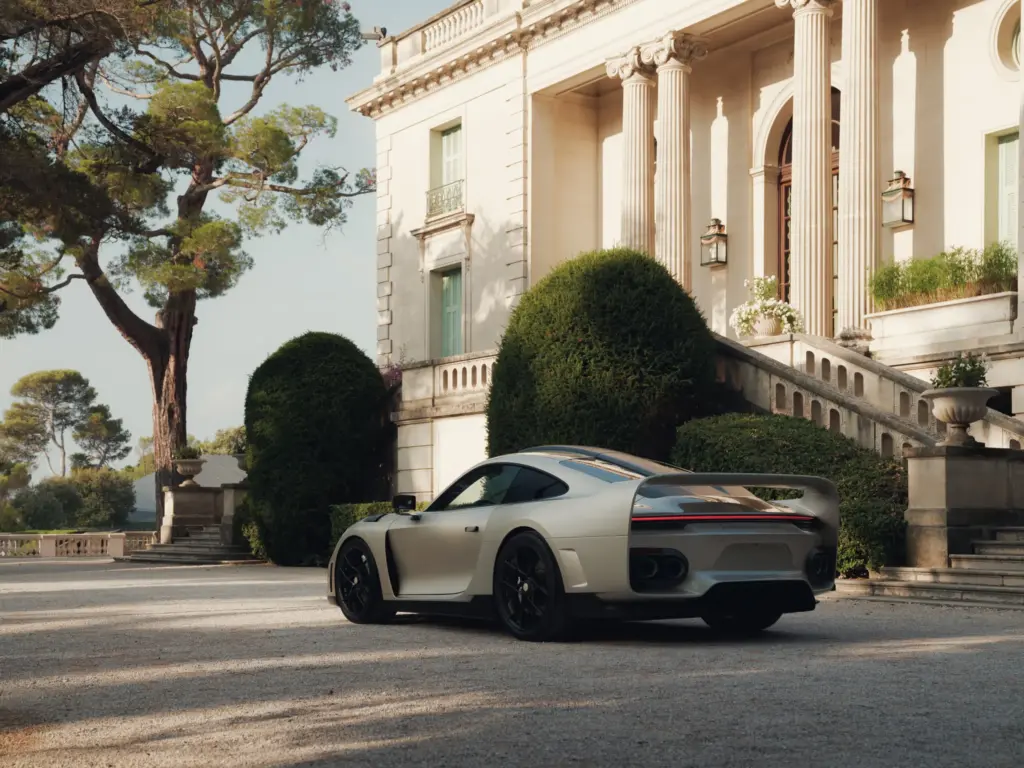
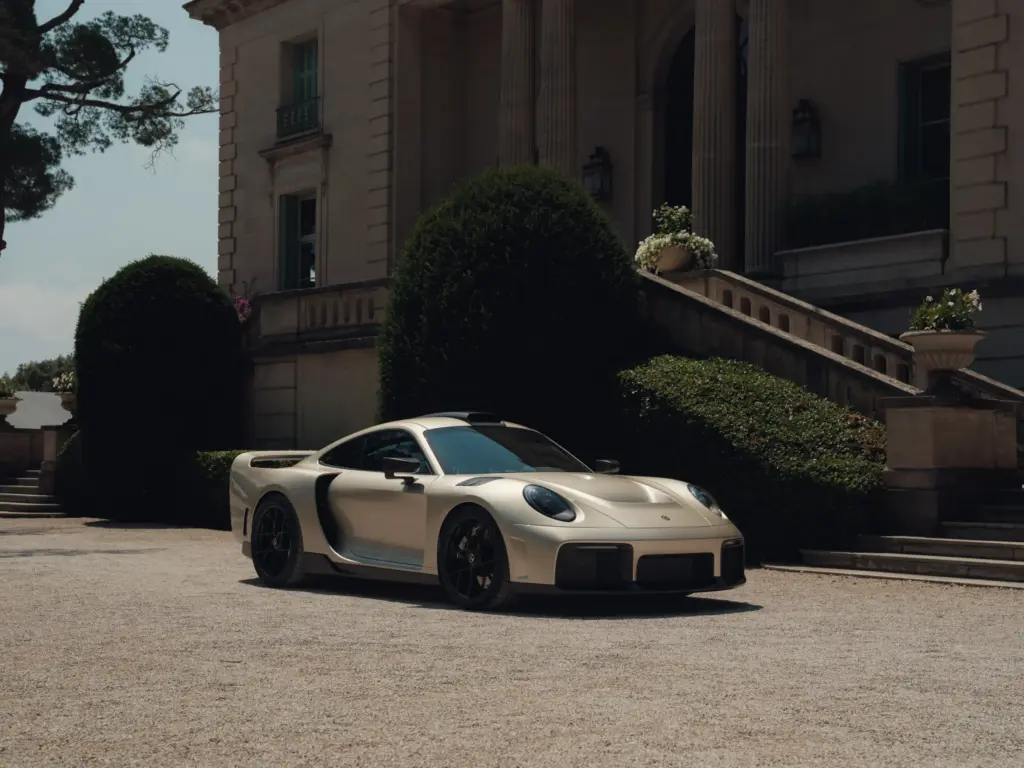
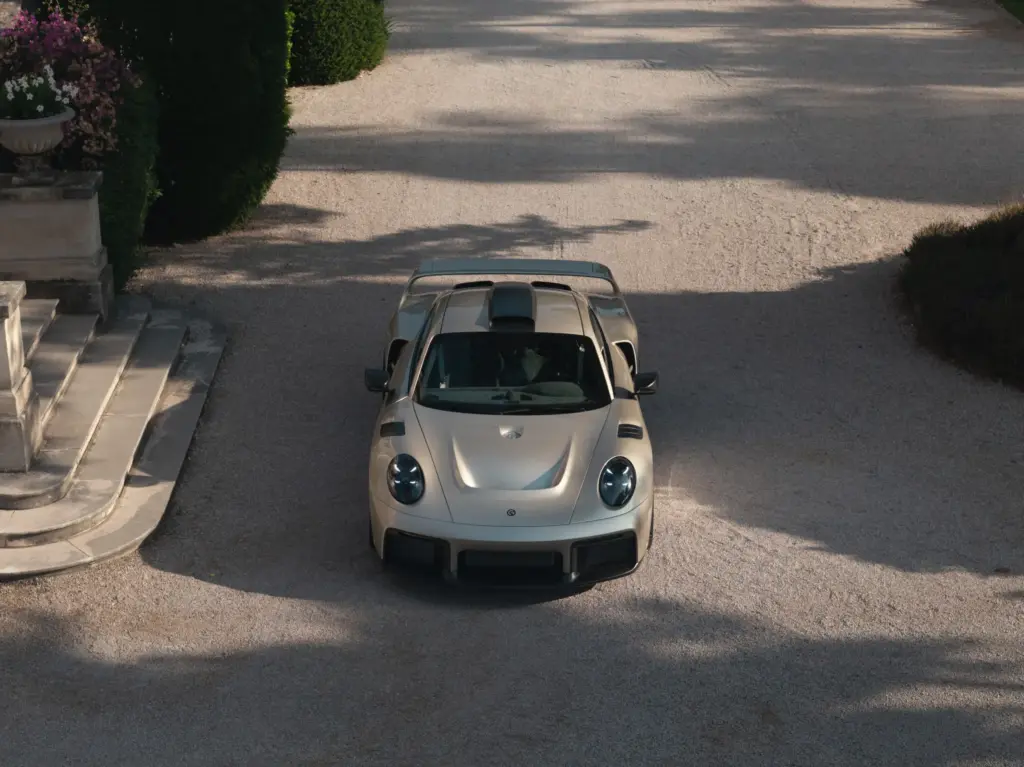
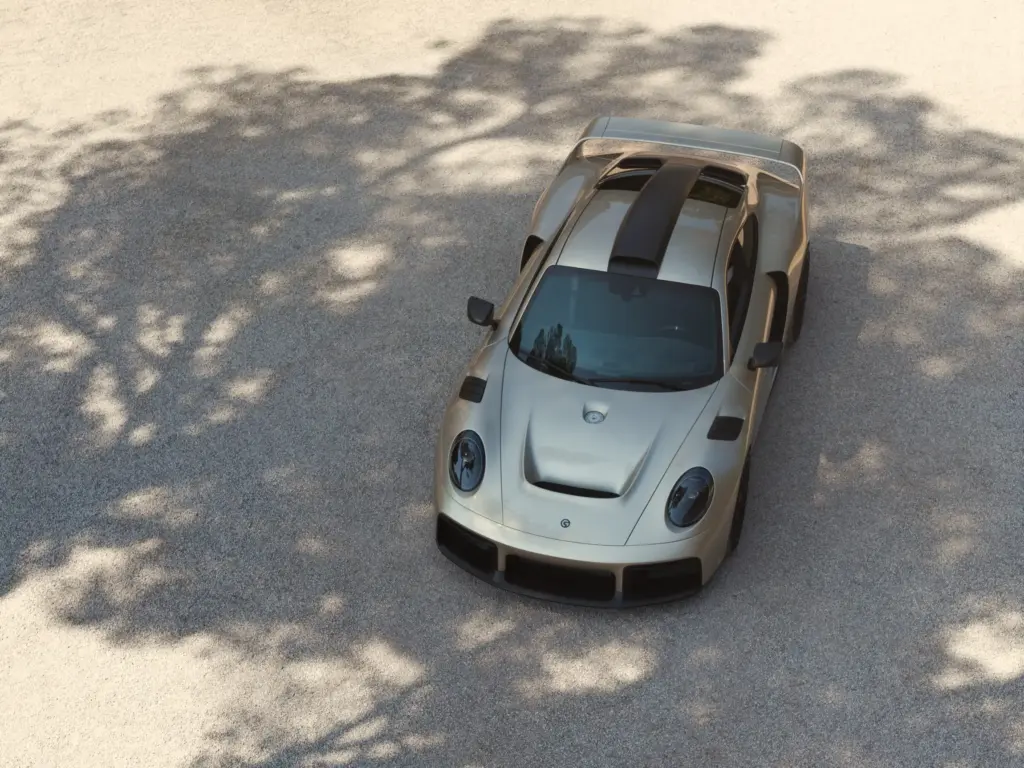

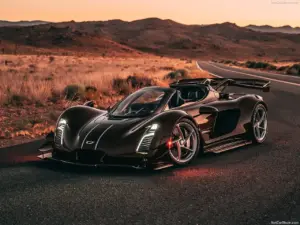
The original Marsien looked like it was ready to tackle the Dakar Rally. The new Marsien GT takes that same visual language and drags it back onto the road. Marc Philipp Gemballa H has turned the 992 Turbo S into a limited-run grand tourer that keeps the drama, drops the off-road capability, and chases on-road performance instead.
Marsien DNA
The first Marsien arrived at Pebble Beach in 2021. It was a rally-era fantasy made real, with Paris Dakar influences baked into the shape and the hardware. The Marsien GT keeps the same family resemblance, but the stance has changed. This road-focused evolution is built for fast driving on tarmac.
That change runs through the whole package. The GT sits on the fully homologated Marsien platform, but the emphasis is now on everyday usability and high-speed stability. Each car begins life as a Porsche 992 Turbo S and then adopts roughly 1 500 individually engineered and manufactured parts across the platform.
Those parts cover far more than bodywork. The build includes the carbon exterior, double wishbone suspension, titanium exhaust, wiring loom, suspension hardware systems, door handles, taillights, and the interior trim.
Carbon and active aero
The Marsien GT uses a completely new carbon fibre body made from more than 100 separate components. That includes the air channels, mirrors, wheel arch liners, and the large rear section that runs from the A-pillar back to the wing. Every panel was reworked for weight, cooling, and airflow.
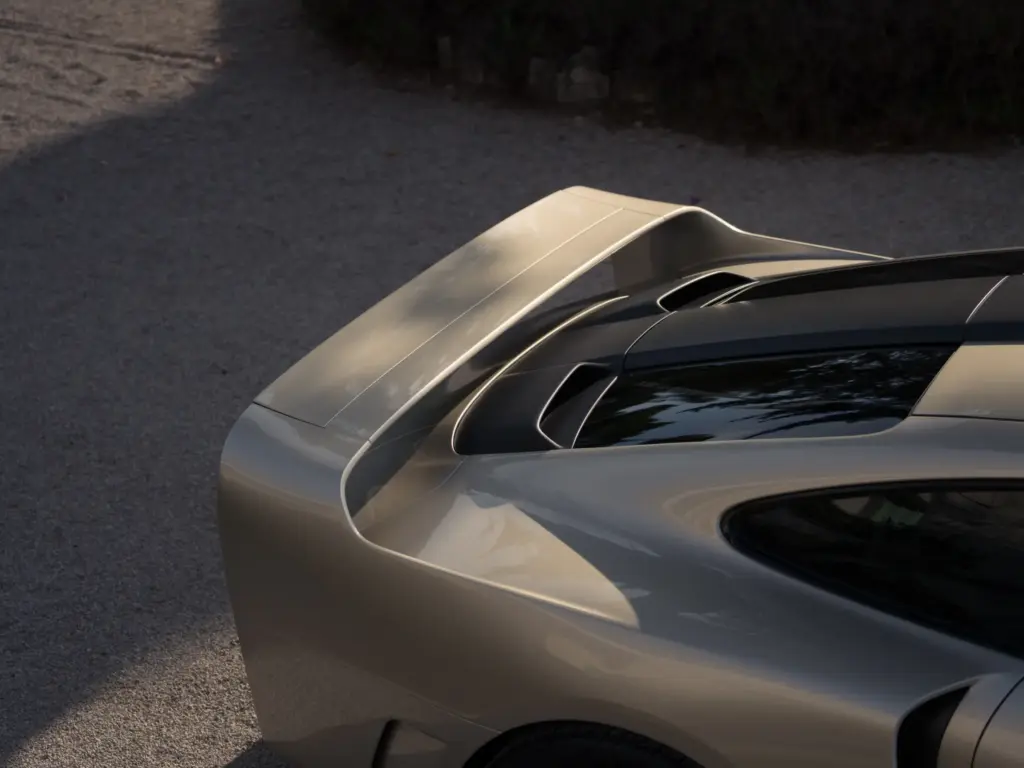
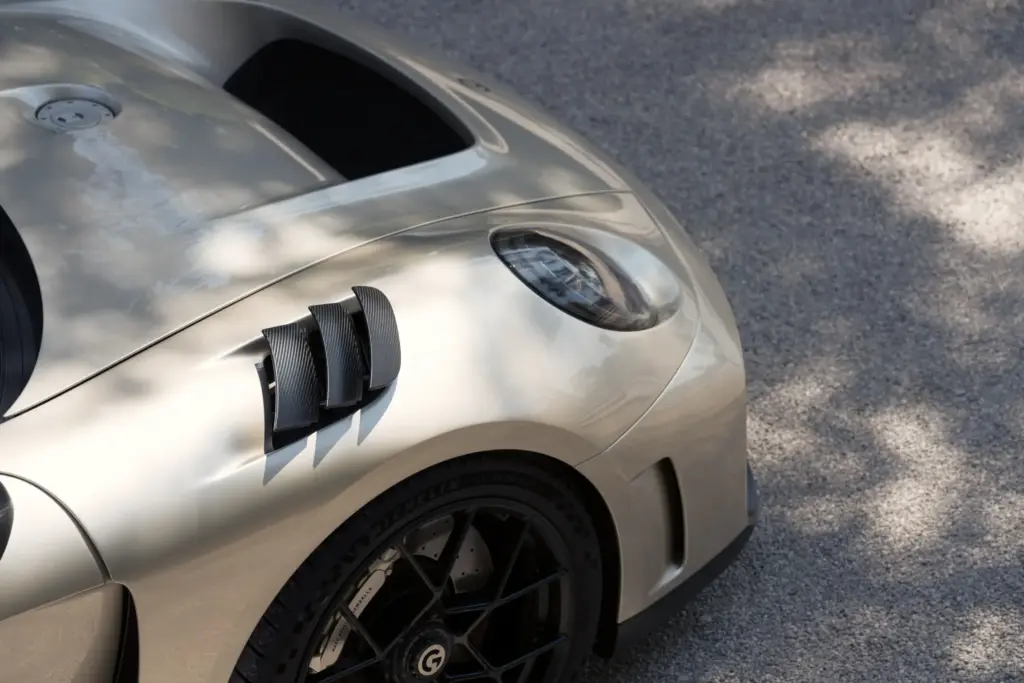
The aero package is proper hardware, not a styling exercise. It features active front fender louvres, a raised active rear wing, a roof scoop, ram air intakes, side skirt intakes, and a full carbon underbody. The louvres vent high-pressure air from the wheel housings to alleviate front-end lift and reduce turbulence around the arches. At the back, the wing changes angle for more downforce and stability at speed, and it can also function as an air brake.
The roof scoop feeds cooler, undisturbed air to the intercoolers, while the separate ram intakes handle the engine’s intake path. The side skirt intakes send fresh air towards the rear wheel arches for extra brake cooling. Underneath, the carbon underbody replaces the heavier aluminium floor, helping both weight loss and diffuser performance.
The whole aero package is actuated by a pneumatic air pressure system, so the louvres and rear wing react instantly when the car changes attitude. The end result is a body that claims a 75 kg saving over the standard 992 Turbo S while doing more work than the factory shape.

KW and RUF
Marc Philipp Gemballa has kept its technical tie-up with KW Automotive. The GT uses an entirely new double wishbone suspension set-up with a bespoke road-focused damper package. The dampers adjust compression and rebound in real time through two electromagnetic proportional valves in each unit, with responses measured in 20 milliseconds.
The driver can select drive modes via a steering-wheel-mounted controller, which changes damper, transmission, and engine mapping in one hit. A nose lift raises the front axle by 60 mm.
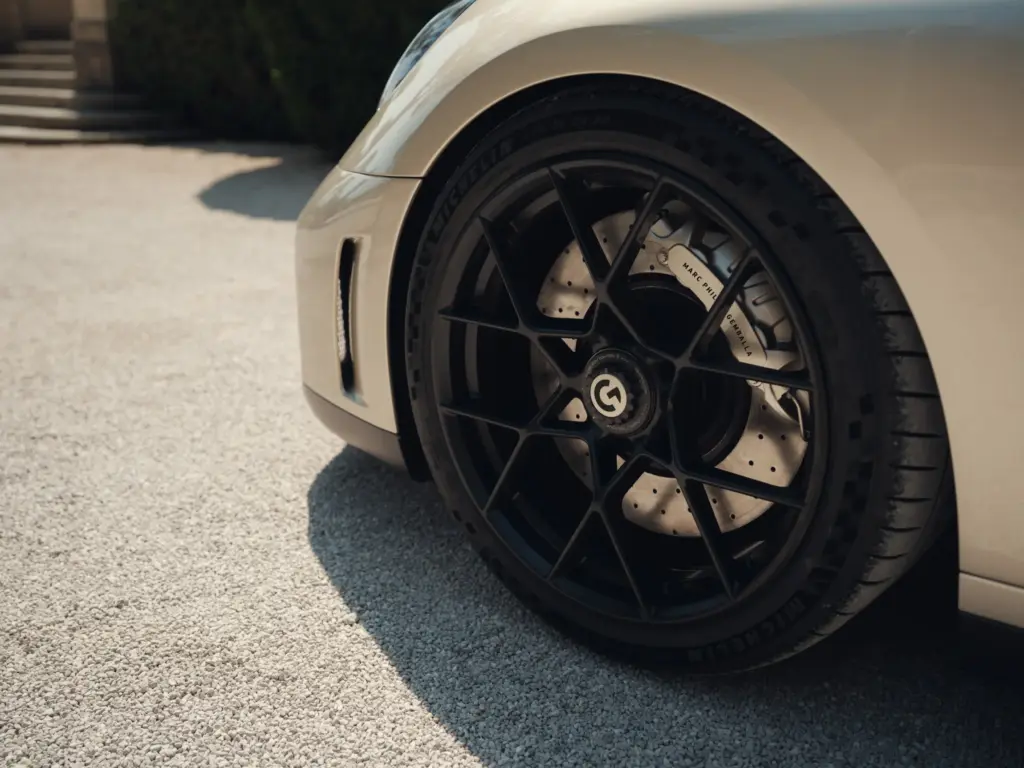
The GT rides on special forged aluminium wheels with centre locks and Michelin Pilot Sport Cup 2 tyres. That choice says everything about the intended use. This is a fast road car, but it is not built for shrinking away from a track day.
Power comes from RUF, which has been working with Porsche hardware since 1981 and also has historical links to Uwe Gemballa’s projects from the 1980s. In this GT application the six-cylinder develops more than 620 kW and 930 N.m, thanks to upgraded turbochargers, revised ECU mapping, and transmission calibration. The ‘base’ version is said to blast from 0-100 km/h in 2,4 seconds and has a top speed of 330 km/h. A second-stage version with over 670 kW is already in the pipeline for clients who think 830 weedy.
Cabin treatment
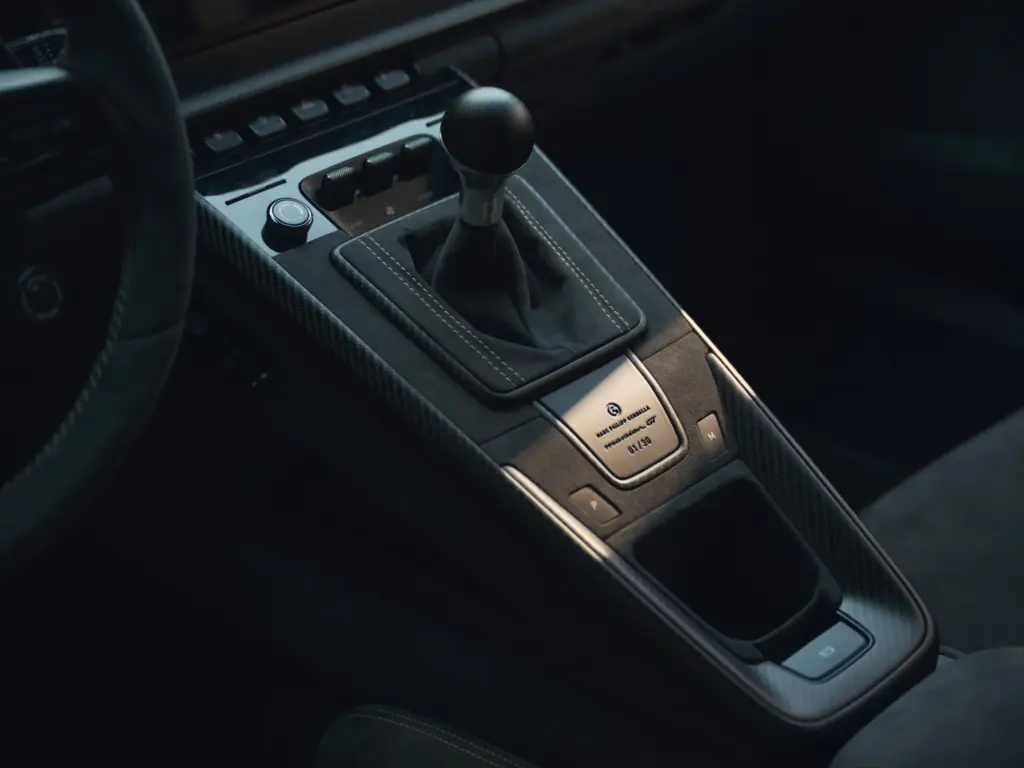
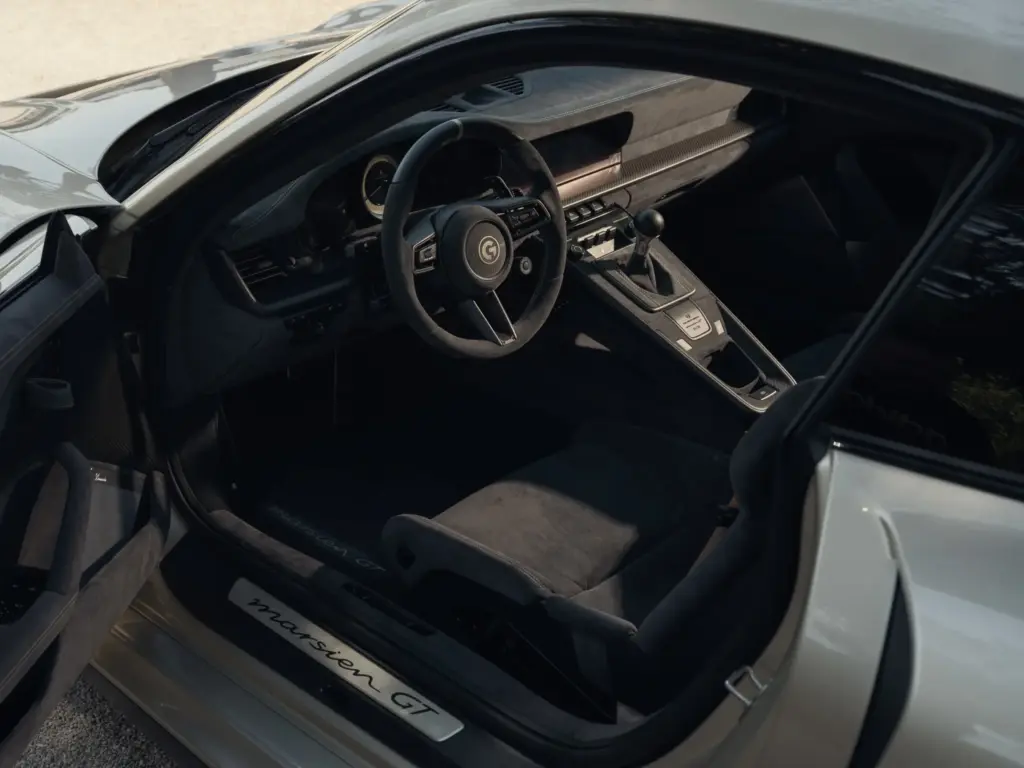
Inside, the Marsien GT has a centre console sits higher than in a regular 992, and the aluminium gear lever takes inspiration from the Carrera GT. Buyers can choose an exposed carbon or mahogany gear knob instead of leather or Alcantara. The logo and paddles are stitched by hand, and the same treatment carries through the floor mats, headrests, and armrest.
Production is capped at 30 examples, making the GT rarer than the original Marsien. Total output across the Marsien programme will stop at 70 cars, a nod to Uwe Gemballa’s 70th anniversary and to the legacy Marc Philipp Gemballa is clearly trying to extend.
![New Porsche Panamera Debuts [w/video]](https://doubleapex.co.za/wp-content/uploads/New-Porsche-Panamera-300x180.webp)
![Brabus 900 Rocket R Is A Turbo S On Steroids [w/video]](https://doubleapex.co.za/wp-content/uploads/2023/07/Untitled-300x180.webp)
![Full Porsche Taycan Cross Turismo Range Debuts [w/video]](https://doubleapex.co.za/wp-content/uploads/2021/03/Taycan-Cross-Turismo-Range-300x180.webp)
![Porsche GT3 20th Anniversary [w/video]](https://doubleapex.co.za/wp-content/uploads/Porsche-GT3-20th-Anniversary-300x154.webp)
![Paul Stephens Autoart 993R [w/video]](https://doubleapex.co.za/wp-content/uploads/2022/08/Paul-Stephens-Autoart-993R-300x180.webp)
Have your say
Got thoughts on this?
No feedback yet on Marc Philipp Gemballa Reimagines The Porsche 992 Turbo S As…. Kick the conversation off.
Free. Email link only — no password.