
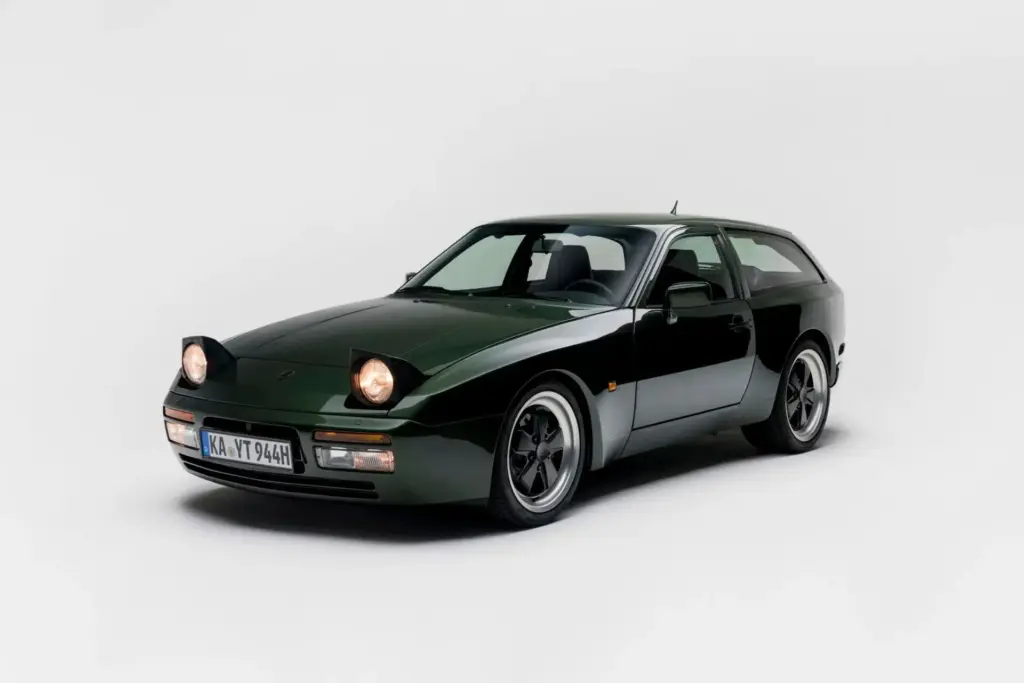
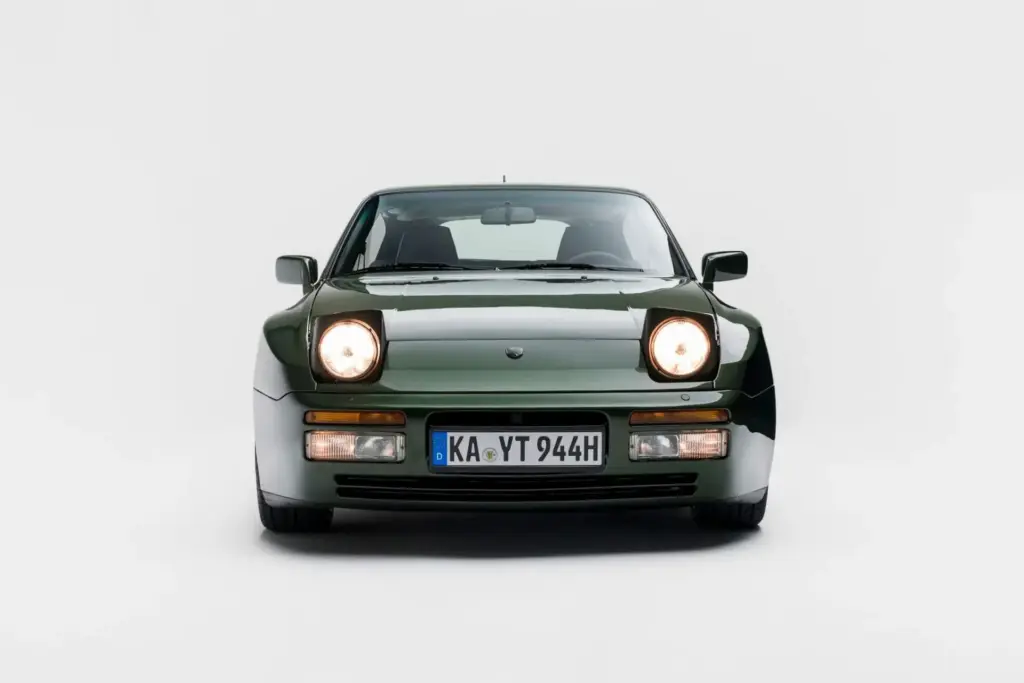

Gunter Artz was ahead of his time. The car customiser has made many memorable cars, including this V8 powered Golf Mk1. His little company made another car that created left an indelible mark on one German car fan by the name Andreas Freund. Freund used to own a Gunter Artz Porsche 924 estate in the mid-1980s. Yes, you read that right, a 924 stationwagon.
The Artz conversion was one of roughly twenty ever built, a 924 Turbo stretched and roof-extended into something that should not have worked but absolutely did. Freund had used his car for weekend runs to Lake Garda, loading the back with whatever Italian weekends required. He discovered that a transaxle Porsche with proper cargo space made sense. Freund searched for another 924 estate, but search for another collapsed into futility. So he did what any reasonable obsessive would do. He decided to build his own, but better, and based on the more resolved 944 platform. Say hello to the Carpoint GT-K44.
From Sketch to Metal
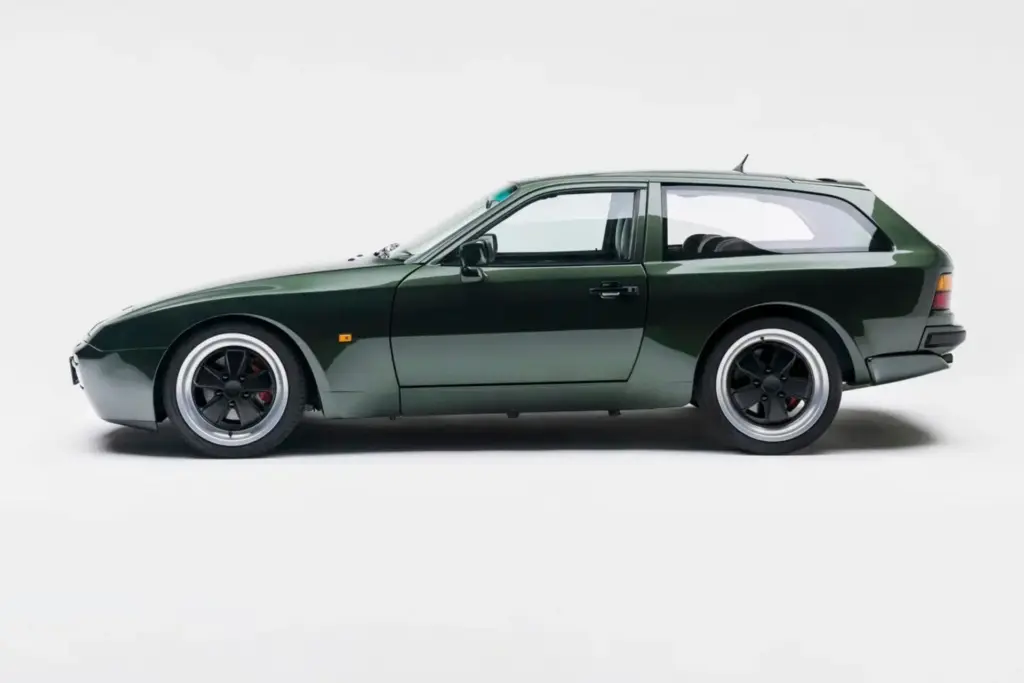
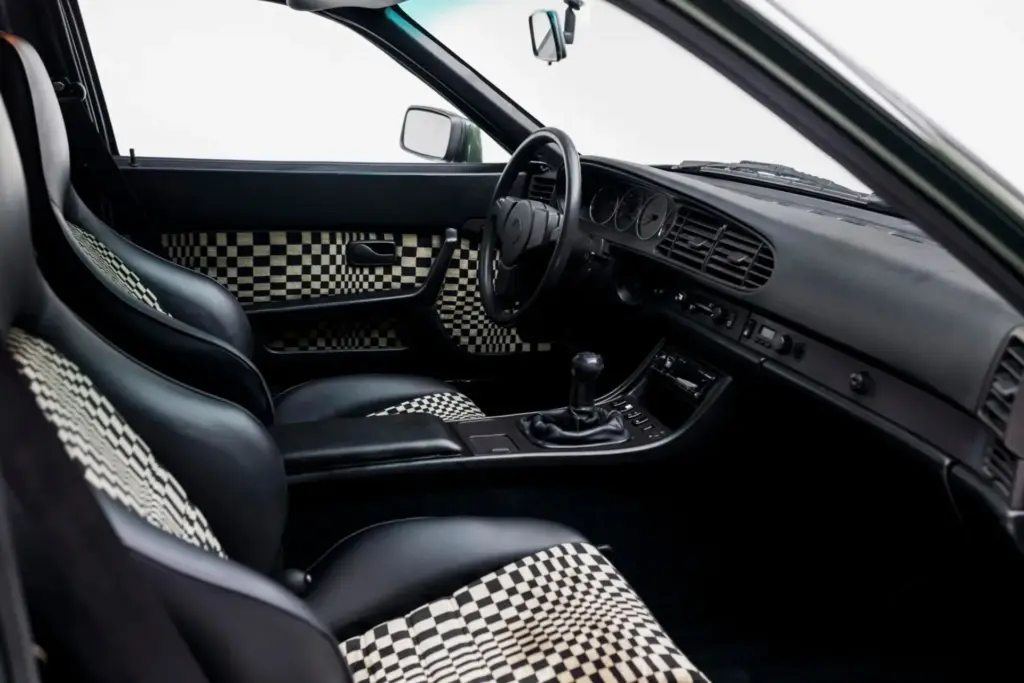
Freund approached designer Michael Sohngen with the idea of creating a 944 shooting brake that might finally fill the Artz-shaped hole in his garage. Sohngen returned with a birthday present in the form of a design sketch: a 944 with its roofline extended and squared, rendered in Oak Green with interior upholstery carrying the distinctive Pascha pattern, that geometric black-and-white fabric that loudly screams 1980s Stuttgart. Freund recognised it immediately as the thing he had been trying to find since the 1980s. The sketch became the project’s guiding principle. Colour, interior treatment, and proportions from that single drawing carried directly into the first completed car.
That inaugural GT-K44 began life as a 944 S2, the 3,0-litre (155 kW) variant that represents the sweetest spot of the naturally aspirated range. The conversion is not a kit. It is a ground-up reimagining of everything behind the B-pillar, executed in sheet metal by craftsmen. A completely new roof structure is fabricated and welded into place, extending rearward with large side windows that give the GT-K44 its characteristic long-roof silhouette. The B-pillars and rear side panels are adapted to meet this new architecture without the telltale panel-gap awkwardness. A set of period-correct Fuchs wheels round off the package.
Engineering the Tailgate
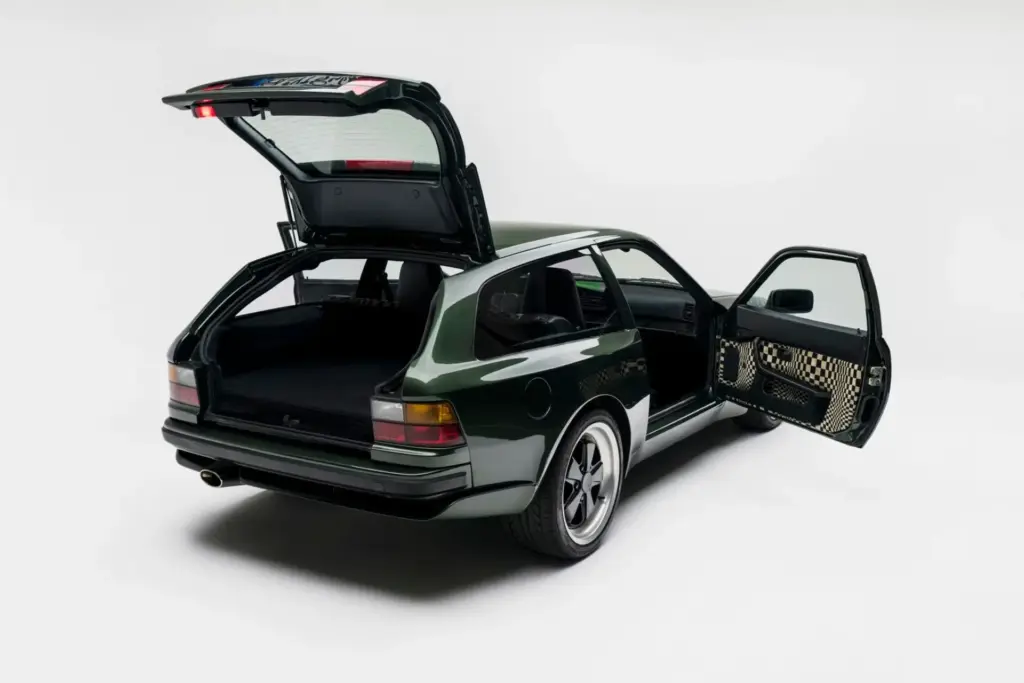
The most clever detail is the tailgate. It is a bespoke sheet-metal piece that drops all the way to the bumper. It also extends approximately 40 cm upward into the roof surface itself. Open it, and you have conventional cargo access plus a top-loading aperture that makes bulky items suddenly manageable. The original fold-down rear seat bench is retained, so the interior remains as flexible as any proper estate should be.
Lighting required its own solution. The 944’s taillight units are divided asymmetrically for the GT-K44, with inner reflectors relocated into separate housings within the tailgate while the active brake and indicator functions stay fixed to the body. A third brake light integrates into the roof spoiler, accompanied by a modern roof antenna and rear wiper that complete the functional package without cluttering the lines. Nothing here reads as aftermarket appendage. Everything looks like it might have emerged from a small, obsessive factory in Weissach that only built wagons for six months in an alternate 1987.

Bespoke Cretions
Each GT-K44 is commissioned individually, built to customer specification rather than batch-produced. The buyer must source a suitable 944 coupe as the foundation, though Carpoint will assist in finding the right donor if needed. A base vehicle that already carries the desired engine, transmission, colour, and equipment specification will reduce both conversion cost and complexity, because Carpoint is not in the business of undoing someone else’s compromise before starting their own work.
Both manual and automatic transmissions are possible, but the choice is constrained by what the donor car left the factory with. No swapping in a Tiptronic where a five-speed manual originally lived, or vice versa. The conversion maintains the transaxle architecture as it left the production line in Stuttgart.
A Name with Meaning
The GT-K44 designation is not accidental. GT stands for Gran Turismo, the old promise of covering distance rapidly and with some grace. The K marks the estate body, Karosserie-form taken from the German shorthand for wagon variants. The 44 grounds it in the specific Porsche model that makes the concept possible. Together, the name argues that this is not a 944 with a weird roof. It is a distinct vehicle category that Porsche didn’t get around to building itself but that the platform seemed meant for.
“I’ve been a station wagon fan my whole life,” says Freund. “Sportscars and station wagons, that was my thing.” The GT-K44 is the physical proof that these categories were never mutually exclusive. The transaxle Porsche’s front-engine, rear-gearbox layout and near-perfect weight distribution could absorb a longer roof and more cargo capacity without surrendering its essential character.
The first car, finished in Sohngen’s Oak Green with those Pascha seats, now exists as both tribute and correction. It is a tribute to Artz’s original vision of a Porsche estate, which was too rare and too briefly produced to become anything more than a footnote. It is a correction because the 944 platform, with its more resolved suspension geometry and engine options, was always the better starting point. Freund did not find another Artz 924. He made something that renders the search unnecessary.

![Two Driving Legends Showcase the RS 2.7 [video]](https://doubleapex.co.za/wp-content/uploads/2022/09/Two-Driving-Legends-Showcase-the-RS-2.7-300x180.webp)
![All-New Porsche Macan Unveiled [w/video]](https://doubleapex.co.za/wp-content/uploads/2024/01/All-New-Porsche-Macan-300x180.webp)
![Track Specials Drag Race [video]](https://doubleapex.co.za/wp-content/uploads/2022/10/Track-Specials-Drag-Race-1-300x180.webp)
![The Original Hypercars [videos]](https://doubleapex.co.za/wp-content/uploads/2021/05/The-Original-Hypercars-side-300x180.webp)

Have your say
Got thoughts on this?
No feedback yet on Carpoint’s GT-K44 Builds the Porsche 944 Shooting Brake Porsche Never…. Kick the conversation off.
Free. Email link only — no password.