
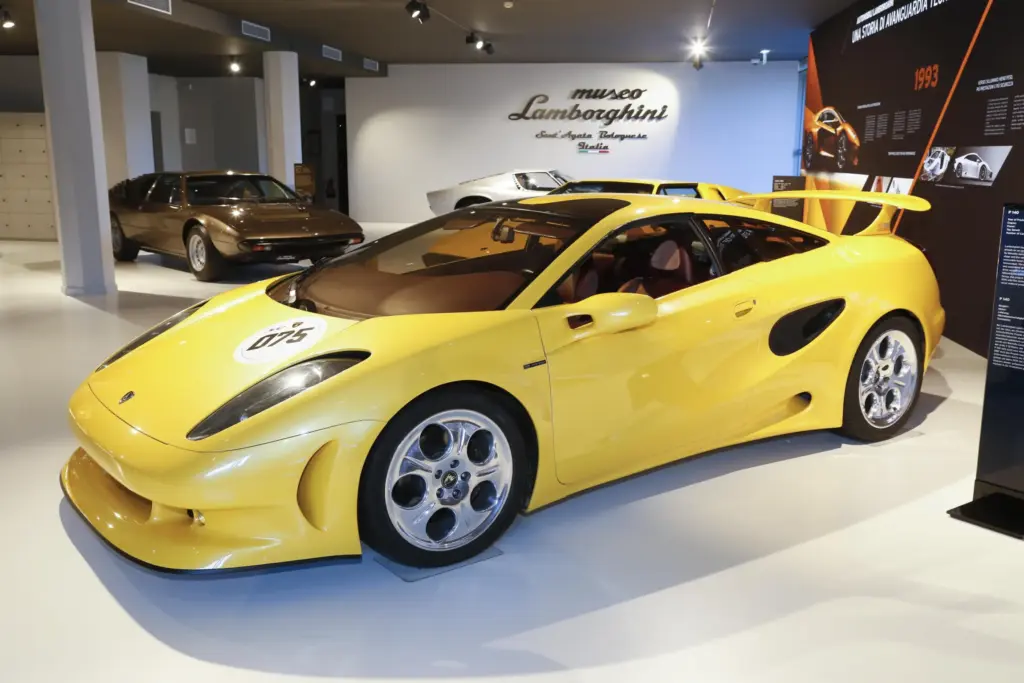
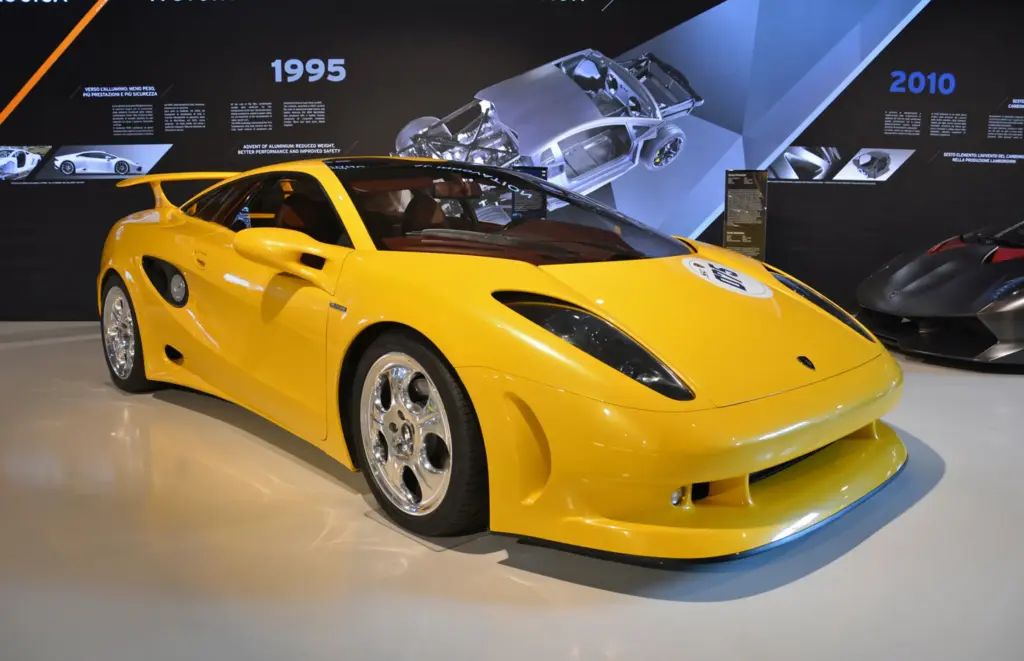
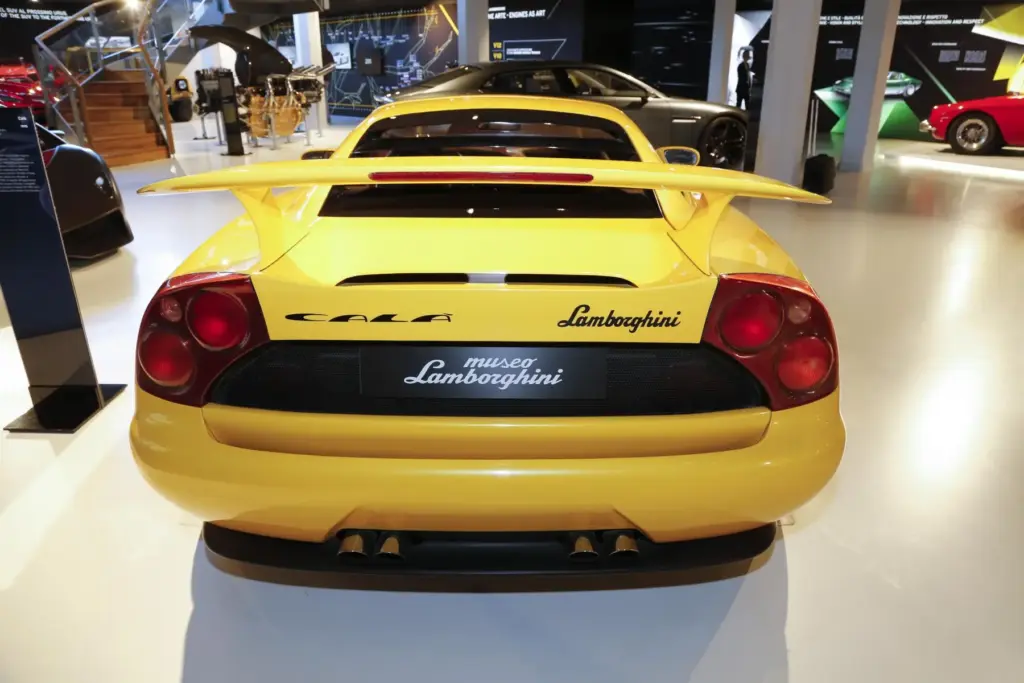
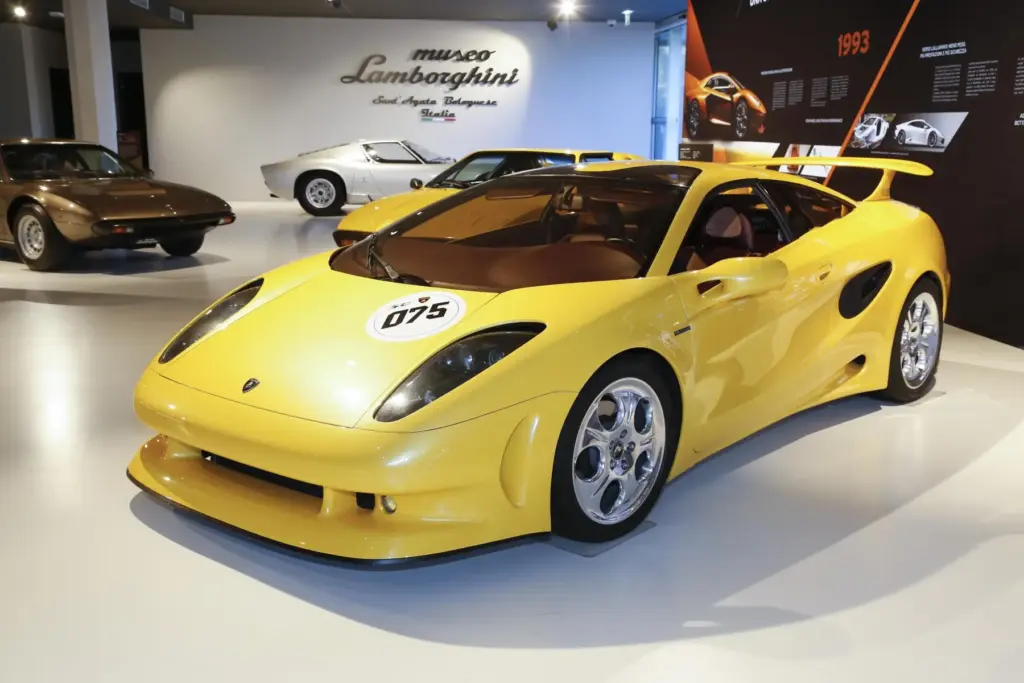

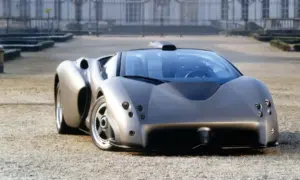
In 1995, Lamborghini arrived at the Geneva Motor Show with a car it could not afford to build. The Cala sat on the Italdesign stand, its glass engine cover revealing a 3,9-litre V10 that would never see a production line. Lamborghini has been through three owners in eight years, and the Cala represented either a genuine path forward. Or, like so many concept cars, a false promise.
Follow Double Apex on Instagram and Facebook where we share more car content.
Instability
The Cala’s conception belongs to a period few would like to revisit. Chrysler had offloaded Lamborghini in 1994 to Megatech, an Indonesian investment company. The American era had at least produced the Diablo, a worthy successor to the Countach. Megatech offered access to capital markets in Jakarta, political connections, and precious little experience in manufacturing automobiles in Modena.
The timing could not have been worse. Lamborghini’s entry-level Jalpa had died in 1988, leaving the Diablo to carry the entire sales burden at a moment when supercar demand was softening globally. The workforce at Sant’Agata needed volume. Dealers needed something to sell below the V12 flagship’s unattainable price point. They received instead a holding company scrambling for its own liquidity, unable to fund the tooling for a new model, let alone the research to develop one.
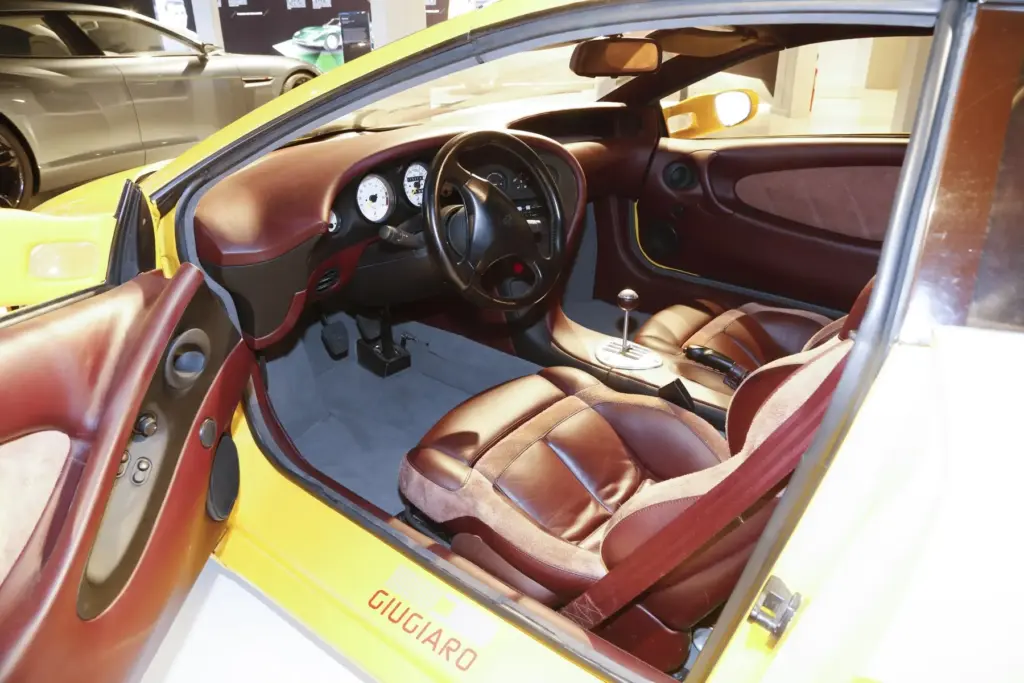
Giorgetto Giugiaro forged the Cala. Italdesign had shaped Lamborghini before, most notably with the Marcello Gandini-penned shapes that defined the brand in the 1970s. Now Giugiaro himself proposed a clean break from the Diablo’s visual aggression: a compact wedge of softer curves and tighter proportions, scissor doors retained as heritage but integrated into a less dramatic shape. The aluminium-carbon composite monocoque suggested serious engineering intent. The 295 kW output from that bespoke forty-valve V10, channeled through a six-speed transaxle to the rear wheels, promised a car that could genuinely dance.
Why the Cala Was Shelved
Geneva crowds loved it. The automotive press filed enthusiastic dispatches. Then nothing happened.
The obstacle was not design approval or market validation. It was cash, pure and simple. Megatech didn’t possess the massive cahs injection required to transform a running concept into a production reality. The bespoke V10 would need supplier networks, emissions certification, and durability testing. The advanced platform demanded manufacturing processes that Sant’Agata lacked. Every element that made the Cala technically interesting also made it financially impossible under the ownership structure.
The 1997 Asian financial crisis delivered the final blow. Megatech’s foundations in Indonesian finance crumbled. Lamborghini was shuffled to another entity, before Audi AG acquired the marque in 1998 with the full weight of Volkswagen Group engineering behind it. The Cala, conceived as Lamborghini’s salvation, became a museum piece before it ever became a car.
Living Blueprint
Audi’s arrival changed everything except the essential idea. The German engineers studied the Cala extensively, not as a template to copy but as proof of concept. A smaller, mid-engined V10 Lamborghini could attract buyers without diluting the brand’s exotic status. The car demonstrated a packaging solution for a ten-cylinder powerplant behind the driver.

The Gallardo that emerged in 2003 shared no platform and no engine with the Cala. Audi’s aluminium spaceframe architecture and its own 5,0-litre V10 were entirely in-house developments, benefiting from Porsche and Volkswagen Group expertise. Yet the lineage is unmistakable to anyone who places the two cars in sequence. The very existence of a ‘baby Lambo’ segment was first carved out by a concept that could not be built.
The Gallardo would sell over 14 000 units across its production life, becoming Lamborghini’s most successful Lambo of all time, until the Urus came along. It funded the revival of Sant’Agata, the development of the Huracan successor, and the financial stability that the 1990s consistently denied. Every one of those cars traces some portion of its DNA to a blue prototype that sat inert on a Swiss show stand while its parent company disintegrated.
Sole Survivor
Only one Cala exists. It resides now in the Museo delle Tecnologie at Sant’Agata Bolognese, a static monument to what almost was not. Visitors can walk around it, peer through that transparent engine cover at a powerplant that never revved in anger.
Although purely academic, the Cala boasted a naturally aspirated 3,9-litre V10. The engine was good for a reported 300-odd kW. All of it was sent to the rear axle through a six-speed manual transmission. It’s acceleration time from 0-100 km/h was about 5,0 seconds (remember, this was 1995) and flat out it would top 290 km/h.
Without Audi’s intervention and the resources to execute what Megatech merely imagined, Lamborghini’s trajectory might have resembled another famous Italian marque of the period: De Tomaso (now revived in a very different form), perhaps, or Iso Rivolta.
The Cala stands as a reminder that automotive history turns not only on engineering brilliance but on the mundane availability of capital. It was the right car at the wrong moment, conceived by the right designer for the wrong owners, a beautiful object that demonstrated what Lamborghini could become without ever becoming it itself.
![Mega Lamborghini Aventador Drag Race [w/video]](https://doubleapex.co.za/wp-content/uploads/2022/05/Mega-Lamborghini-Aventador-Drag-Race-300x180.webp)
![Twin-turbo Lambo Vs MotoGP Bike Drag Race [video]](https://doubleapex.co.za/wp-content/uploads/2022/08/Twin-turbo-Lambo-Vs-MotoGP-Bike-Drag-Race-300x180.webp)
![Lamborghini Huracán STO Time Chaser_111100 [w/video]](https://doubleapex.co.za/wp-content/uploads/2023/02/Lamborghini-Huracan-STO-Time-Chaser_111100-2-300x180.webp)
![Lamborghini Unveils Limited-Edition Fenomeno Roadster [w/video]](https://doubleapex.co.za/wp-content/uploads/2026/05/668433-300x180.webp)

Have your say
Got thoughts on this?
No feedback yet on Forgotten Concepts Part 11: Lamborghini Cala. Kick the conversation off.
Free. Email link only — no password.