
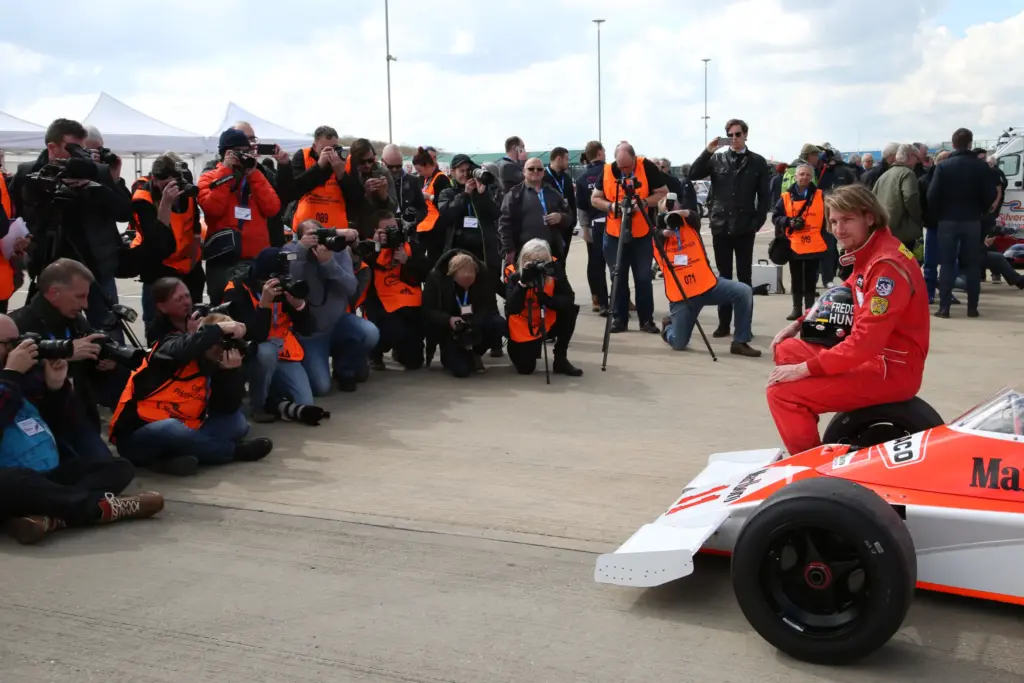


Imagine if Rory McIlroy or Jon Rahm could only ever swing a golf club on a practice range the day ahead of a tournament weekend? Then go straight into a competitive weekend. Seems silly, doesn’t it? In reality, golfers play many, MANY rounds of golf between tournaments.
But the world’s most complex sport runs by a set of rules that ties the hands of most engineers behind their backs. The old Formula One test days were brute-force engineering sessions where a team could turn up with a new floor, a different rear wing, a revised suspension layout and a third version of a brake duct, then run the lot until the stopwatch showed which was most effective.
Ferrari, McLaren and Williams used to treat testing as a second championship. Cars often changed shape between Grands Prix because nobody had to wait for a race weekend practice session to find out whether an idea was going to deliver as envisioned. That world has gone. Modern F1 still looks like a laboratory, but the lab is now wrapped in rules, budgets and a lot less track time.
When teams could test and test and test and…
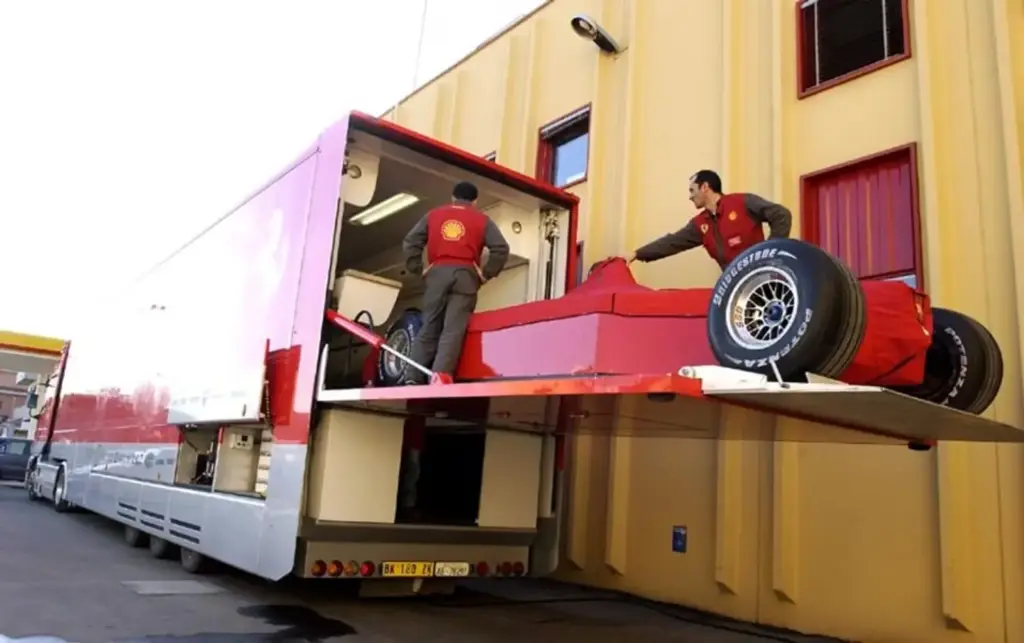
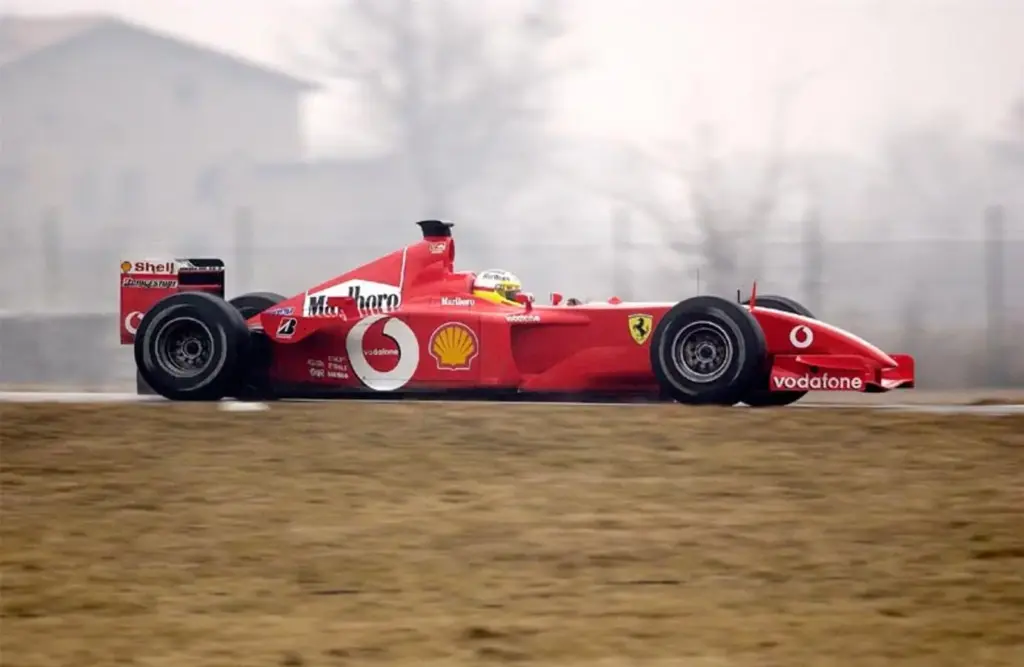
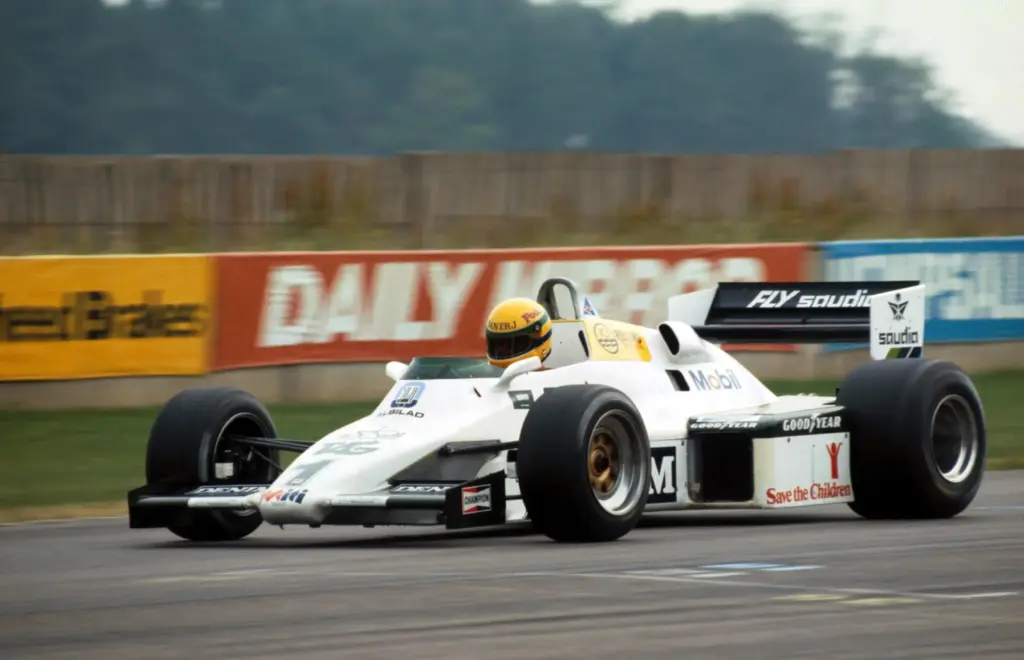
From the 1980s into the early 2000s, when tobacco and alcohol money was, err… flowing, the top teams built testing programs that would make a modern race engineer smile. Ferrari had Fiorano. McLaren, Williams and the like regularly hired circuits such as Paul Ricard and Silverstone for mutiple days at a time.
Teams ran dedicated crews to test. This included two drivers, not just their race drivers, but two talented wheelmen who did nothing but test, engineers and tyre technicians. Luca Badoer did huge mileage for Ferrari. Pedro de la Rosa did the same for McLaren. Their value came from repetition, not glamour.
There is a tale that is part of Ferrari F1 lore. In years gone by F1 practice sessions took place at Monaco on a Thursday, leaving Friday open for residents to use their city. Michael Schumacher would fly back to Fiorano to test for the full day on Friday, using data learned on the streets of Monaco on Thursday. He’d then fly back to the principality for Saturday’s practice and quali sessions.
The numbers were absurd by current standards. More than 50 000 km in a season was normal for front-running teams. Some test programs vastly exceeded the distance those teams covered in the race season. If a concept looked promising in the wind tunnel, it went to the track. If the track said it was bad, the team tried something else the next day. This loop repeated relentlessly for months.
Tyre War
Tyre competition made the whole thing even more intense. Michelin and Bridgestone both wanted an advantage. Teams spent time learning how a specific construction behaved with a specific car, with different fuel loads and suspension settings. A tyre change could alter the character of the car, so testing was about making the whole package work together, lap after lap, until the stopwatch gave a positive answer.
The free-for-all era also suited the richest outfits. A big testing department meant more engineers, more mechanics, more transport, more spares and more track hire. If you had the money, you could find out more than the next team. In F1, that often became the whole story.
The modern rulebook
By the late 2000s, the sport had had enough of that arms race. In-season testing almost disappeared around 2009 and 2010. The current system leaves teams with a very narrow window to run a current car. Pre-season testing is usually one session of about three days, shared by the two race drivers, often at one circuit alongside all rivals. Bahrain has become the familiar venue in recent years. That is a long way from the old pattern of private shakedown days and endless circuit hire.
There are still small loopholes, but they are tiny compared with the old system. Teams get limited filming days, usually two a year, with a 100 km cap per day and special demonstration tyres. Nobody is discovering anything useful on a filming day.
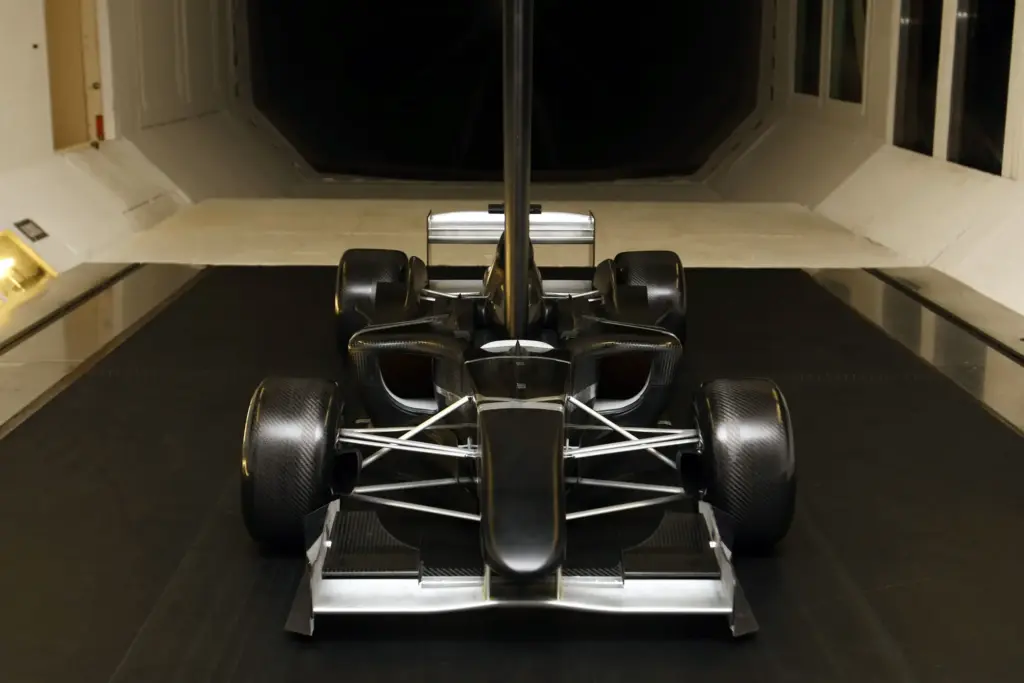
Track limits are only half the story. The rules also squeeze development in the tunnel and on the computer. Wind tunnel use is restricted, CFD computer time is capped, and the sliding scale gives less successful teams more development room than the front-runners. On top of that sits the cost cap, currently set at $215 million. Even if a team wanted to pour cash into testing, it now has to fit within a budget that makes the old excess impossible.

Power unit bench running is also controlled, which closes another door. The sport has gone from test-and-iterate to simulate-and-optimise. The car is built in the virtual world first, then validated in very small slices of real life.
What F1 gained
The clearest win is cost. Endless testing was a money pit, and not only for the headline teams. Every extra day on circuit meant transport, fuel, parts, tyres, staff time and track rental. Cutting most of that away stops the numbers spiraling out of control. That makes the sport easier to sustain for smaller teams and reduces the chance that the biggest budgets simply crush everyone else.
Safety improved too. Fewer test laps mean fewer high-speed accidents outside race weekends, fewer tired mechanics and less need to keep a huge travelling army on the road. The old testing culture was hard on people. It rewarded endurance as much as skill, and a long season could grind crews down before the first race even began.
The environment has benefited as well. Less travel, fewer cars built purely for testing and fewer component cycles all reduce the sport’s footprint. F1 still burns a lot of fuel in the broad sense, but the sport is not pretending that unlimited testing fits a modern eco outlook.
There is also a competitive argument. When teams cannot buy performance through sheer mileage, the grid tends to stay closer. A clever operation can still get ahead, but it has to do it through better design, better correlation and cleaner execution rather than a private research program on tarmac.
What the sport lost
The cost of all that control is obvious the moment a team gets a radical concept wrong. With almost no spare track time, there is less room to try a wild aero idea and recover if it does not work. Remember how poorly the 2022 (ground-effect) Mercedes performed? That pushes engineers toward safe, incremental development. The result is often a more conservative field, where cars converge because nobody can afford to waste a precious test day on a leftfield idea.
Simulation has become the new king, but it is still an approximation. CFD, wind tunnels and driver-in-the-loop simulators do an enormous amount of work, yet they can only ever model reality. They do not perfectly reproduce kerb strikes, tyre degradation, wind gusts, track evolution or the feel of a car through the driver’s on-board G-meters. The old system let teams discover those things quickly. The new one only realises real-world answers on a race weekend.
A better sport?
Formula One testing limits put the brakes on unlimited finances and made the paddock safer. They also took away the chaos that once let teams chase breakthroughs with near-zero restraint. That trade-off has always been the point. F1 chose a more sustainable version of itself. In doing so, it ended an era when a team could spend its way to understanding through thousands of miles.
The modern grid is more efficient. It is also less wild. For the beancounters, that is progress. For anyone who loved the sight of a team turning a private circuit into a rolling development lab, it feels like the moment the sport grew up and got a little less fun.
![ABC of Formula 1 by Red Bull Racing [videos]](https://doubleapex.co.za/wp-content/uploads/ABC-of-F1a-300x180.webp)


![2021 Formula One Cars [Gallery]](https://doubleapex.co.za/wp-content/uploads/2021/03/Ferrari-SF21-front-300x180.webp)


Have your say
Got thoughts on this?
No feedback yet on Formula One’s Testing Limits Ended An Era Of Engineering Freedom. Kick the conversation off.
Free. Email link only — no password.