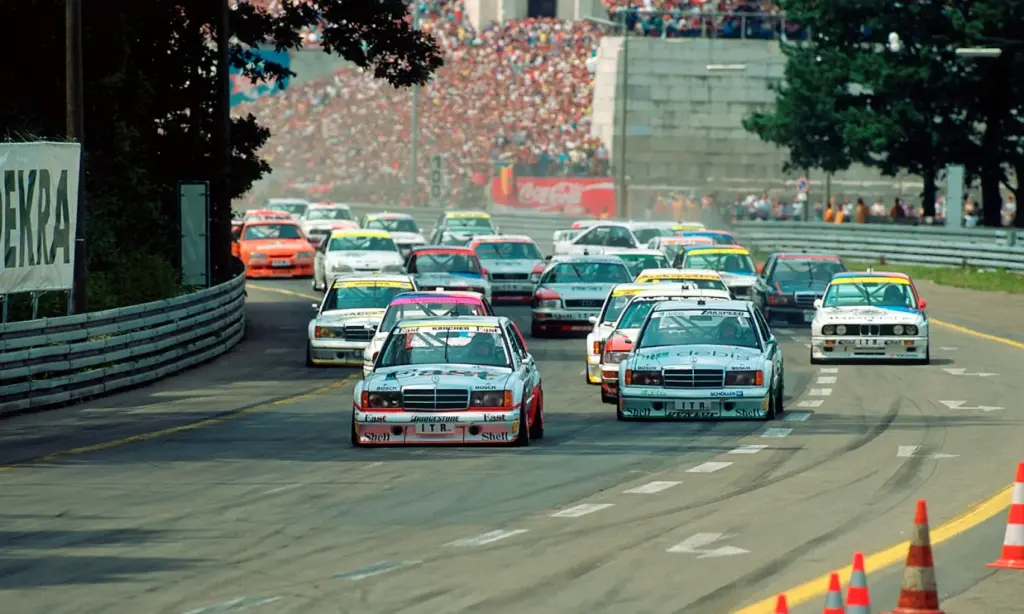
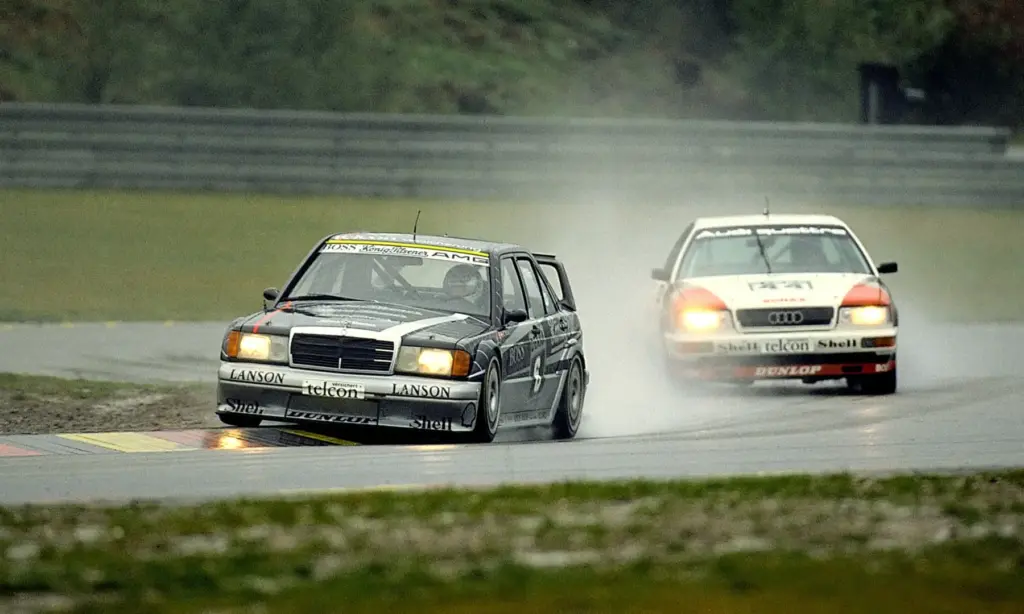
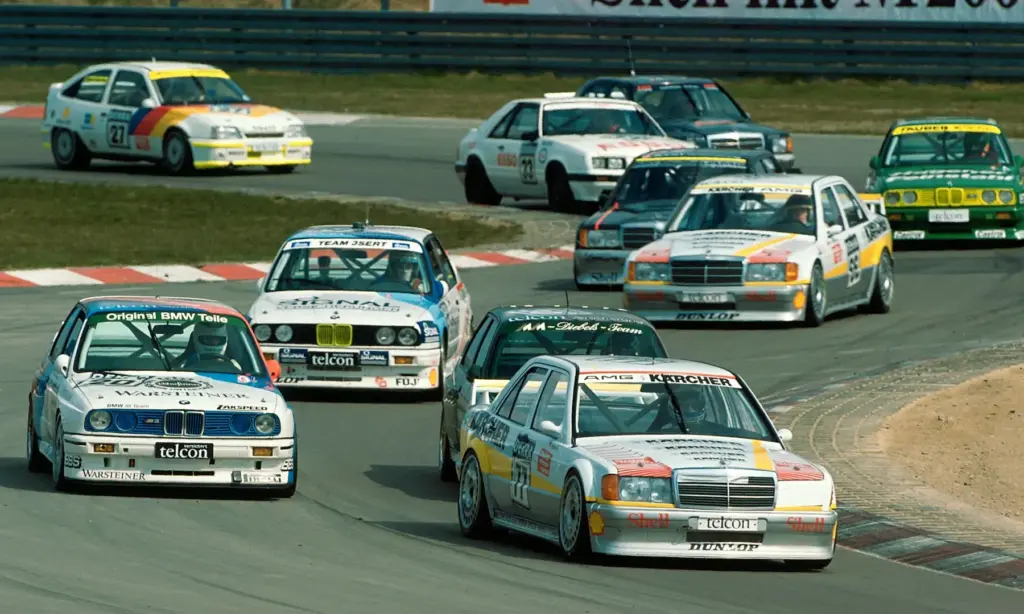
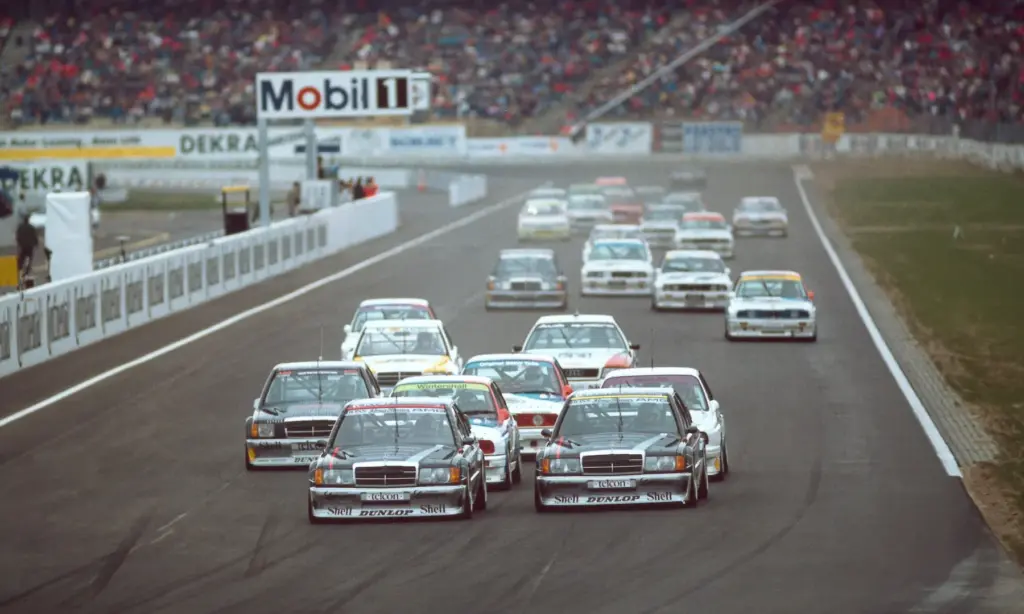
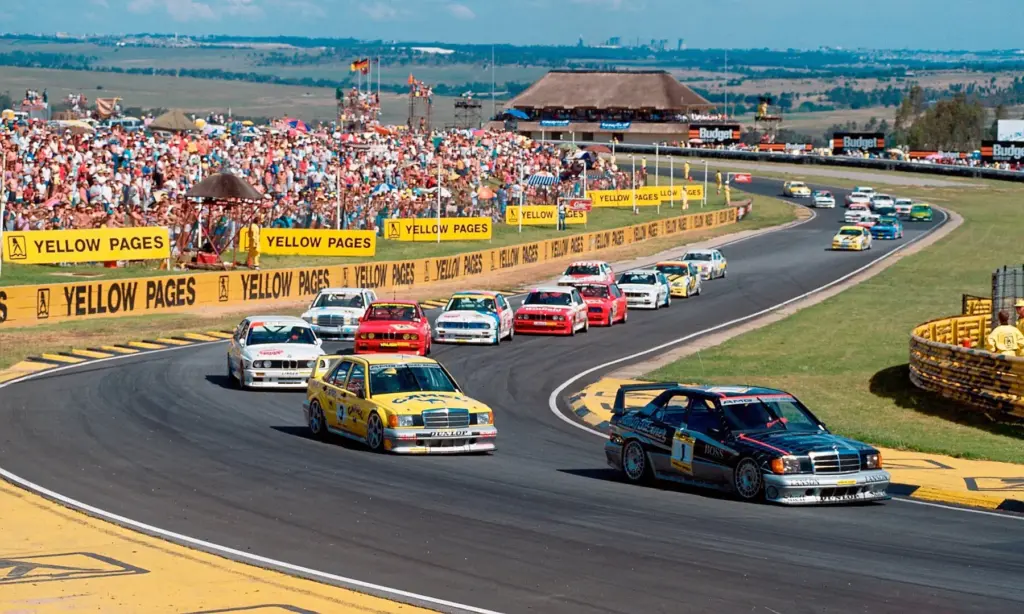

1990s DTM, or German Touring Cars for the uninitiated, provided some of the maddest saloon car racing that the world had ever seen. Major OEMs duked it on track weekend after weekend or supremacy. More than the drivers, the cars were the real stars.
These machines made a Sunday afternoon feel like a factory war. Their shapes still carry the noise of the period, from screaming inline fours to savage V8s and that wicked Alfa V6 that sounded like it had been built in anger. Each one hit a sweet spot where rules, engineering, and driver talent lined up just long enough to create a legend. The result was a run of cars that defined what winning in DTM looked and sounded like.
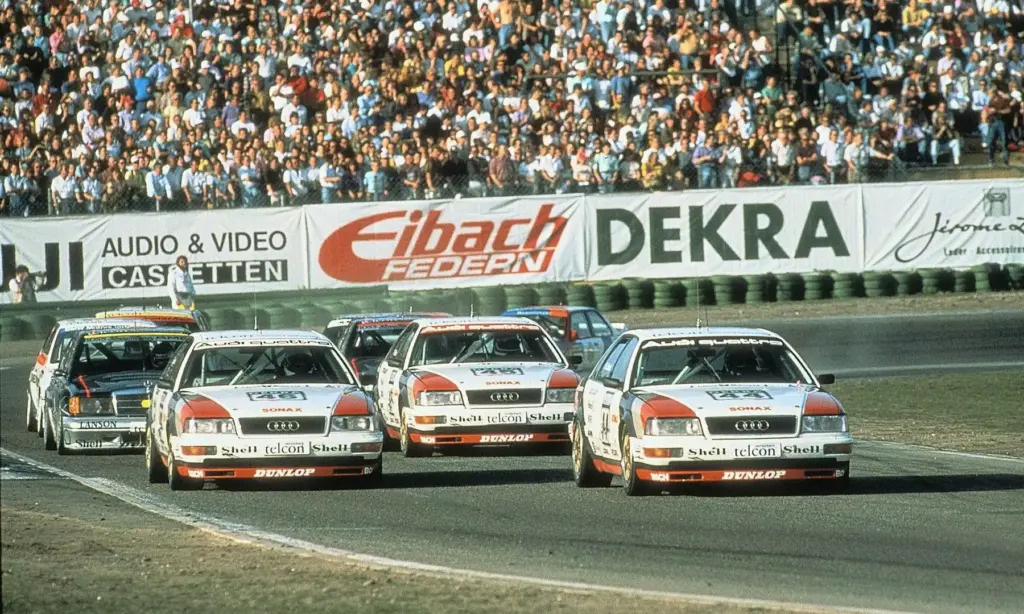
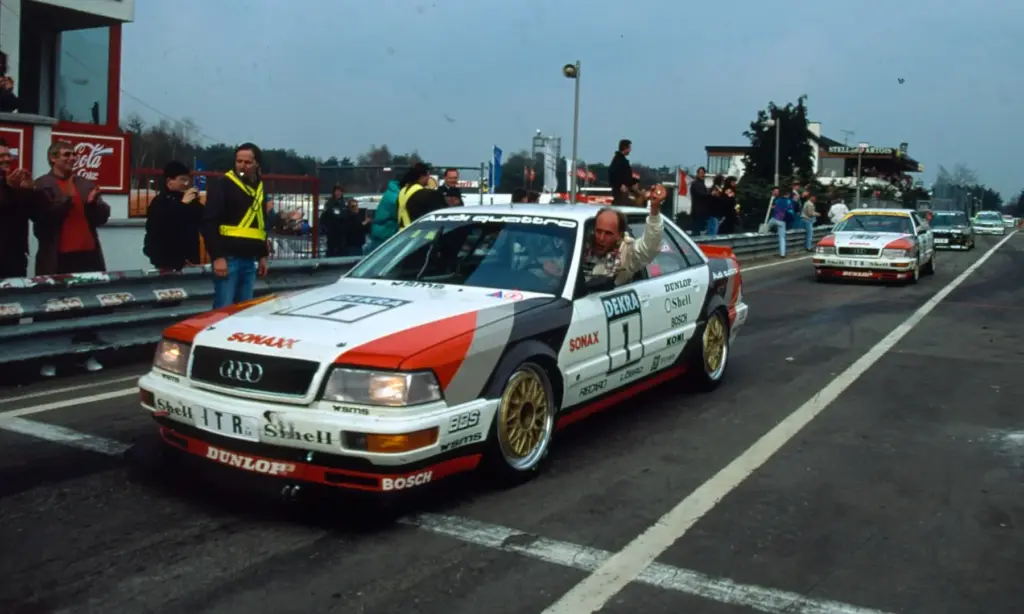
Audi Quattro V8
Audi turned DTM upside down when it arrived with the Quattro V8 in 1990. Until then, the fight had been a mostly rear wheel drive affair. Audi showed up with permanent all wheel drive, a large saloon body, and a naturally aspirated V8 that made the rest of the grid rethink everything they knew about traction. The early 3,6 litre version produced about 340 kW, while the 4,2 litre evolution for 1991 pushed roughly 350 kW. Peak revs sat around 9 000 r/min, a ridiculous number for a touring car V8 of that era.
Hans-Joachim Stuck won the 1990 title, then Frank Biela followed with the 1991 crown. Walter Röhrl also drove the car, adding one more layer of authority to a legendary machine. Audi’s advantage was obvious on corner exit and in poor conditions, where the Quattro system hauled the big car out of bends with a violence the rear drive rivals could not match.
Politics ultimately ended Audi’s involvement. The 1991 crankshaft controversy became part of the car’s legend. Audi engineers dropping in a, decidedly non-production-based, flat-plane crank, and trying to argue their way out on a technicality. The Four Rings team’s cars were disqualified from a race which prompted the automaker to depart and boycott the series for 12 years.
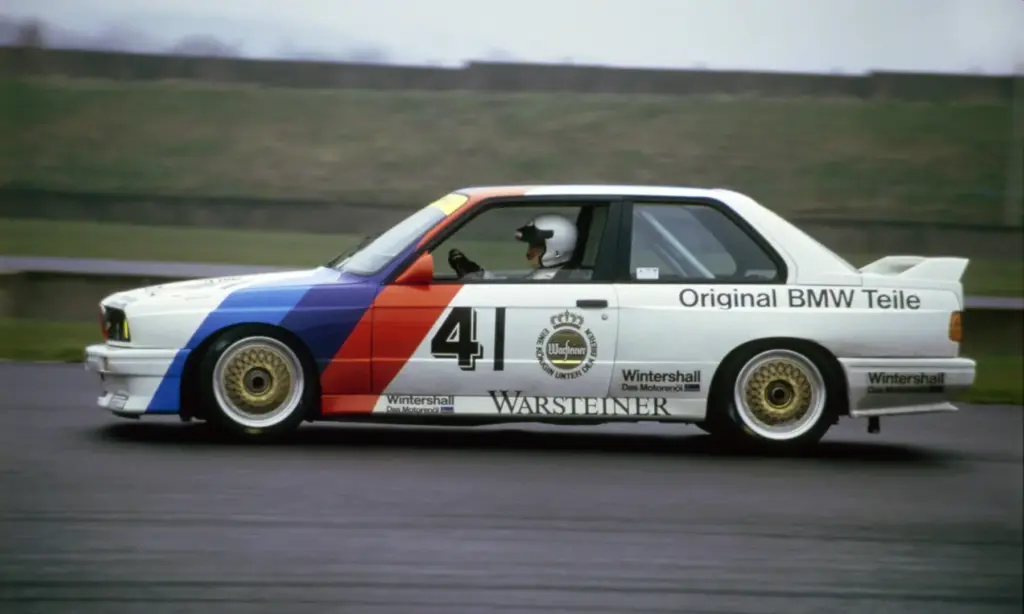
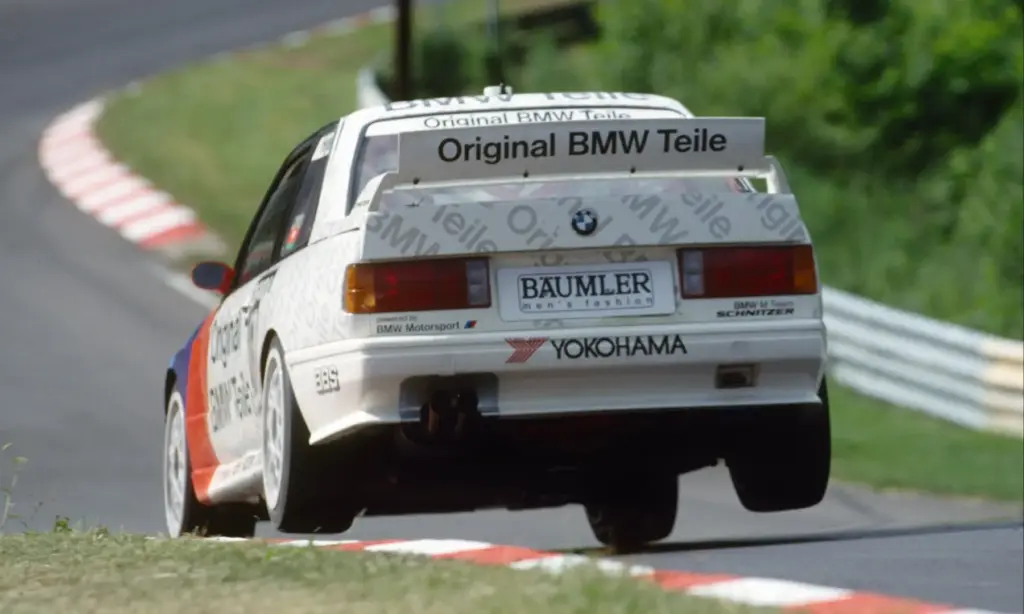
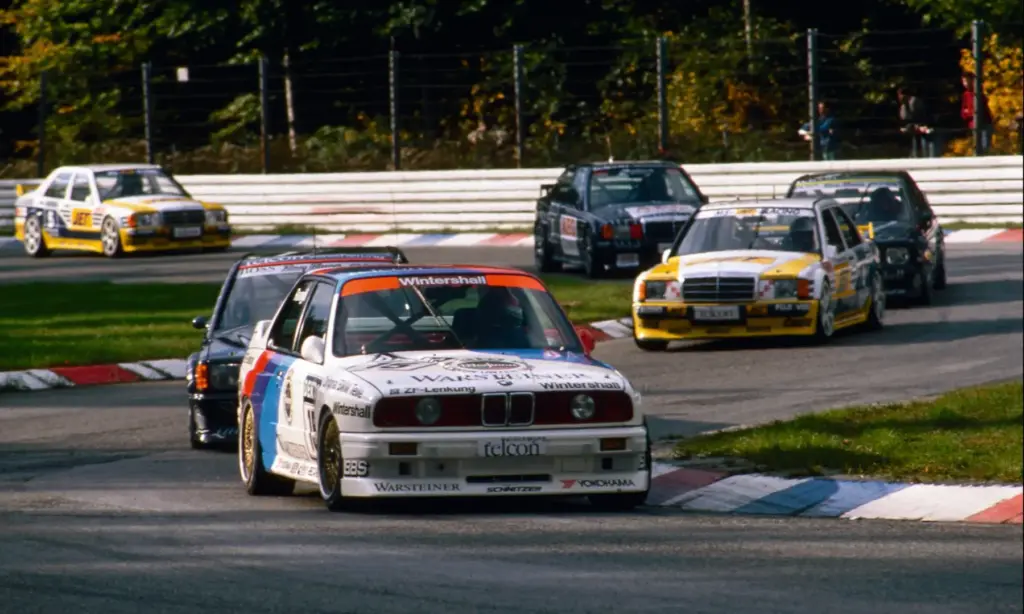
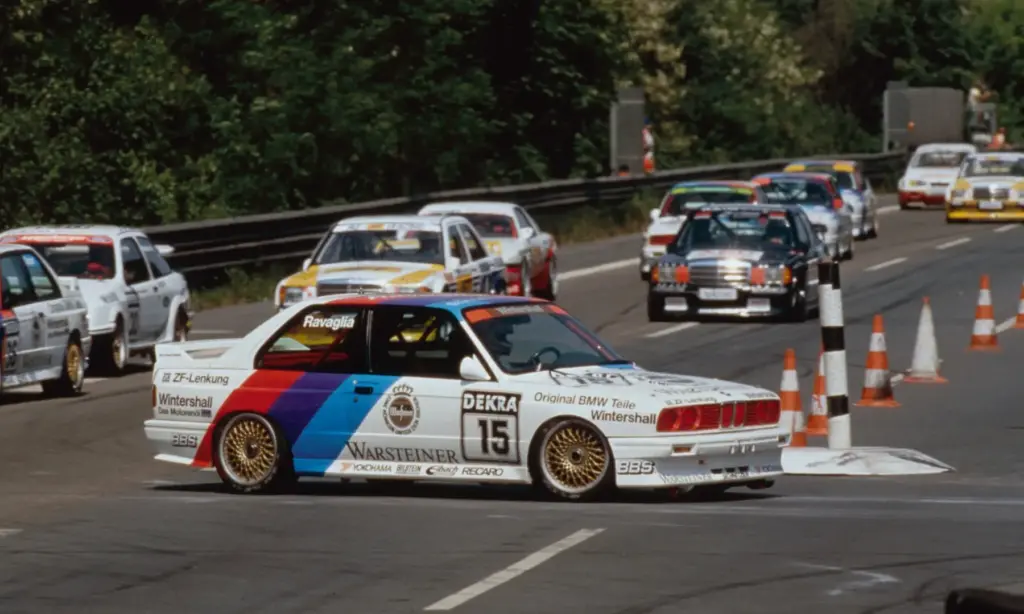
BMW E30 M3
If the Mercedes was a blunt instrument with elegant engineering behind it, the E30 M3 was the opposite: a compact, alert, efficient touring car that seemed to turn every circuit into its own kind of playground. BMW introduced it into DTM in 1987, and it immediately set the tone for the class. The base engine was the S14, a 2,3 litre naturally aspirated inline four, later enlarged for the serious DTM and Sport Evolution cars to 2,5 litres. Early race versions made around 225 kW, while the later 2,5 litre cars were producing about 255 kW and spinning to roughly 9 400 r/min.
Its best DTM seasons came in 1987 and 1989, with Eric van de Poele and Roberto Ravaglia taking the titles in those years. That alone would make the M3 important, but the bigger story is that it remained a nuisance for everyone else right through to 1992. Johnny Cecotto, Joachim Winkelhock, and Steve Soper all helped keep it at the front. The car’s real weapon was never brute force; it was balance, rigidity, and the ability to work on almost any track layout without complaint.
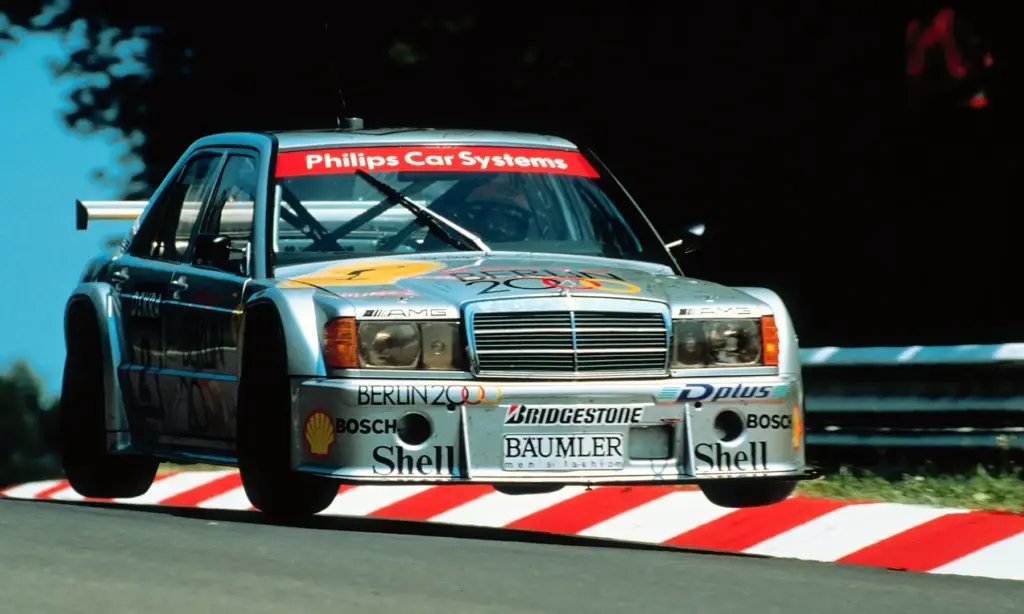
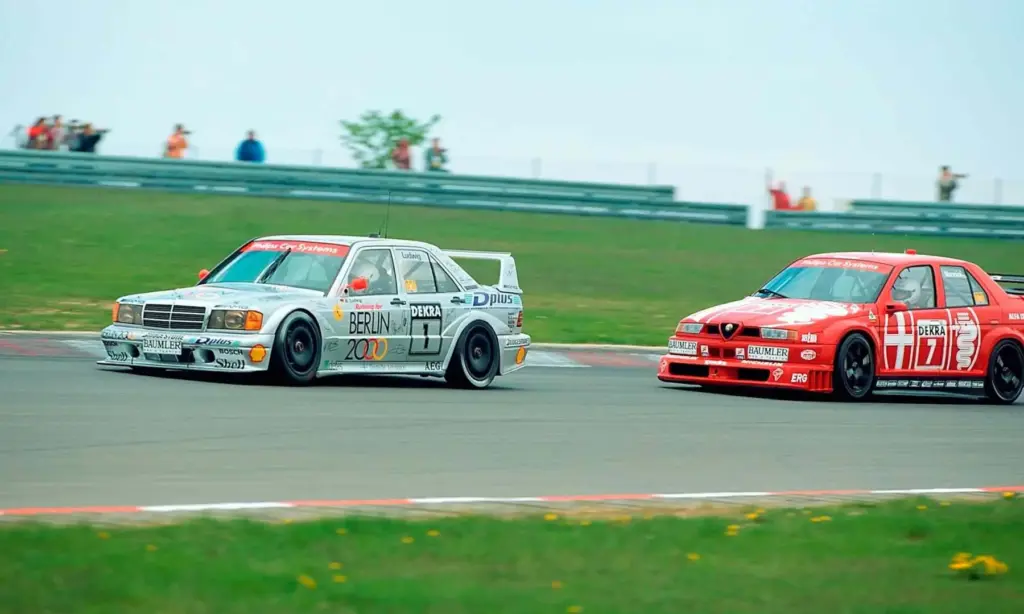
Mercedes-Benz 190E 2.5-16 Evolution II
The Evo II arrived in 1990 looking like it had been designed with a ruler and a wind tunnel. The huge rear wing, deep splitter, and swollen arches were not styling flourishes; they were the aero answer to a championship that had started rewarding downforce and high corner speed almost as much as outright punch.
Under the bonnet sat a 2,5 litre Cosworth built inline four. In race trim it was good for about 275 kW. It was a serious engine, revving beyond 9 000 r/min and happiest when kept in the top third of the tacho.
Mercedes hit its peak with the car in 1992, when Klaus Ludwig took the DTM drivers’ crown and the marque also secured the manufacturers’ title. That year the Evo II stopped being the upstart homologation special and became the benchmark. Ludwig was the headline name, but Bernd Schneider, Roland Asch, and Ellen Lohr all added to the car’s reputation. Lohr became the first woman to win a DTM race in one of Mercedes’ Silver Arrows in touring car clothing. The Evo II was the Mercedes answer to BMW at exactly the right moment.
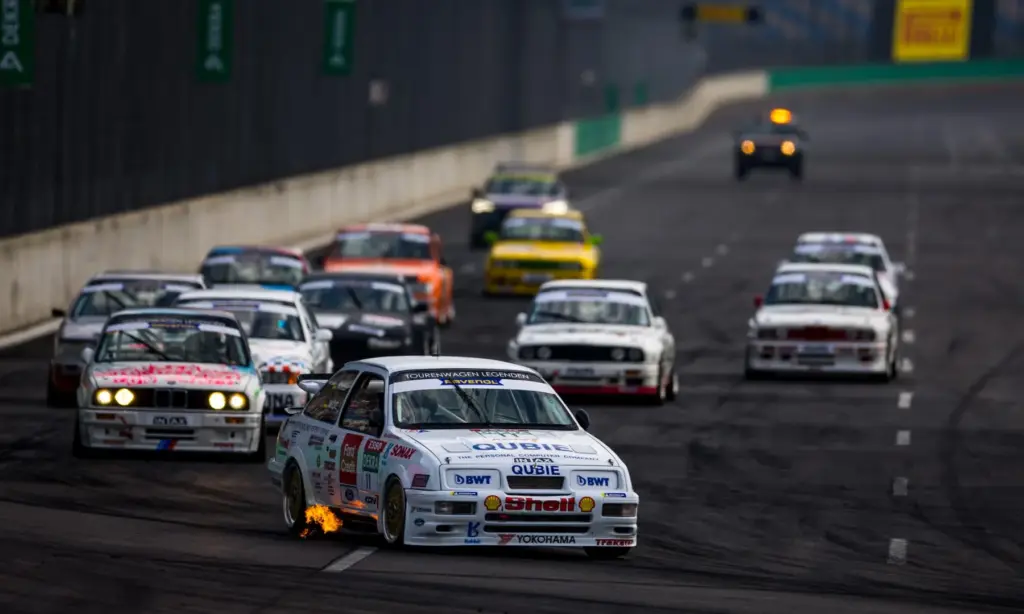
Ford Sierra RS500 Cosworth
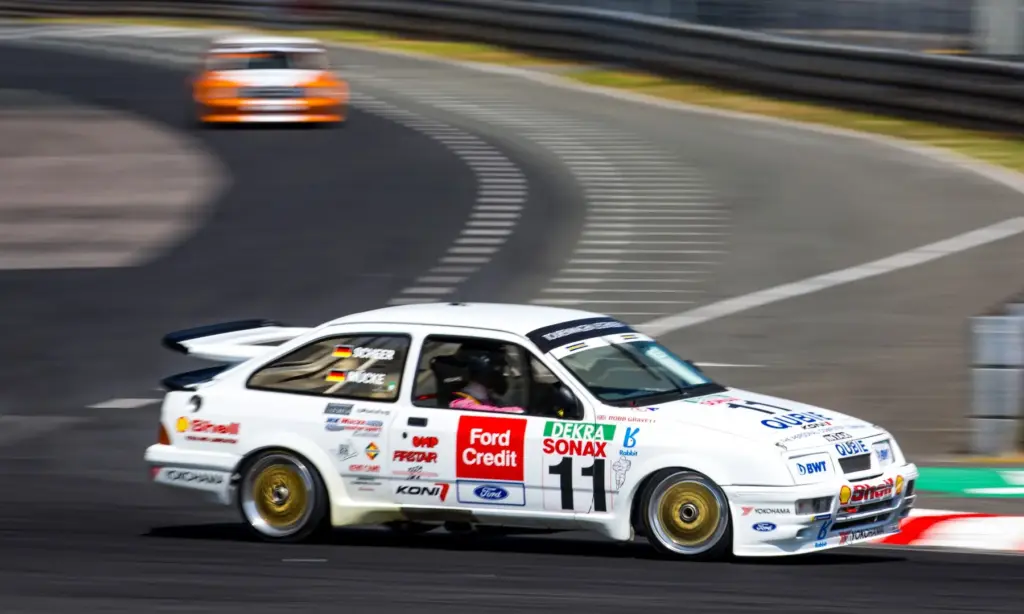
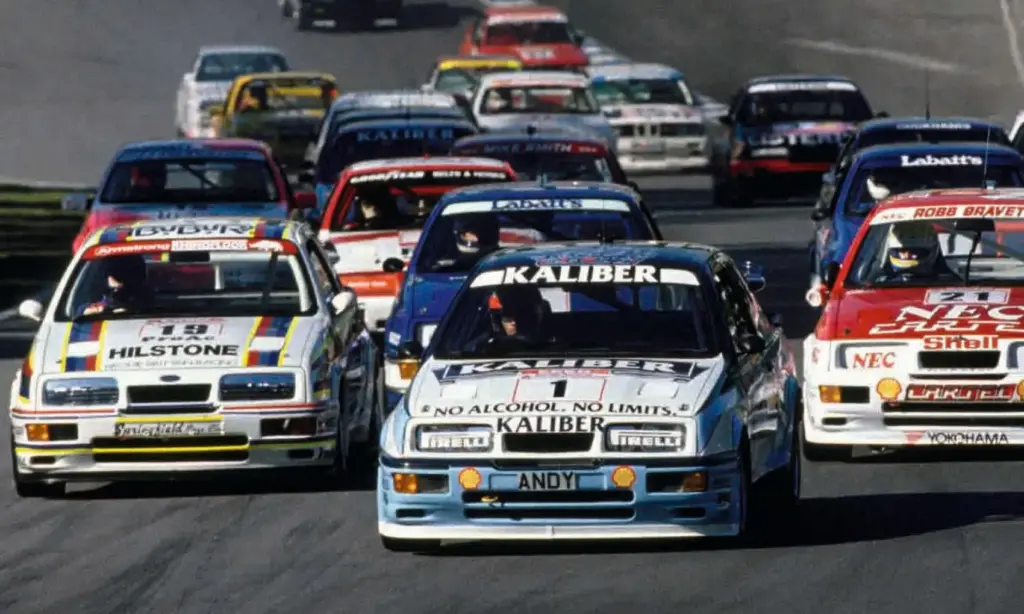
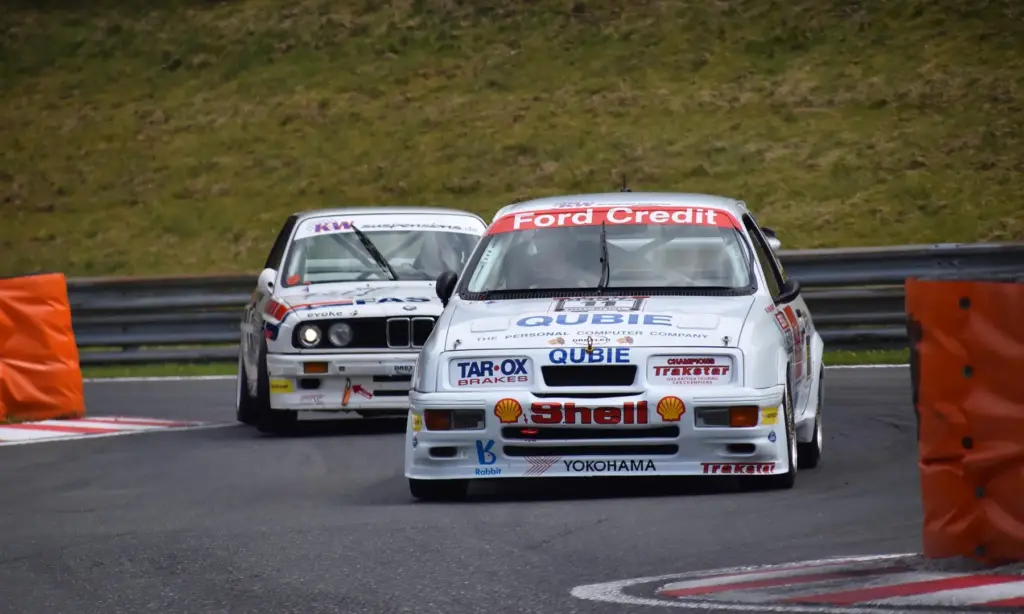
The Sierra RS500 was DTM’s turbocharged troublemaker. It was a Group A special built to go racing first and look mean second, and it did both exceptionally well. The engine was Ford’s 2,0 litre Cosworth YB inline four, force fed and tuned to high heaven. In race trim it made between 370 kW and 380 kW, while qualifying settings could reputedly push beyond 400 kW. Peak revs sat around 8 000 r/min, a crazy number for a turbo engine that relied on boost rather than revs to make power.
Its strongest DTM years were 1988 and 1989, when it remained a regular race winner and front runner even if the championship trophies went elsewhere. Klaus Ludwig, Manuel Reuter, Armin Hahne, Roland Asch, and Frank Biela all steered versions of the car in anger. The whale tail, the boxy shape, and the boosty turbo delivery made it a fan favourite then and created thousands of Blue Oval fans worldwide.
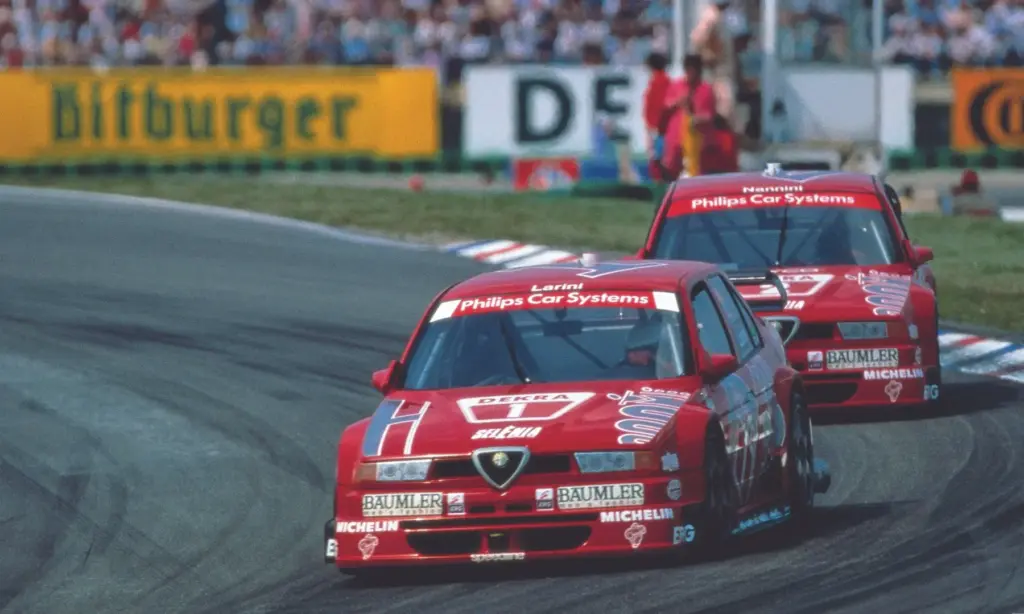
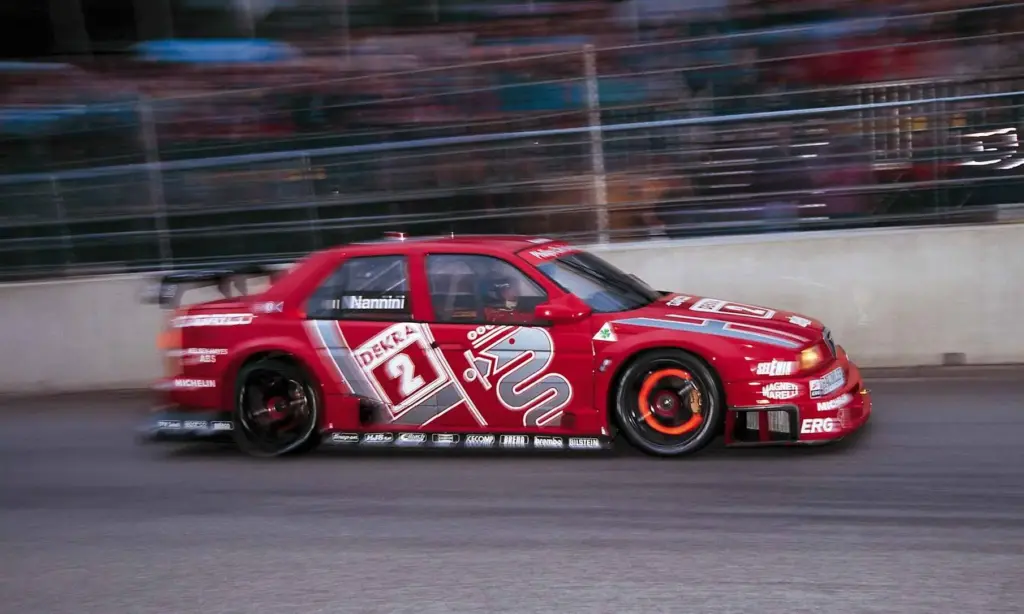
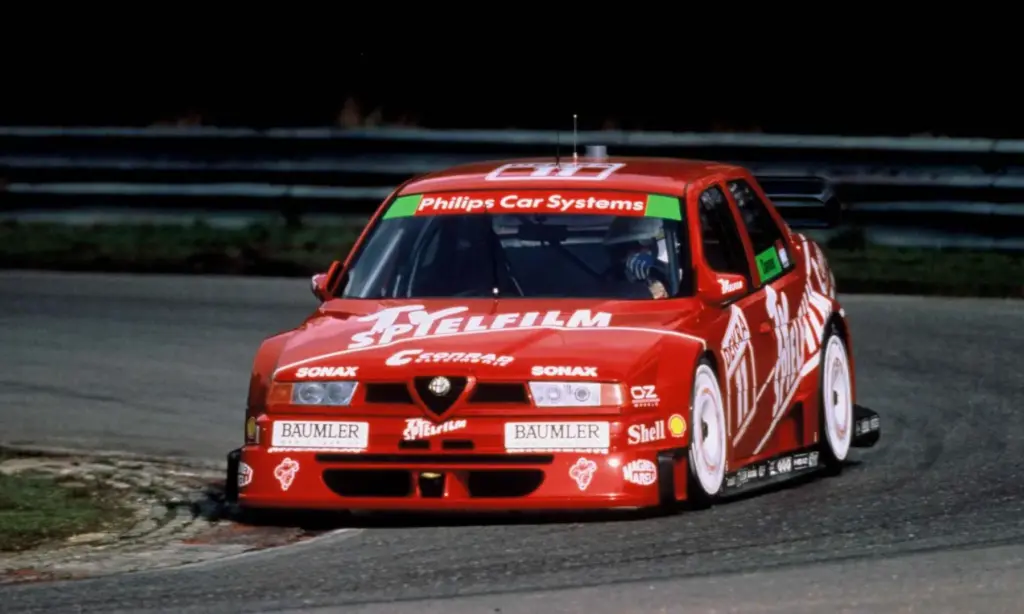
Alfa Romeo 155 V6 TI
The Alfa 155 V6 TI was the car that finally broke German control of DTM. It landed in 1993 and immediately looked like a special rather than a warmed over road car, because that is exactly what it was. Beneath the body sat a 2,5 litre 60-degree V6, a Busso derived unit that revved to 12 000 r/min. Output in its first championship winning year was about 310 kW.
Nicola Larini took the 1993 DTM title, which remains one of the defining results in the series’ history. Alessandro Nannini, Gabriele Tarquini, Giancarlo Fisichella, and Stefano Modena all added their names to the Alfa story. The car’s advanced all wheel drive, pushrod suspension, and carbon fibre bodywork made it one of the most sophisticated touring cars ever raced. It was quick, technical, and a little unhinged in the best possible way.
The era they made
These five cars did not just trade victories; they forced DTM to keep moving. The Mercedes and BMW duel gave the category its early muscle. Audi’s V8 challenged the basic assumptions of drivetrain layout. Ford’s Sierra proved turbo power was formidabe and overcame any handling deficiencies. Alfa Romeo arrived with a machine so advanced it felt like a warning shot.
Each, therefore, had rightfully earned a place on this list of the most iconic DTM cars to ever race, quite possibly some of the most legendary production-based saloon cars to race anywhere in the world.
![2022 Simola Hillclimb Is A Go [w/video]](https://doubleapex.co.za/wp-content/uploads/2022/05/2022-Simola-Hillclimb-5-300x180.webp)
![Martini Kimera 037 Is Every Rally Fans Fantasy [w/video]](https://doubleapex.co.za/wp-content/uploads/2022/03/Martini-Kimera-037-2-300x180.webp)
![2026 FIA WEC: 6 Hours of Fuji Race Report [w/video]](https://doubleapex.co.za/wp-content/uploads/2026/09/DPPIPRODUCTION_00005021_0918-300x200.webp)
![2019 Simola Hillclimb Gallery [Part 2]](https://doubleapex.co.za/wp-content/uploads/AT4I0242-300x180.webp)
![2021 Dakar Stage 1 [w/video]](https://doubleapex.co.za/wp-content/uploads/2021/01/2021-Dakar-Stage-1-300x180.webp)
Have your say
Got thoughts on this?
No feedback yet on Five DTM Icons That Still Dominate Motorsport Lore. Kick the conversation off.
Free. Email link only — no password.