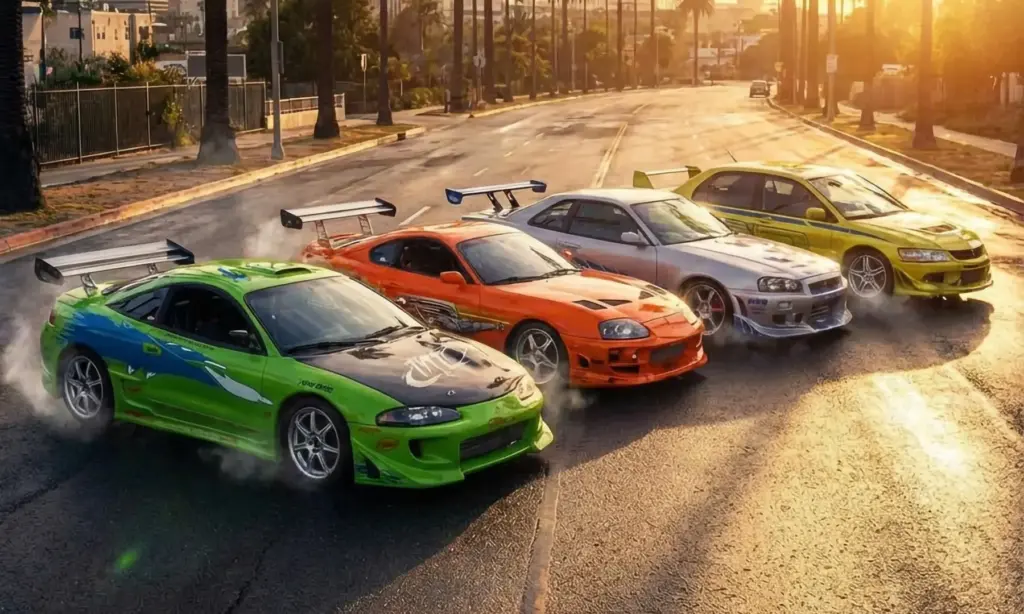
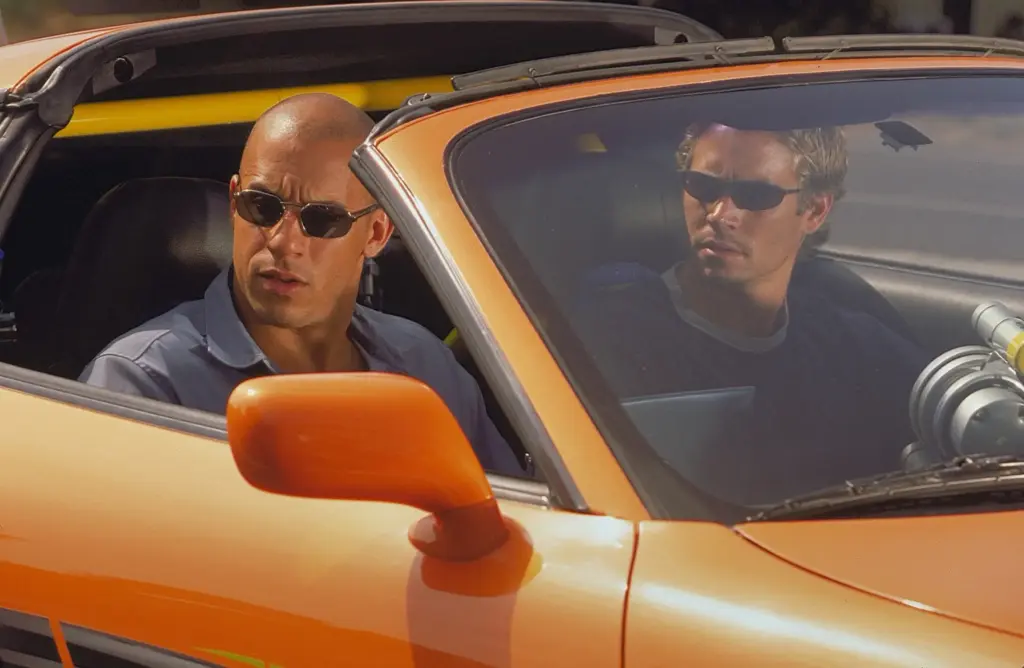

When Brian O’Conner rolls into frame, the car usually arrives before the man does. The paint, the wheels, the turbo noise and the stance all tell you exactly what sort of street scene you are in. For a generation of South African petrolheads, those machines became shorthand for a new kind of performance culture; JDM machines.
In Msanzi, that appeal landed hard. The local scene already knew what a quick car looked like, from hot Golfs to V8 bruisers and rally weapons, but Brian’s film cars pushed the conversation toward the Supra, the Skyline, the Evo and the STI. Those names still come up at meets, in workshop chats and in online classifieds, usually followed by the same questions about originality, imports, parts and what it would cost to build one properly in rand.
Click here to check out other JDM legends that helped create a generation of fans.
The green Eclipse that started the obsession
Brian’s first car in The Fast and the Furious was the second generation Mitsubishi Eclipse, painted green and fitted with enough visual drama to make it memorable even before the race starts. It was the opener, the car that introduced his character to the street scene, and it set the template for everything that followed. The front drive platform did not have the myth status of the later cars, but it carried the tuner message well, with turbocharged intent and a modified look that fit the early 2000s perfectly. Not to forget the famous ‘manifold meme’.
South African enthusiasts understood the appeal immediately. Before the franchise fully became a cultural touchstone, plenty of local builders were already mixing body kits, boost and audio installs. The Eclipse gave that world a Hollywood face. It was the car of the young buyer who wanted a project, not a showroom toy, and that is exactly why it connected.
Mitsubishi Eclipse
Engine: 2,0-litre turbocharged four cylinder
Power: Around 150 kW in period trim, depending on market and spec
Transmission: Manual
Top speed: Varies by build, but the film version was presented as a serious street racer
The Supra that became the legend
The orange 1994 Toyota Supra Mk IV did far more than headline one movie. It became the car most people picture when they hear Brian O’Conner’s name. The film leaned into the now famous “10-second car” line, and the visual of a battered but brutally quick Supra winning a race against a Ferrari gave the car a second life beyond the tuner crowd. Under the skin sat the 2JZ GTE, an engine that has done more to shape modern performance folklore than most entire model ranges.
That engine is a favourite in South African car culture. We respect durability, we respect tunability, and we respect a platform that can take abuse without asking for sympathy. It can be found locally in everything from Hiluxes and Corollas to BMW 3 Series. The Supra also arrived in a period when local interest in big turbo conversions, standalone management and aggressive street builds was rising sharply. Shops that supplied HKS, GReddy and Apexi hardware found a broader audience, while Veilside style body kits and Volk Racing TE37 wheels became visual shorthand for someone who had done their homework.
For collectors, the Mk IV is now deep into cult territory. Clean, original cars are scarce, and asking prices have climbed to levels that place them firmly in modern classic territory. In South Africa, an unmolested Supra is not just a car. It is a statement about taste, timing and patience.
Toyota Supra Mk IV
Engine: 3.0-litre twin-turbo inline six 2JZ GTE
Power: 176 kW in standard Japanese trim, with enormous tuning headroom
Transmission: Six speed manual
Top speed: About 250 km/h in factory form, far more with modest modification
The Skyline that turned into forbidden fruit
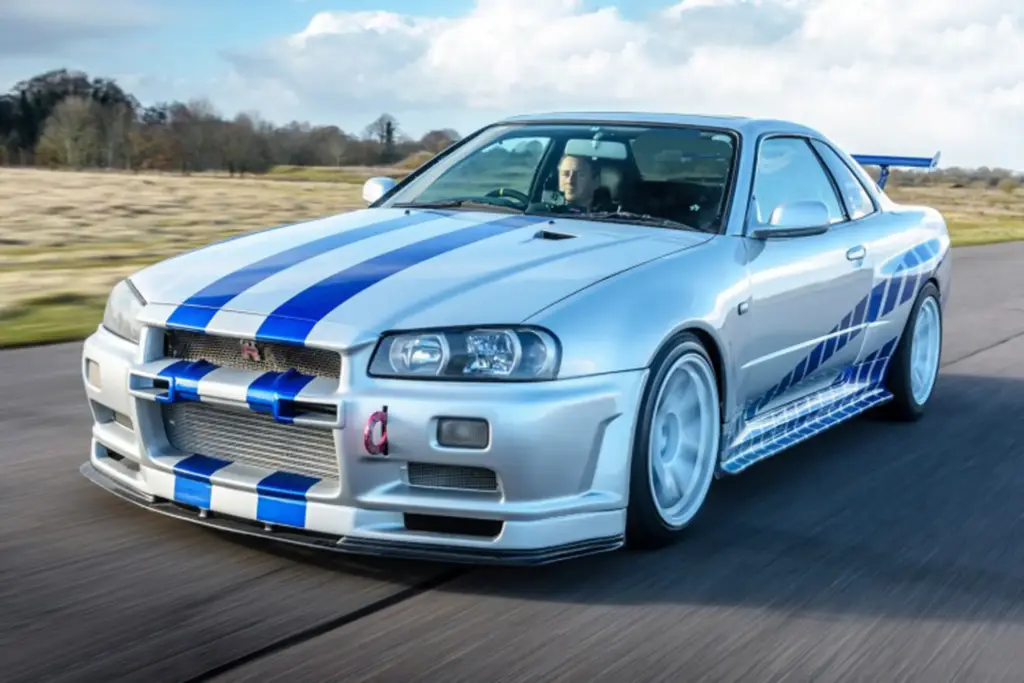
If the Supra was the hero car, the Nissan Skyline GT R R34 was the machine that made enthusiasts go quiet for a moment. In 2 Fast 2 Furious, Brian gets a blue R34 that looks like it was assembled by people who understood both grip and intimidation. The RB26DETT engine, the all wheel drive system and the car’s reputation in global motorsport made it one of the most desirable performance cars of its era.
In South Africa, the R34 carries a special kind of weight because scarcity always sharpens desire. Import restrictions and limited local supply mean pristine examples are exceptionally rare, and that scarcity pushes the car further into dream territory. For many local fans, it is the ultimate poster car, one that sits at the top of the wish list alongside Ferraris and classic BMW M models, but with a tuner edge that feels more personal.

The R34 also influenced the way people approached grip. It gave credibility to all wheel drive performance in a scene that had often celebrated rear wheel drive drama. On Kyalami track days and at drag strips, the message was clear, traction has its own theatre.
Nissan Skyline GT-R R34
Engine: 2.6 litre twin turbo inline six RB26DETT
Power: 206 kW in stock form, with huge modification potential
Transmission: Six speed manual
Top speed: 180 km/h limited in standard form
The Evo and STI that brought rally grit into the mix
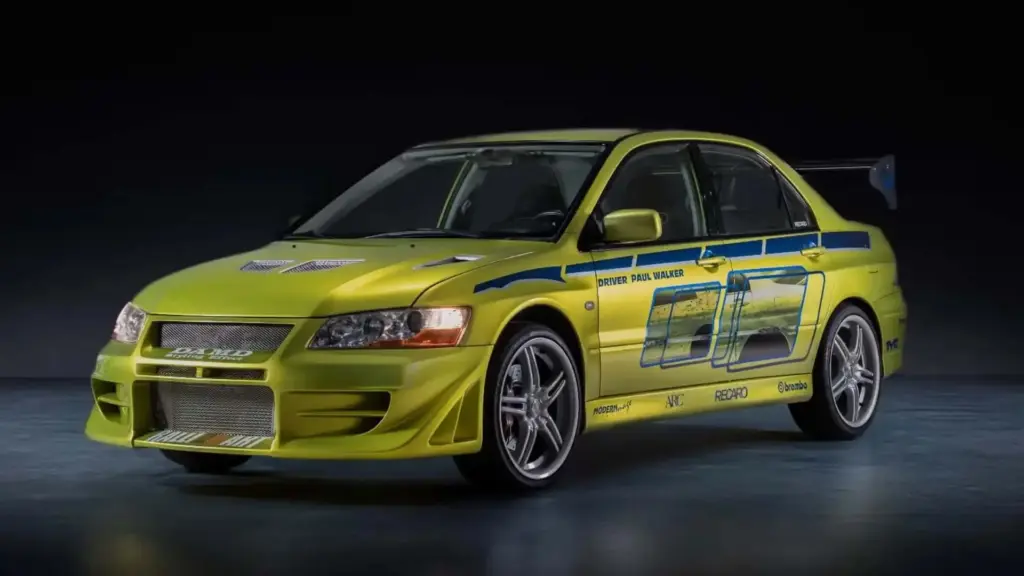
Brian’s 2002 Mitsubishi Lancer Evolution VII and later the 2009 Subaru Impreza WRX STI hatchback broadened the story. The Evo VII was the more focused tool, a silver sedan built around a turbocharged 4G63 and the sort of all wheel drive grip that made perfect sense for a fast road car. It was practical, compact and deadly effective. The STI, meanwhile, brought Subaru’s boxer soundtrack and hatchback practicality into the spotlight, while keeping the rally connection front and centre.
These cars resonated strongly in South Africa because they matched local priorities. We have always appreciated a car that works on bad roads, fast roads and race days. The Evo line became prized for its rally pedigree and tuning strength, while the STI grew into a favourite among drivers who wanted pace without losing everyday usability. Both cars helped shift attention away from style alone and toward genuine performance hardware.
Mitsubishi Lancer Evolution VII
Engine: 2.0 litre turbocharged inline four 4G63
Power: About 206 kW
Transmission: Five-speed manual
Top speed: Around 240 km/h
Subaru Impreza WRX STI hatchback
Engine: 2.5 litre turbocharged boxer four
Power: About 221 kW
Transmission: Six-speed manual
Top speed: Around 255 km/h
Brian’s garage in South Africa
The lasting effect of Brian O’Conner’s cars is visible everywhere in the South African scene. They helped popularise JDM culture beyond a small circle of specialists, gave younger builders a new set of heroes and made turbocharged Japanese machinery feel aspirational rather than niche. At local meets, you still see the influence in the stance of a Supra build, the wheel choice on an Evo, the restraint of a Skyline owner who refuses to overdo the bodywork, and the old school pride of a tuner who knows his ECU map better than his own phone number.
Collectors chase these cars now because they are scarce, emotionally loaded and mechanically serious. Enthusiasts chase them because they still offer a real driving experience, not just a badge. In South Africa, that mix has been enough to turn Brian’s film garage into something larger than cinema. It became part of the country’s own car story, one that still plays out in workshops, on mountain passes and at every proper petrolhead gathering.
![2023 International Concours Of Elegance [Gallery]](https://doubleapex.co.za/wp-content/uploads/2023/02/2023-International-Concours-Of-Elegance-300x180.webp)


Have your say
Got thoughts on this?
No feedback yet on Brian O’Conner’s F&F Cars — SA’s Cult Classics and Their…. Kick the conversation off.
Free. Email link only — no password.