The term JDM (Japanese Domestic Market) evokes images of flame-spitting turbochargers, high-revving powerplants, drifting and a tuner-centric car culture that exploded in the 1980s and 1990s. During this era, a handful of Japanese performance cars achieved legendary status worldwide, inspiring countless enthusiasts. Below we highlight six JDM Legends – each a cult hero in its own right – that helped shape an entire generation of fans.
Follow Double Apex on Instagram and Facebook where we share more car content
Toyota AE86 (1983)
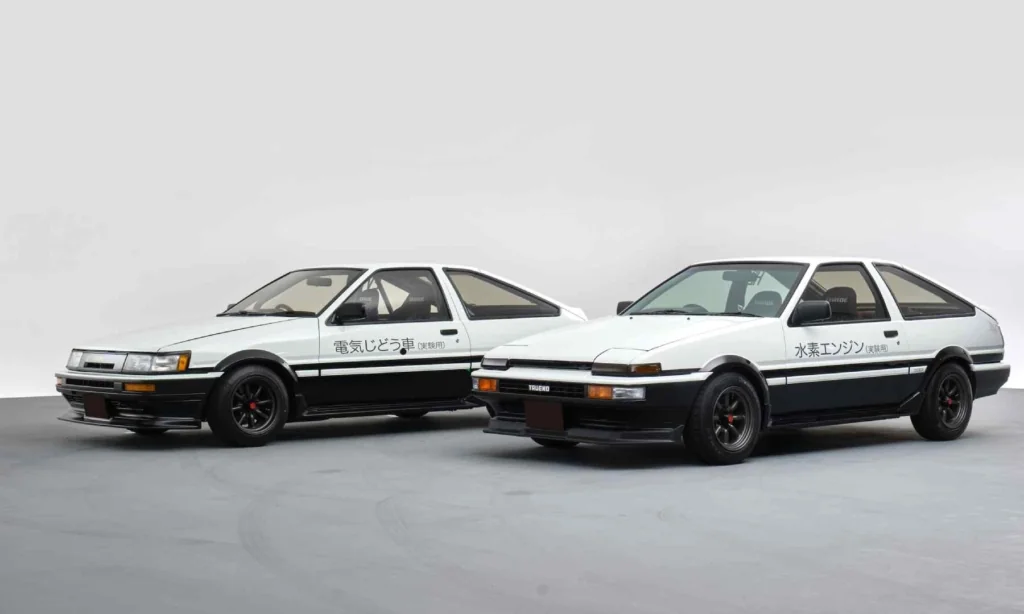
The humble Toyota AE86 Corolla Levin/Sprinter Trueno became a cult icon among enthusiasts, inextricably interwoven with the earliest days of drifting, as Road & Track noted. This lightweight, rear-wheel-drive two-door coupe (affectionately nicknamed ‘Hachi-Roku’* or ’86’ in Japanes) packed a high-revving 1,6 L twin-cam engine and an ideal 50/50 weight balance.
Though modest on paper, the AE86’s balance and tweakability made it a giant-killer in the corners. It achieved worldwide fame through the 1990s anime/manga Initial D, in which protagonist Takumi’s black-and-white AE86 drifted past more powerful cars and captured the hearts of JDM fans the world over. Today, the AE86 is regarded as a drift racing legend and a symbol of accessible performance.
- Engine: 1,6-litre, inline four
- Power: 96 kW
- Torque: 149 N⋅m
- Transmission: five-speed manual, RWD
- Fuel consumption: ~8,0 L/100 km
Nissan Skyline GT-R (R32)
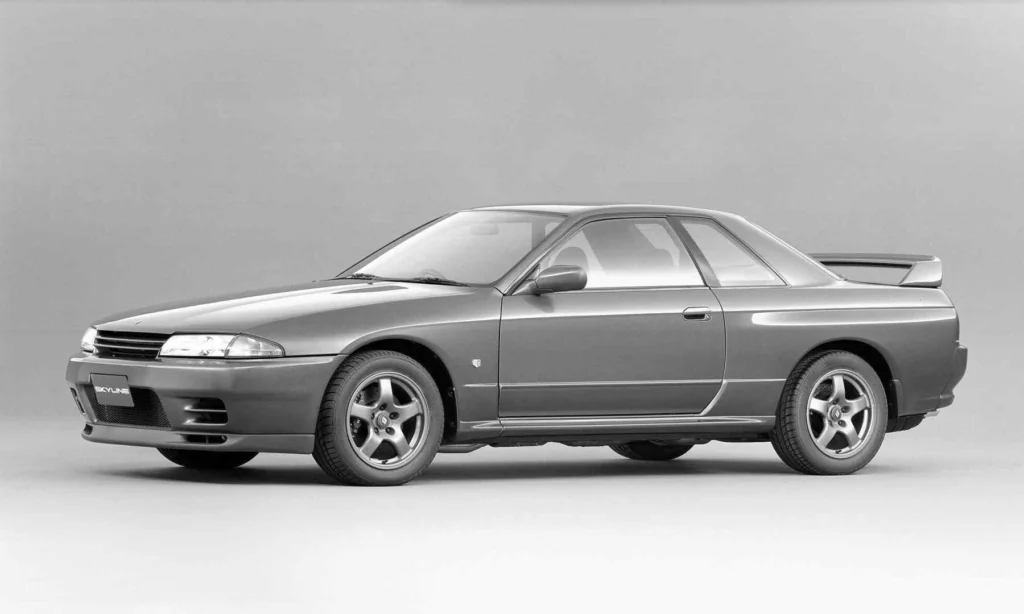
No list of JDM legends is complete without the Skyline GT-R. The famous letters go back decades but it was the R32 generation that earned the nickname ‘Godzilla’. Launched in 1989, the twin-turbo, all-wheel-drive R32 GT-R dominated touring car racing and was so ferocious that Australian media coined its monster moniker.
With its advanced ATTESA AWD system and 2,6 L RB26DETT straight-six (officially capped at 206 kW per government regulations), the GT-R could sprint 0–100 km/h in under five seconds. Equally influential was its presence in video games and movies – the R32/R33/R34 GT-Rs became cult favorites through titles such as Gran Turismo and the Fast & Furious franchise. Rare in its day and not sold new outside Japan, when new, the Skyline GT-R nevertheless inspired a global generation of JDM enthusiasts.
- Engine: 2,6-litre, inline six twin-turbocharged
- Power: 206 kW
- Torque: 361 N⋅m
- Transmission: five-speed manual, AWD
- Fuel consumption: ~10,0 L/100 km
Honda NSX (NA1)
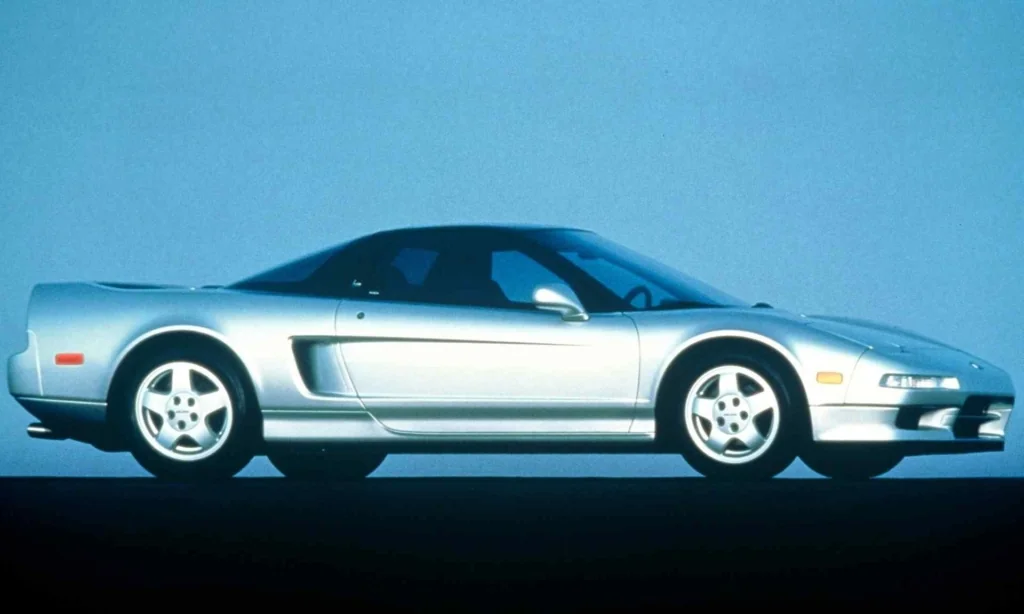
Honda stunned the world in 1990 with the NSX – Japan’s first true supercar. It was the first mass-produced car with an all-aluminum body, and was powered by a mid-mounted 3,0 L V6 with VTEC trickery. The final product had sign-off from none other than triple F1 champ Ayrton Senna.
Click here to read our driving impression of an original NSX.
The NSX offered Ferrari-like performance with, uncharacteristic for the time, reliabili and superb handling, making exotic performance accessible and usable. This ‘Japanese Ferrari’ proved that JDM engineering could rival the best of Europe, earning it a devoted following. Only around 18 000 units were sold globally, but its influence on car culture far outstripped those numbers.
- Engine: 3,0-litre V6
- Power: 201 kW
- Torque: 284 N⋅m
- Transmission: five-speed manual, RWD
- Fuel consumption: ~10,0 L/100 km
Mazda RX-7 (FD3S)
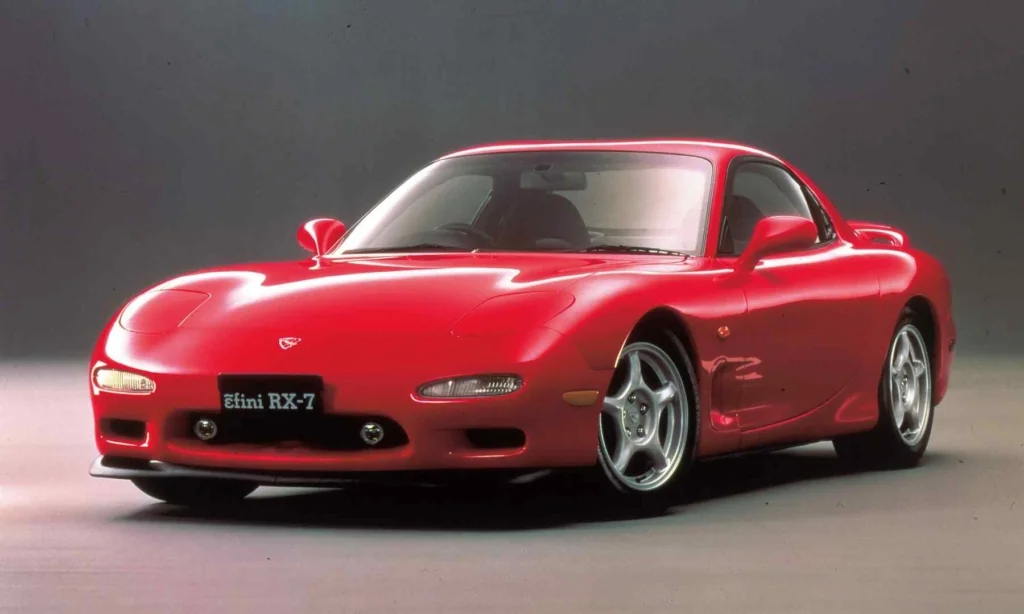
Mazda’s RX-7 (3rd-gen, or FD) is a rotary-engined rebel that exemplified JDM innovation. Its compact 1,3-litre twin-rotor 13B-REW engine, armed with sequential twin turbos, produced about 190 kW and a distinctive high-pitched wail. The RX-7’s low-slung, curvy body with pop-up headlights remains timeless, and its rather light 1 250 kg karb mass made it a razor-sharp handler.
Click here to read about all the things we learned while watching movies this festive season.
In the manga/anime Initial D, Ryosuke’s white RX-7 and Keisuke’s yellow FD introduced the rotary to a new wave of fans. The car also starred in the Fast & Furious films, further cementing its status. Unique, fast, and unforgiving if not maintained, the RX-7 became an object of fascination – highly sought-after today (pristine FDs now fetch over $100k) – and remains the poster car for Mazda’s rotary legacy.
- Engine: 1,3-litre twin-rotor
- Power: 190 kW
- Torque: 294 N⋅m
- Transmission: five-speed manual
- Fuel consumption: ~11 L/100 km
Subaru Impreza WRX (GC8)
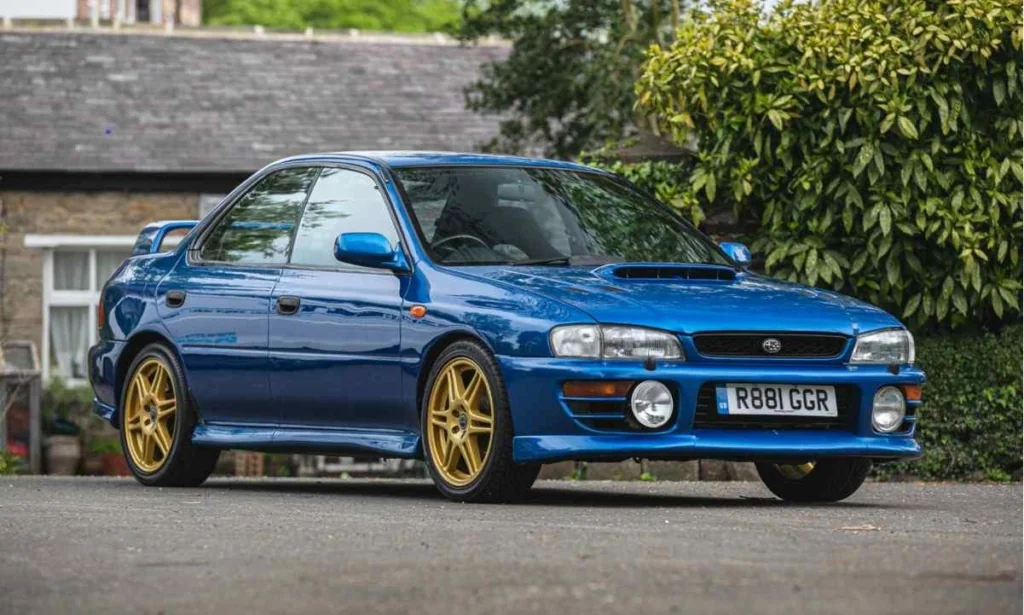
Subaru’s Impreza WRX STi turned the humble Impreza into a turbocharged giant-slayer. Sporting a 2,0-litre turbo boxer engine, AWD grip made good use of the early STi versions 206 kW and 350 N⋅m. On the world rally stage, the blue-and-gold 555 Impreza became an icon – Colin McRae’s 1995 championship put it on the map, and Subaru took three consecutive WRC manufacturers’ titles (1995–1997).
The STi’s exploits – and its trademark boxer rumble – cultivated a global fanbase of ‘Scooby’ lovers. In Japanese pop culture, it even features as an adversary in Initial D’s street battles. The STi proved that an unassuming four-door sedan could punch well above its weight, both on gravel stages and in the hearts of enthusiasts.
- Engine: 2,0-litre boxer, turbocharged
- Power: 206 kW
- Torque: 353 N⋅m
- Transmission: five-speed manual, AWD
- Fuel consumption: ~10,5 L/100 km
Mitsubishi Lancer Evolution (IX)
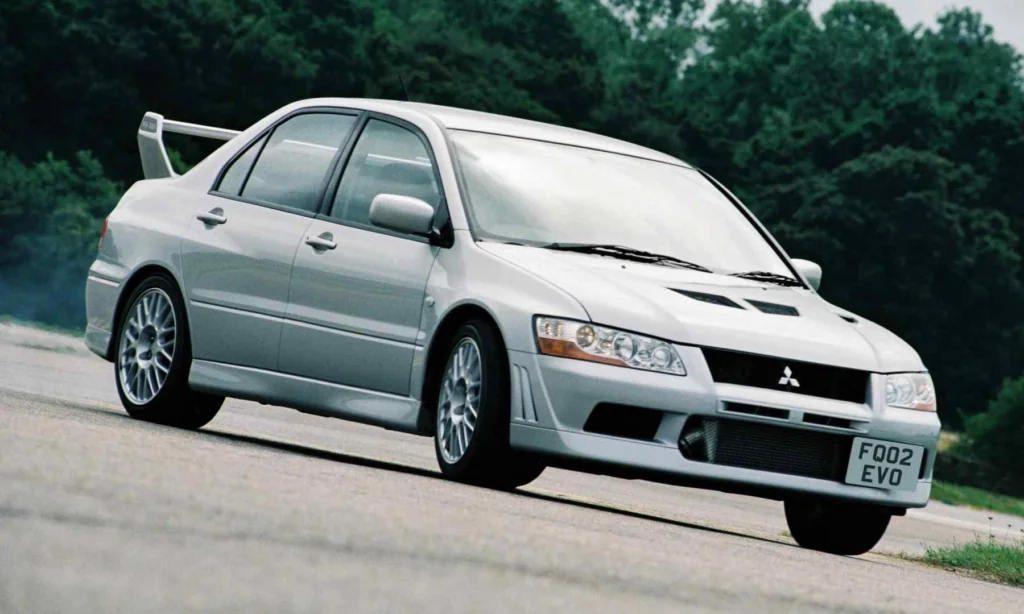
The Mitsubishi Lancer was a vanilla sedan made to compete with the likes of the Corolla. But in Evolution form it brought hard-core performance to the streets and to rally stages the world over. Debuting in 1992, each Evo iteration featured a potent 2,0-litre turbocharged 4G63 engine, rally-tuned AWD in a sedan body. Power grew from about 184 kW in the Evo I up to the 206 kW limit by the Evo VI, with explosive torque (up to ~373 N⋅m) for lightning-fast launches.
The Evo’s reputation was sealed by its WRC dominance – Tommi Mäkinen piloted various Evolutions to four straight driver’s championships (1996–1999), etching the car’s name in rally history. Mitsubishi also gave a nod to that success with the Evo VI Tommi Mäkinen Edition. Beyond rally circles, the Lancer Evo became a pop culture star (e.g. the red Evo IX in Tokyo Drift), and it remains a beloved JDM icon. Its blend of four-door practicality and supercar-beating point-to-point pace won over enthusiasts worldwide.
- Wngine: 2,0-litre, inline-four, turbocharged
- Power: 206 kW
- Torque: 373 N⋅m
- Transmission: five-speed manual, AWD
- Fuel consumption: ~13L/100 km

![2022 Concorso d’Eleganza Villa d’Este [Gallery]](https://doubleapex.co.za/wp-content/uploads/2022/05/2022-Concorso-dEleganza-Villa-dEste-300x180.webp)
![Record Prices Achieved At Classic Car Auction [w/video]](https://doubleapex.co.za/wp-content/uploads/2021/12/Record-Prices-Achieved-At-Classic-Car-Auction-300x180.webp)
![From Malvern to the Midnight Sun in a Morgan Supersport 400 [w/video]](https://doubleapex.co.za/wp-content/uploads/2026/07/Morgan-Supersport-400-Faroe-Islands-300x200.webp)
Have your say
Got thoughts on this?
No feedback yet on Six JDM Legends That Created a Generation of Fans. Kick the conversation off.
Free. Email link only — no password.