
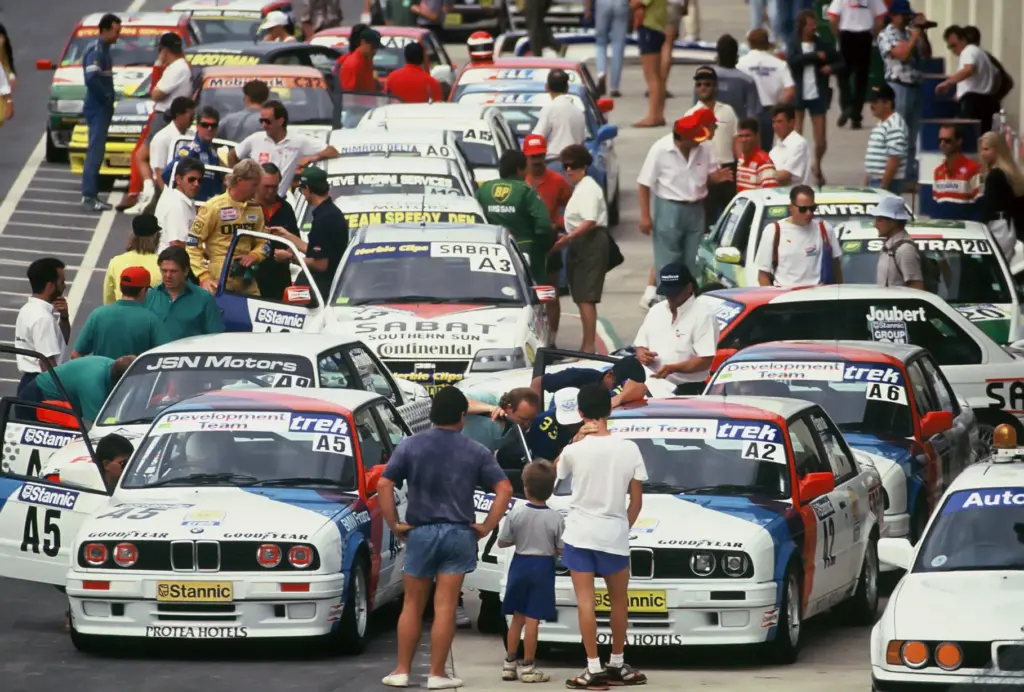
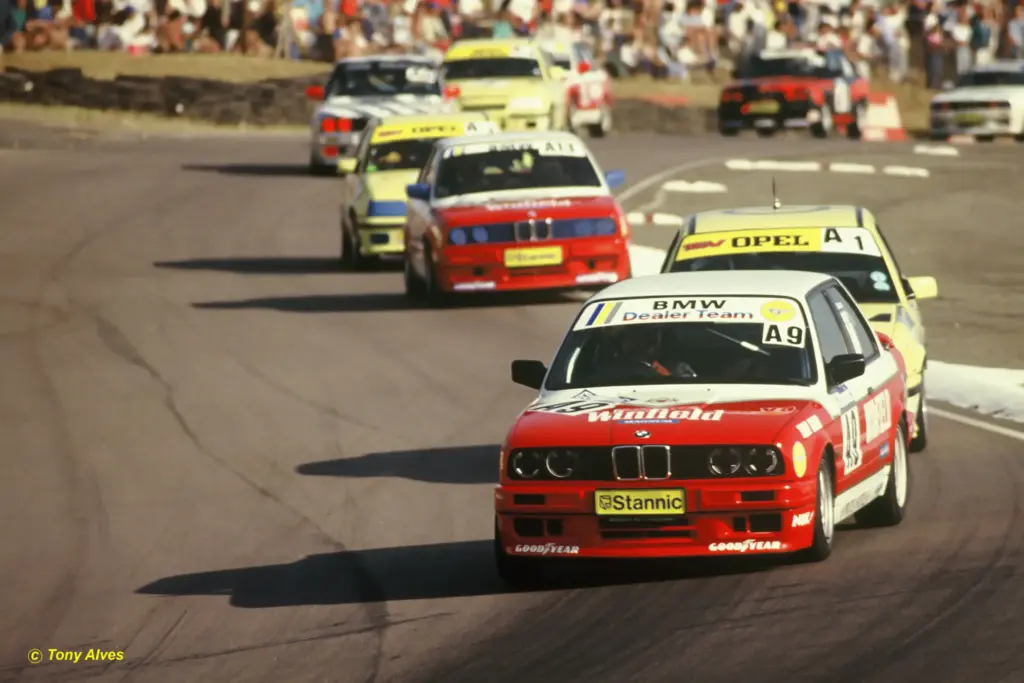
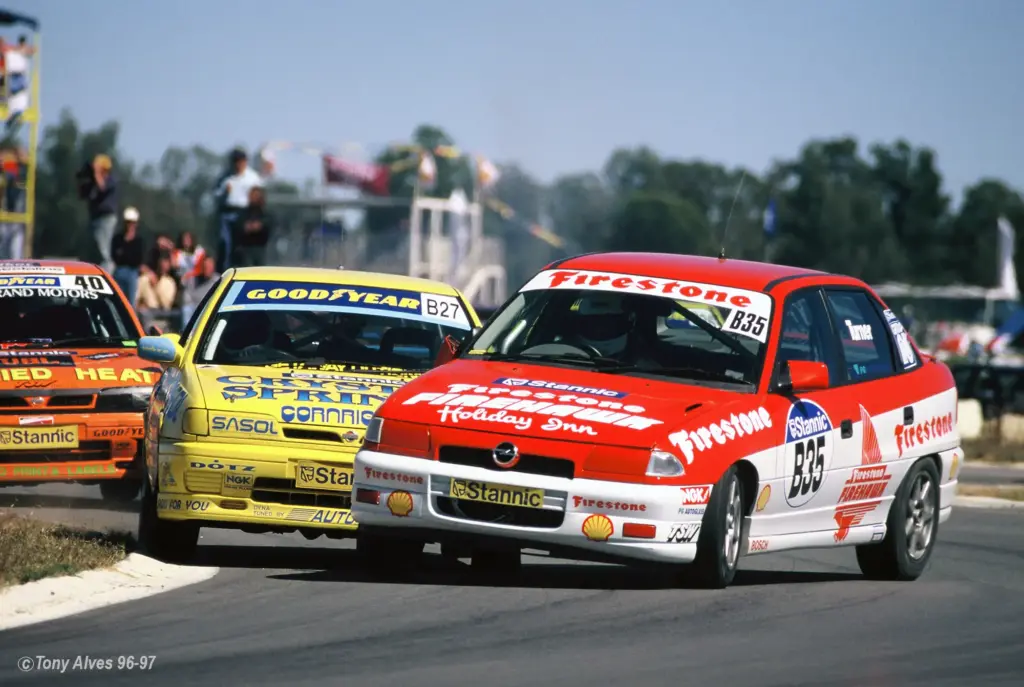
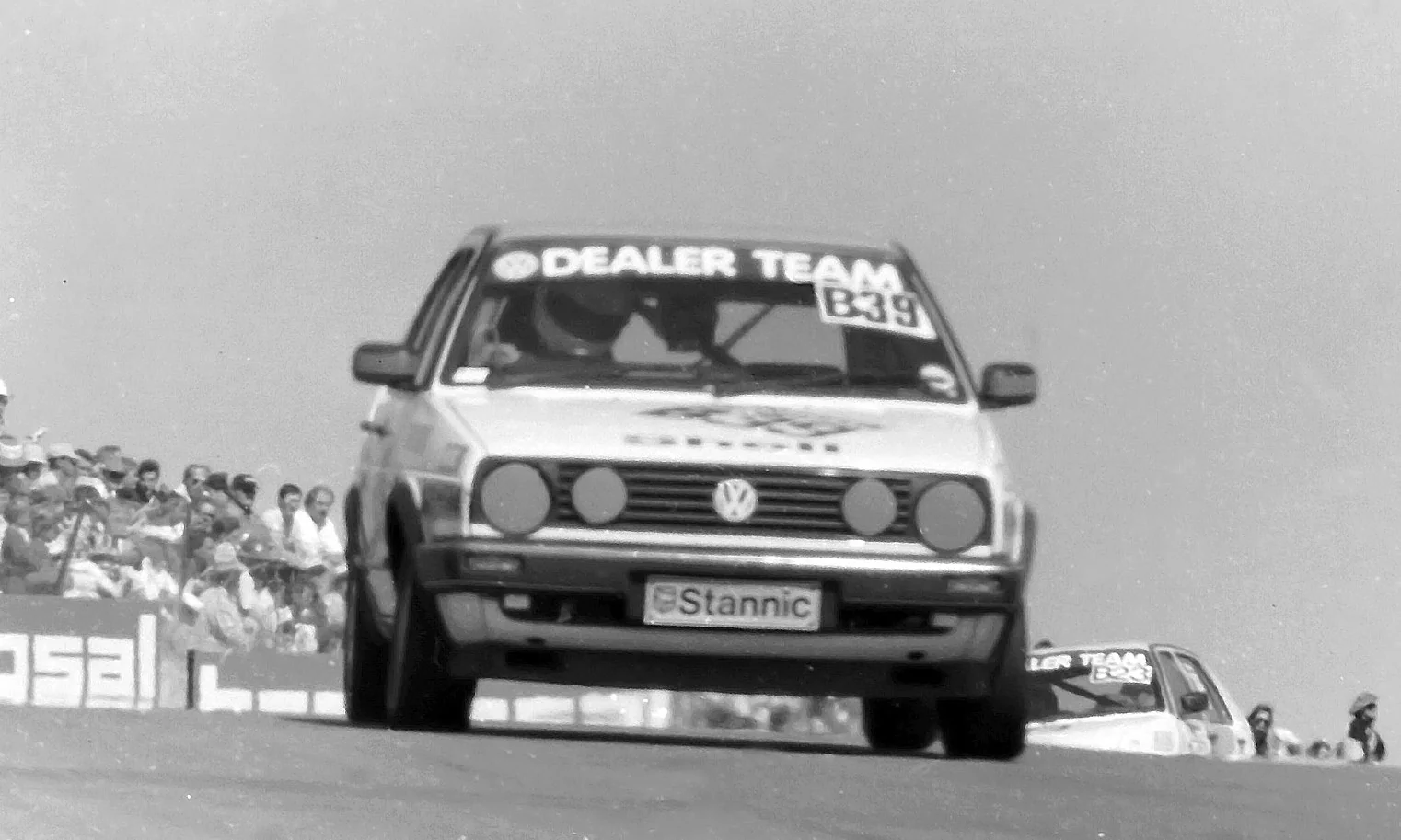
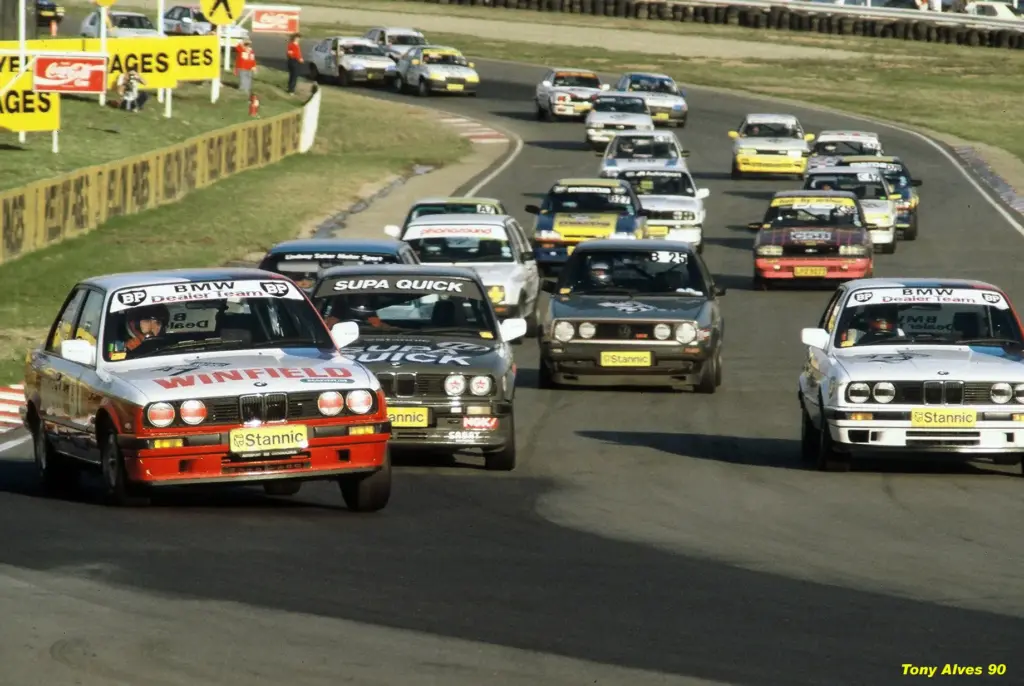
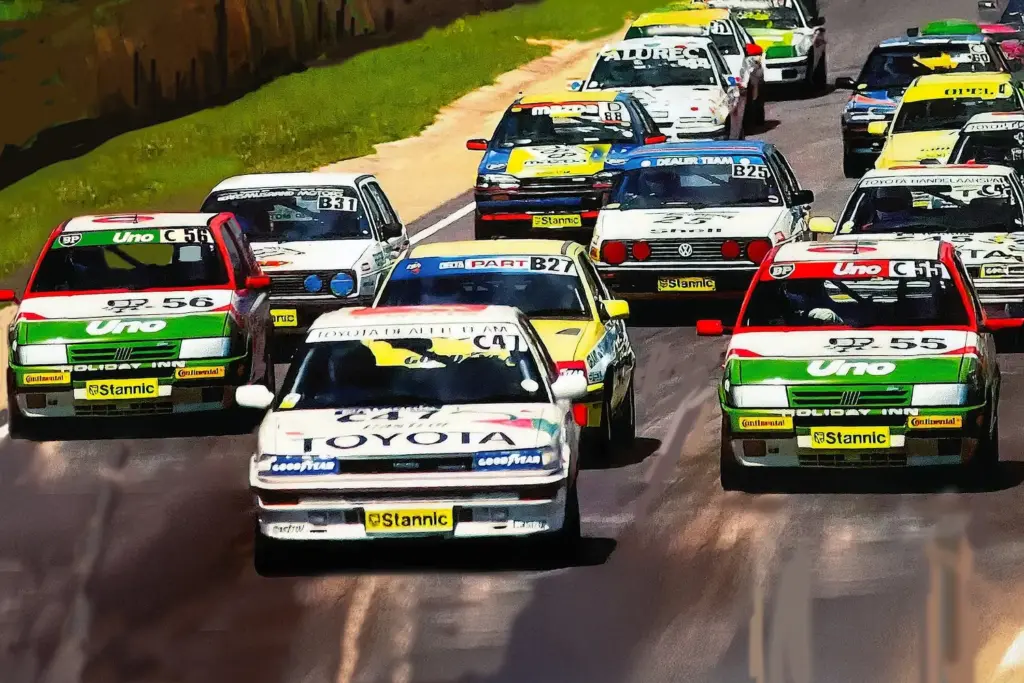
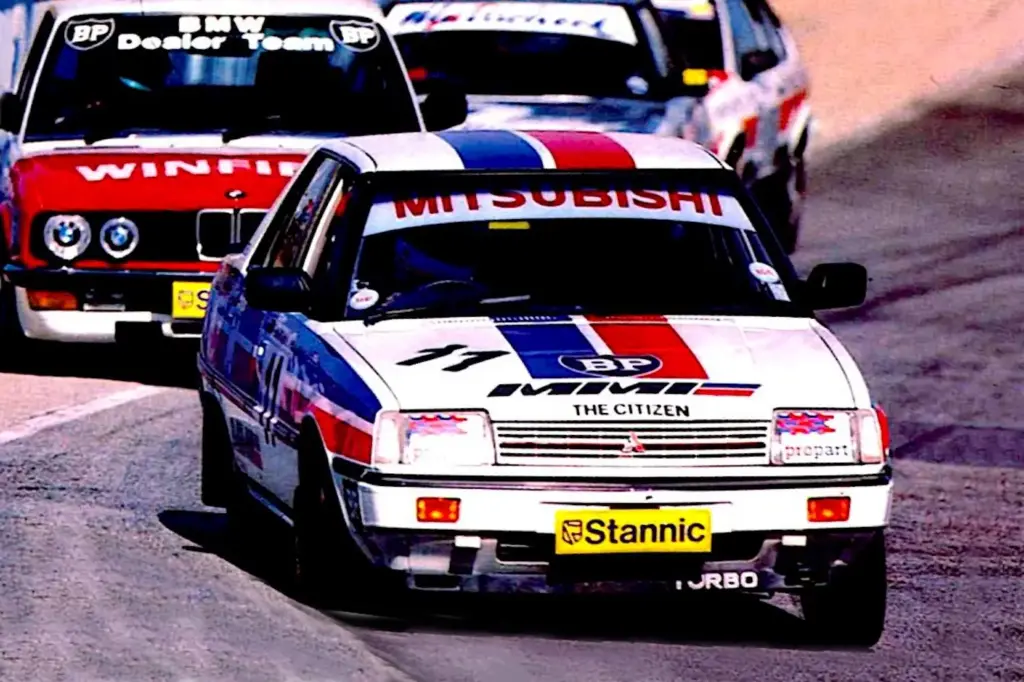
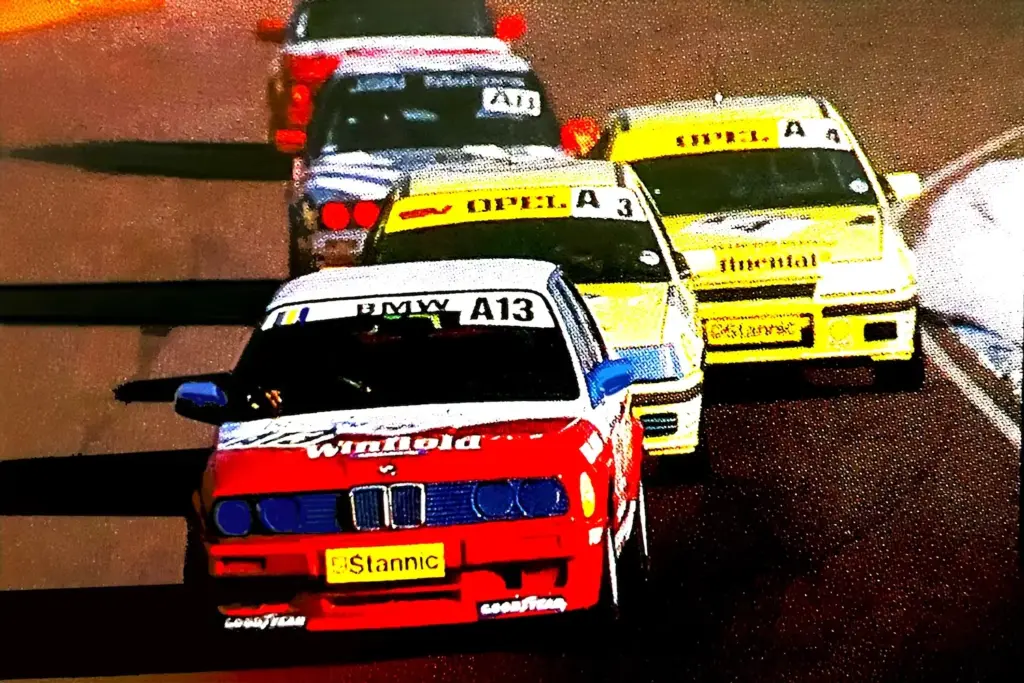
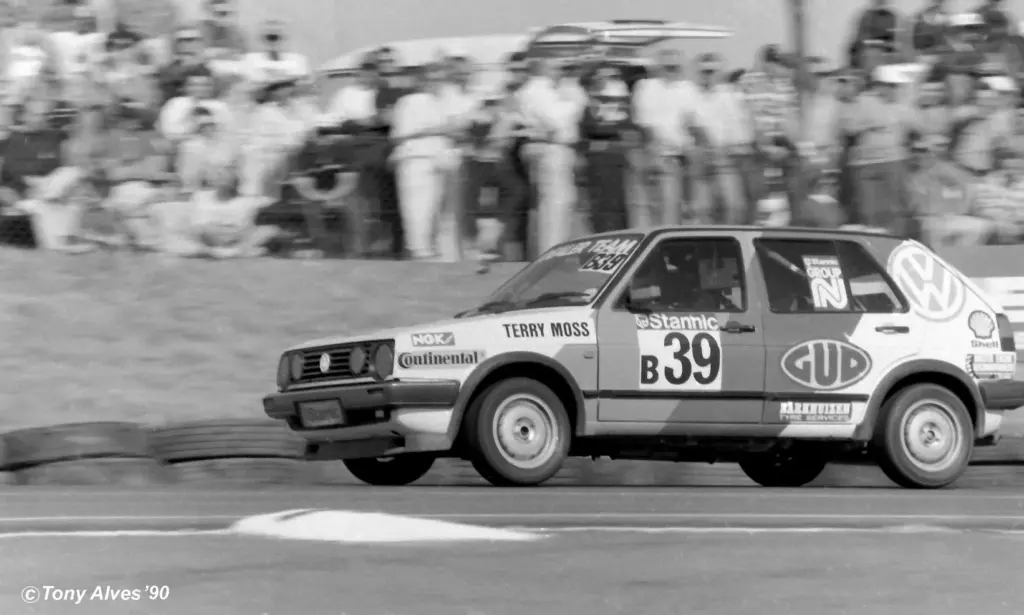
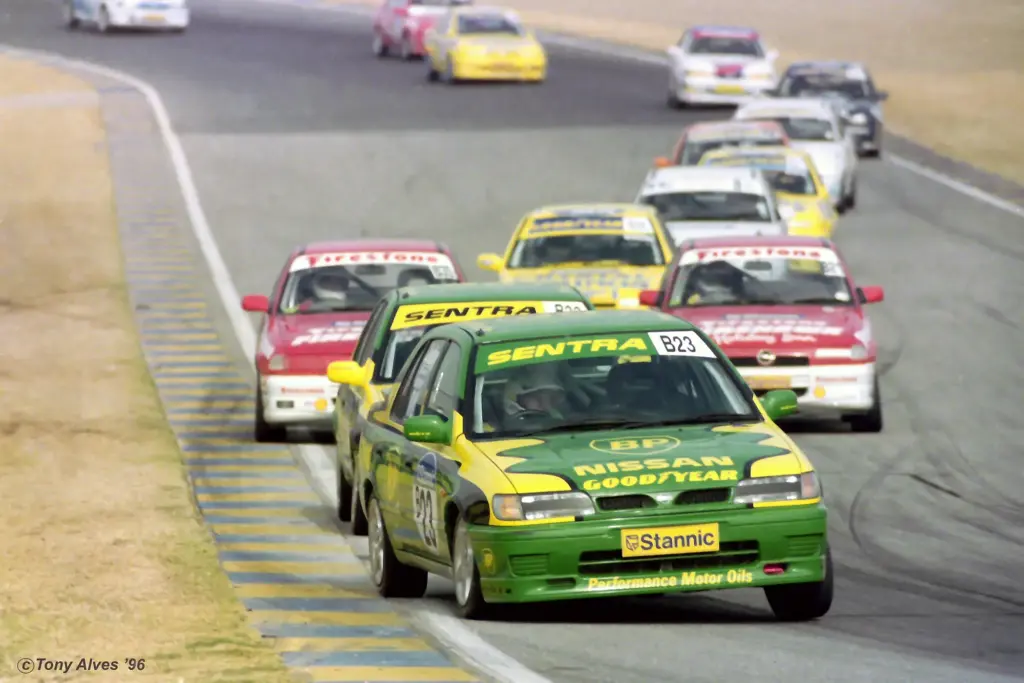
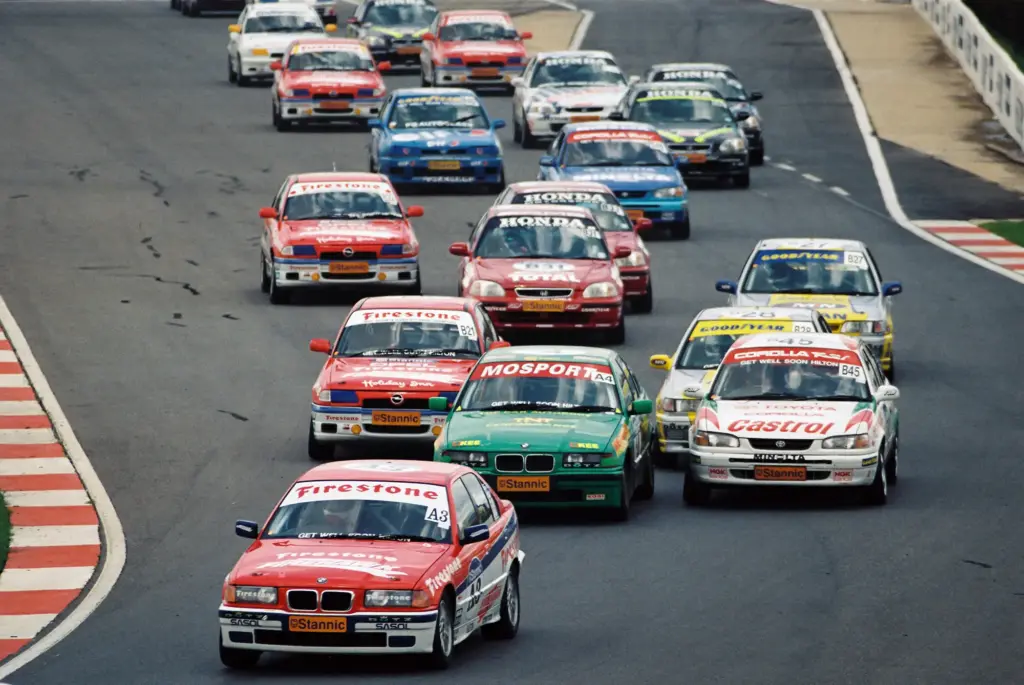
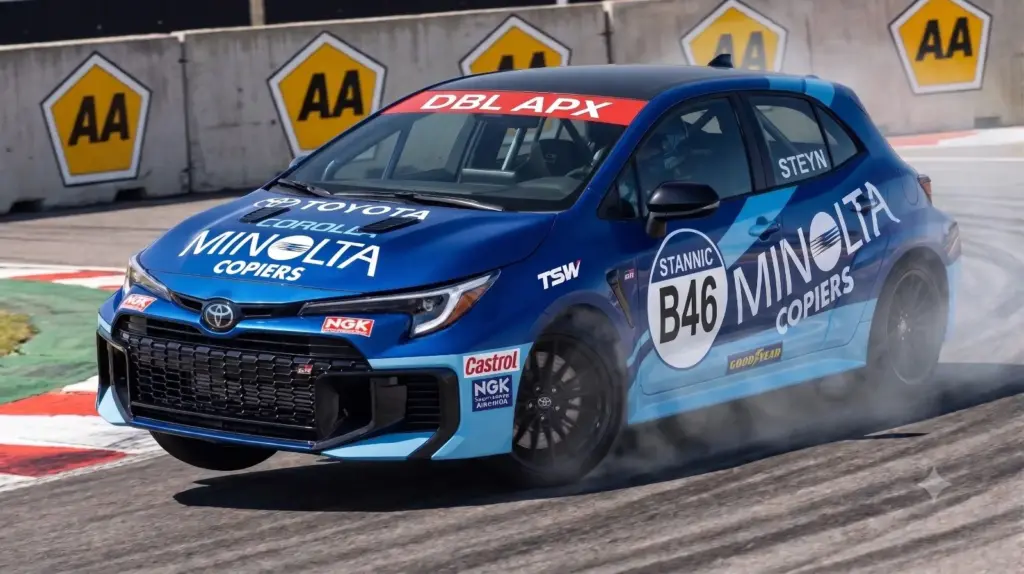
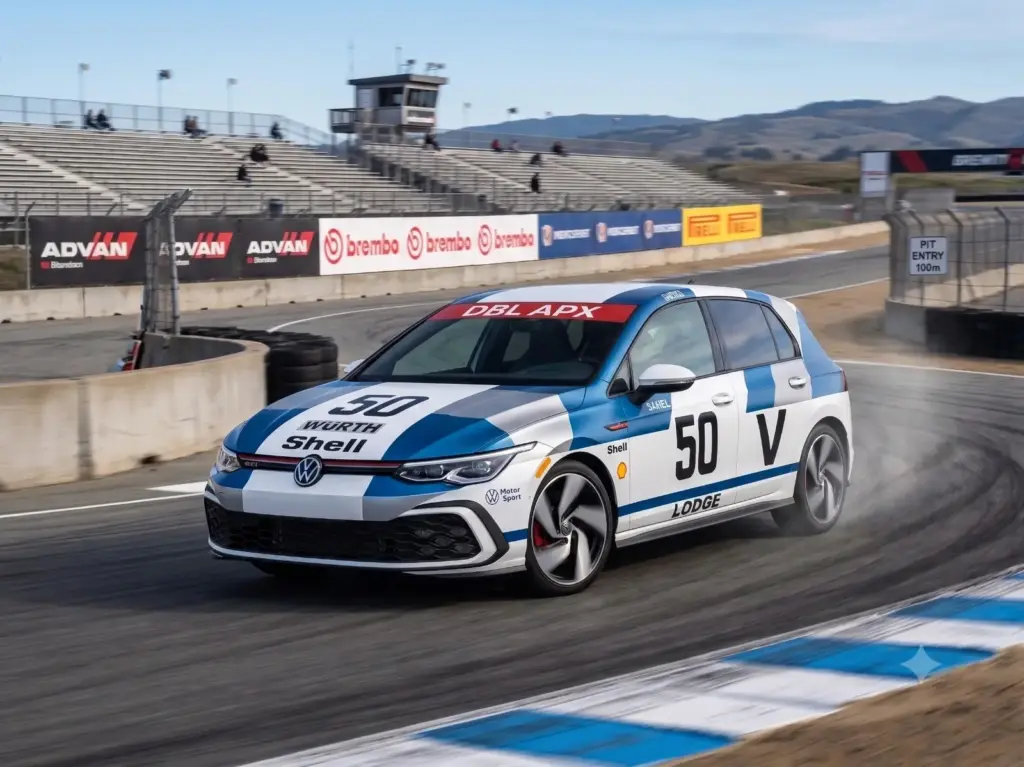
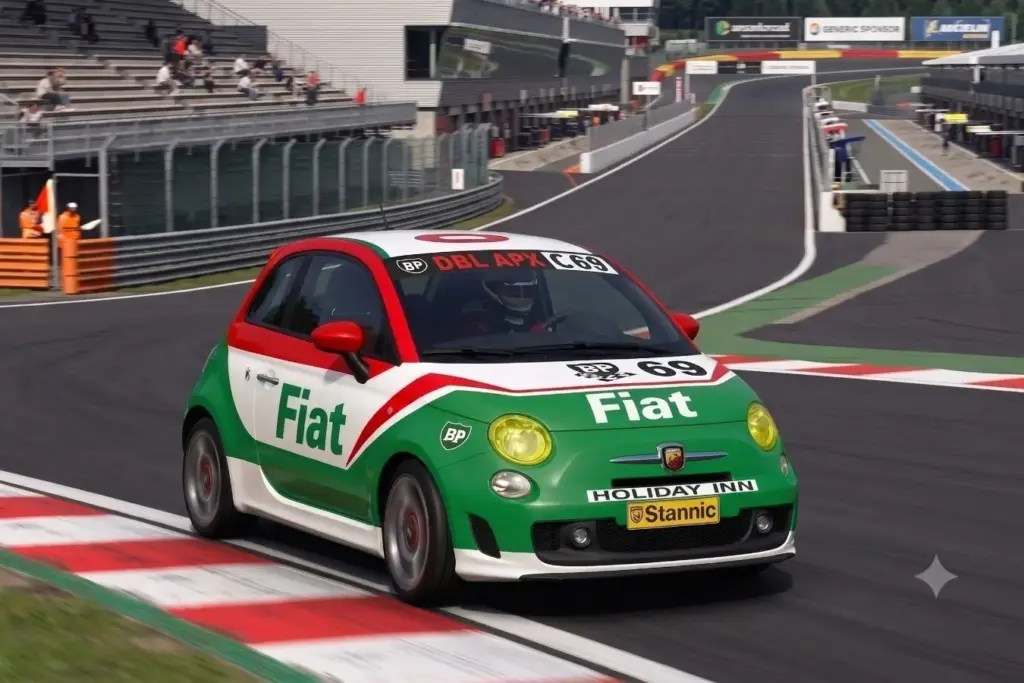
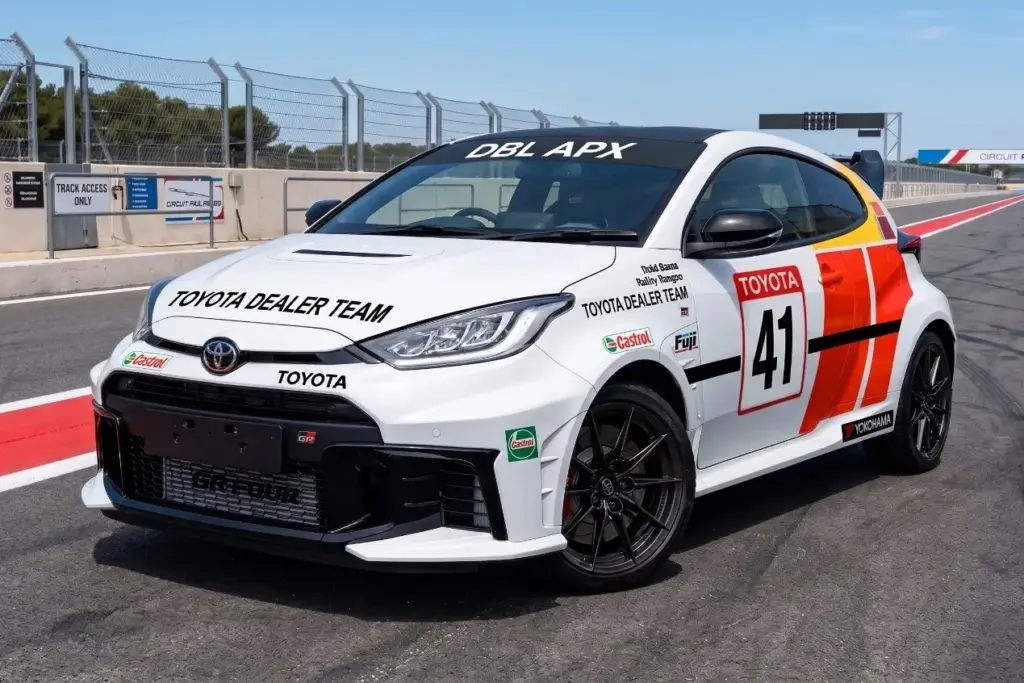
A modern Group N grid in South Africa would stumble before the first flag fell. The old formula flourished from a specific moment in local motorsport, when a production car could still be turned into a racecar without bankrupting half the grid. The cars on the showroom floor were close enough to the ones battling at Kyalami, Aldo Scribante and Killarney that the man in the street felt connected to the on-track action.
That world produced cult metal and proper driver rivalries. It also produced a format that was simple in concept but increasingly impossible in practice. Group N did not fade because the racing got boring. It vanished because the conditions that sustained it were stripped away, one by one, until nothing was left.
The showroom years
Group N’s appeal came from its simplicity. The cars had to look, and mostly remain, like production vehicles. Safety gear went in, suspension could be mildly tuned, exhausts could be changed, and tyres mattered. Engines, bodywork, gear ratios, interior and the basic shell stayed close to stock. That was the trick. You could see the road car in the racecar and immediately understand why the category garnered such huge support.
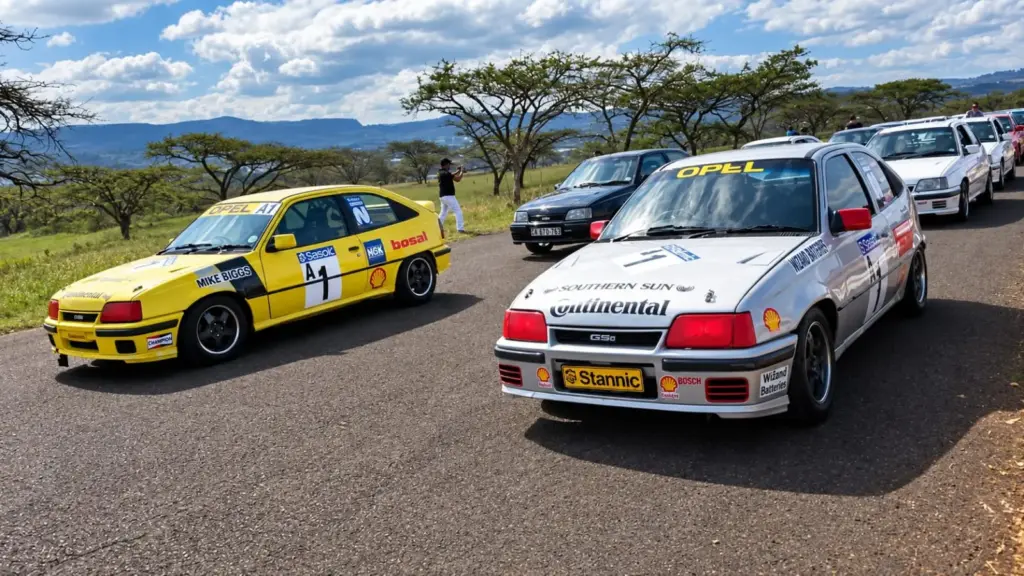
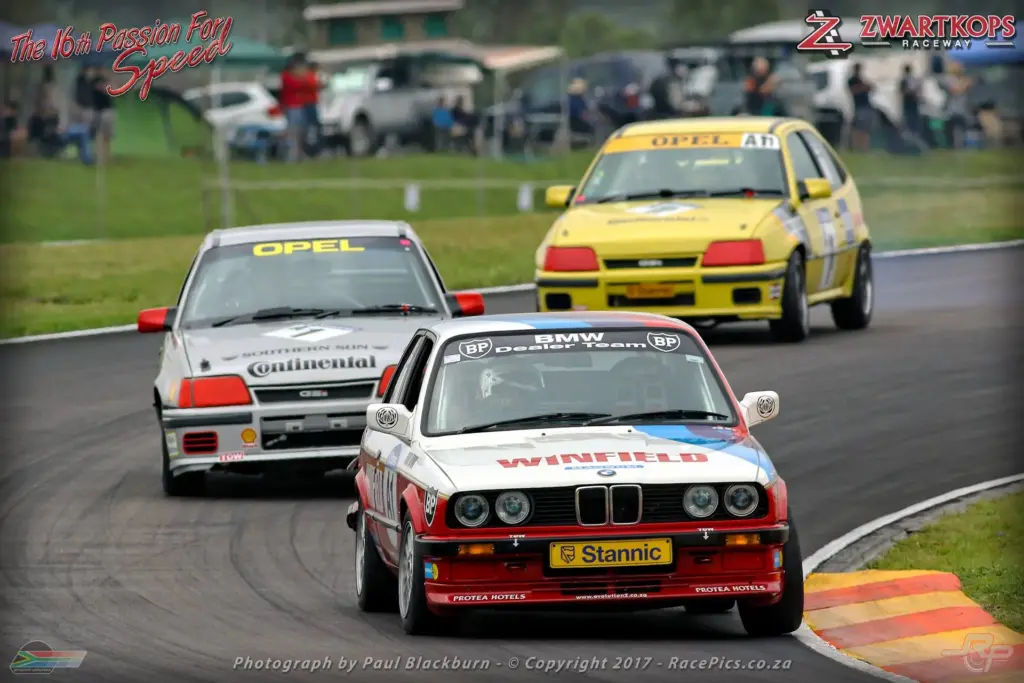
South African fans got a rare local version of that idea in the form of homologation specials built for the job. BMW’s E30 (2,7-litre) 325iS was built in SA specifically for racing. Opel developed the Kadett GSi 16V ‘S’, a car that was a formidable foil for the fast Beemer. Those two models turned the BMW versus Opel fight into a Saturday afternoon religion, and often a drunken brawl in the grandstands. There was also the stillborn VW Spitze project, which we covered here.
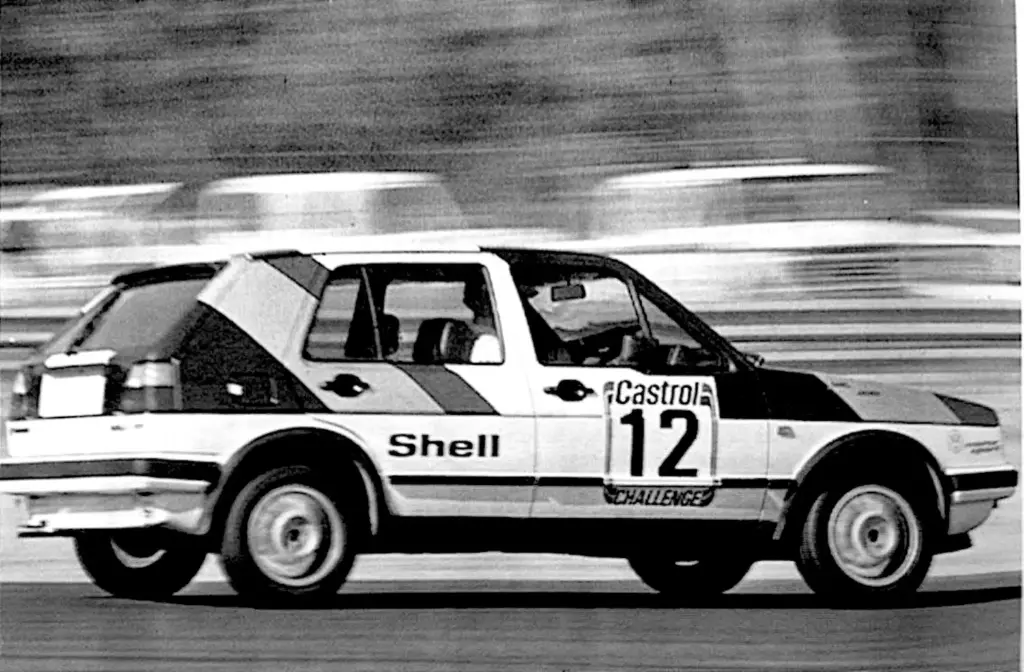
The cast around them was just as important. Toyota Conquest RSis. Nissan Sentra 200STIs, various VWs, Fiats, Mitsubishis, Hondas and smaller Kadetts all added depth to the category, growing the fields to unprecedented levels, peaking at a reported 76. The cars were fast, familiar and, crucially, recognisable to anyone who had stood in a dealership and wished harder.
The drivers also had their own followings. Mike Briggs, Tony Viana, Ben Morgenrood, Chris Aberdein, Farouk Dangor, Grant McLeery, Deon Joubert, Clint Weston, Antony Taylor and Giniel de Villiers all made their names in a scene that rewarded nerve, aggression and car control. Group N grids were tight, elbows stayed out, and there was nowhere to hide if you were sloppy on turn-in or ran wide on exit.
This article was proudly sponsored by Generator Services Inclusive. For all your country wide power generator application requirements, rental and sales contact Chris from GSI at [email protected]

Why it worked then
Group N thrived because South African motorsport once had the ingredients to make factory-backed production racing attainable. Local manufacturing was stronger, manufacturers were willing to spend on South African racing programs, and the road cars themselves were simpler. The link between showroom and racetrack was direct enough that the public could follow it.
BMW, Opel, VW, Nissan, Fiat, Hyundai and Toyota were part of the marketing machine that made homologation specials possible. A 325iS or Superboss was not built for a press release. It was a road car that gave the factory team a race-able platform. Then there was the not-so-small matter of privateer involvement. As the cars were relatively cheap, budding racers could mix it with the country’s top factory pilots on meagre budgets, often supported by the factories with cut-price parts.
Media also did its part. Motorsport coverage was live on national television every Saturday afternoon and print gave the category a profile that modern local racing rarely gets. Drivers were not anonymous helmets in a field of sponsors. They were names people knew, faces that appeared in print and on TV ads. When Group N was humming, it drew crowds because the fight was easy to understand.
The slow death
Group N did not collapse in one dramatic season. It got squeezed until the economics stopped making sense. The first pressure point was cost. Even with production-based rules, teams began spending heavily on the details that separated the front row from midfield. Better suspension parts, better/more tyres, finer engine blueprinting, deeper race prep, and bigger team structures all turned a supposedly affordable category into an expensive exercise. The arms race was subtle at first but then it spiraled.
Tyres were a major part of that inflation. Once suppliers began fighting for every tenth, the cost of chasing performance climbed fast. There was a full-on tyre war between Continental, Goodyear and Bridgestone. Drivers, especially in the factory teams, were privy to new rubber as and when they wished. Brand new tyres were skimmed down to a legal limit to effectively act as cut slicks.
Sponsorship dried up as corporate priorities changed. South African brands became less willing to fund local tin-top warfare, especially when the return on investment could not compete with bigger, shinier platforms. Manufacturer support also faded. The local factory backing that had underwritten the whole idea of homologation specials was no longer there in the same form, and without that anchor Group N lost stability.
The modern replacement problem
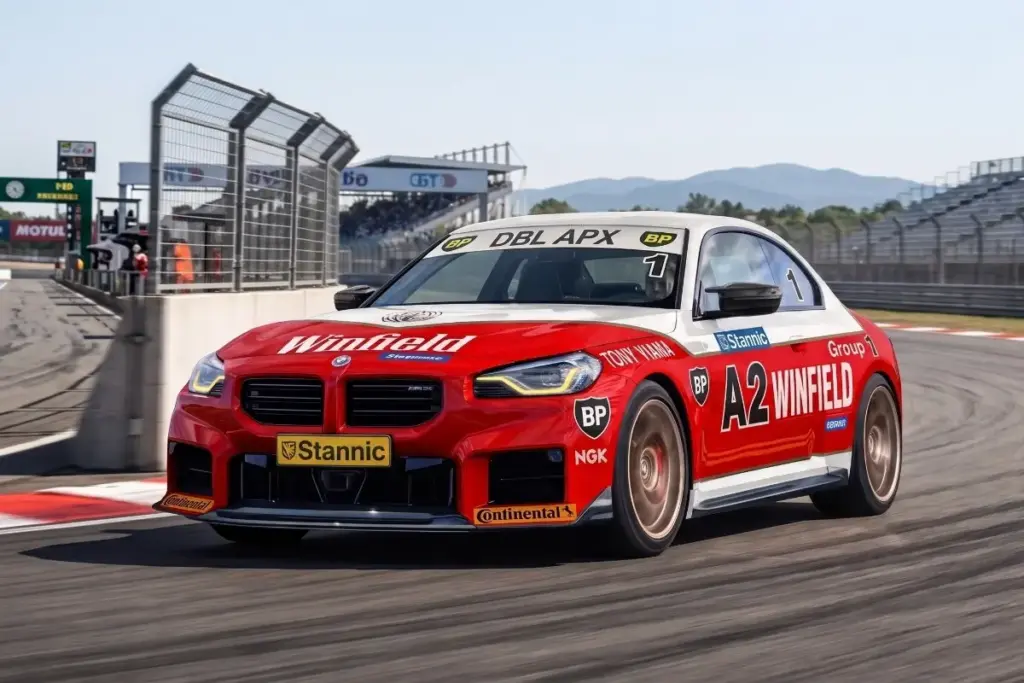
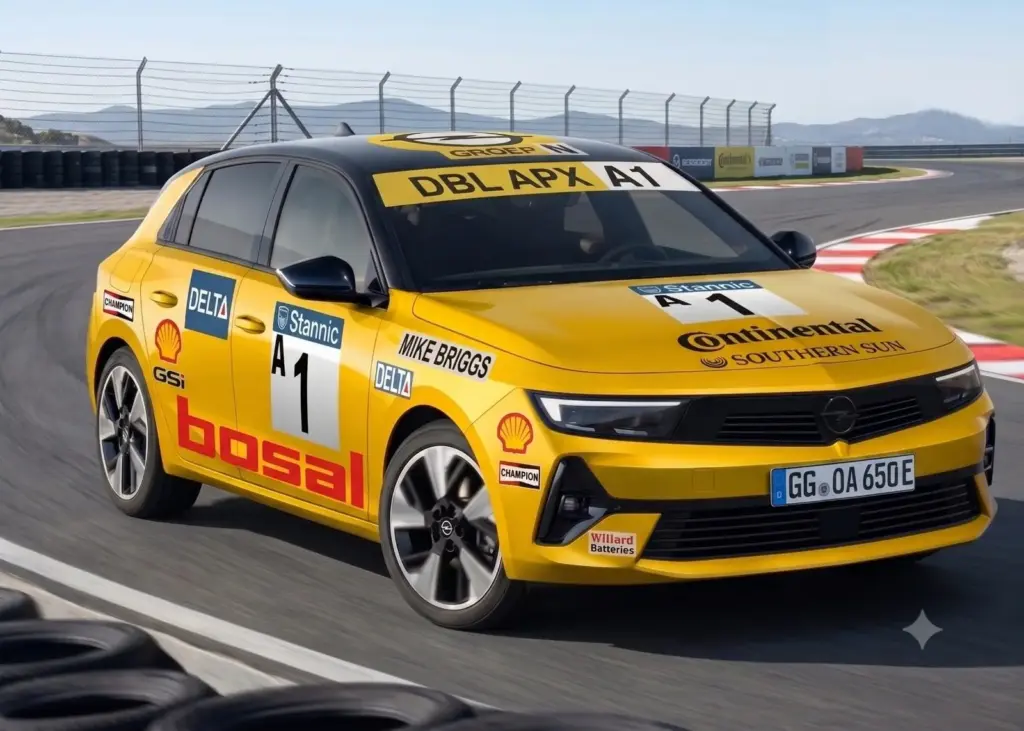
If someone tried to build Group N today, the list would start with cars like the Volkswagen Golf GTI/R, Honda Civic Type R, Toyota GR Yaris/Corolla/86, BMW M2, and Audi RS3. Those are the obvious candidates because they are quick, desirable, and still recognisable to enthusiasts. But, they are also expensive and none of them are produced within our borders.
A GR Yaris and a Golf GTI, leave little change from a million rand. A Civic Type R and GR Corolla are both over the million rand mark. That is before the first race-prep invoice lands. For privateers, the entry ticket alone is a massive hurdle. Let alone the conversion for racing duties and subsequent running costs.
Modern production vehicles are too integrated, too electronically complex, and too expensive to transform into cheap racers. A current road car brings drive-by-wire systems, CAN bus networks, complex ECUs, advanced safety electronics, and packaging that makes a simple roll cage a far more awkward exercise than it once was. The old recipe of: strip, cage, suspension, tyre, and go; no longer works.
The parts bill just ramps up and up. Modern brakes are pricey, suspension is highly specialised and often bespoke, and replacement panels or wheels are not built with weekly contact in mind. Add the cost of track-time for development, and the idea of a low-cost showroom series turns into a very costly exercise.
Modern cars are far more powerful and heavier, this would place a heavy burden on high-performance tyres, which are expensive, and the teams would need multiple sets to survive a race weekend. Once you factor in repairs, the budget spiral becomes unavoidable.
Why the dream stays in the past
Sadly, Group N belonged to a South Africa that no longer exists in motorsport terms. The cars were simpler, the manufacturers were closer, the media was louder, and the economic gap between road car and racecar was small enough to cross. That combination produced a category that provided some of the best circuit-car racing that we’d ever seen on local tracks.
A modern version would have none of that. It would cost too much, need too much support, and demand too much technical intervention just to imitate the old show. The problem is not nostalgia, there is plenty of that to go around. As witnessed by many pukka Group N race replicas, such as the beautiful GSI recreation of Chris Davison, an homage to the championship-winning Briggs’ car.. The larger problem is price. There is no budget-friendly, multi-model national level circuit-racing in SA any longer, which is a real shame.
Special thanks to Springbok Tin Top. The Book (Coming 2027) and Tony Alves Media and Paul Blackburn for the use of these great images.
![SCG 004C Testing [Video]](https://doubleapex.co.za/wp-content/uploads/SCG-004C-Testing-1-300x180.webp)
![Rodin FZED F1-Style Track Car [w/video]](https://doubleapex.co.za/wp-content/uploads/Rodin-FZED-300x180.webp)
![Formula E Heading to Cape Town [w/video]](https://doubleapex.co.za/wp-content/uploads/Sound-of-Formula-E-300x180.webp)
![New Nissan GT500 Racecar Unveiled [w/video]](https://doubleapex.co.za/wp-content/uploads/2021/12/Nissan-GT500-Racecar-front-300x180.webp)
![Haas Formula One Drivers Try Nascar [video]](https://doubleapex.co.za/wp-content/uploads/2022/05/Haas-Formula-One-Drivers-300x180.webp)

Have your say
Got thoughts on this?
No feedback yet on The Group N Racing Revival South Africa Will Never See. Kick the conversation off.
Free. Email link only — no password.