
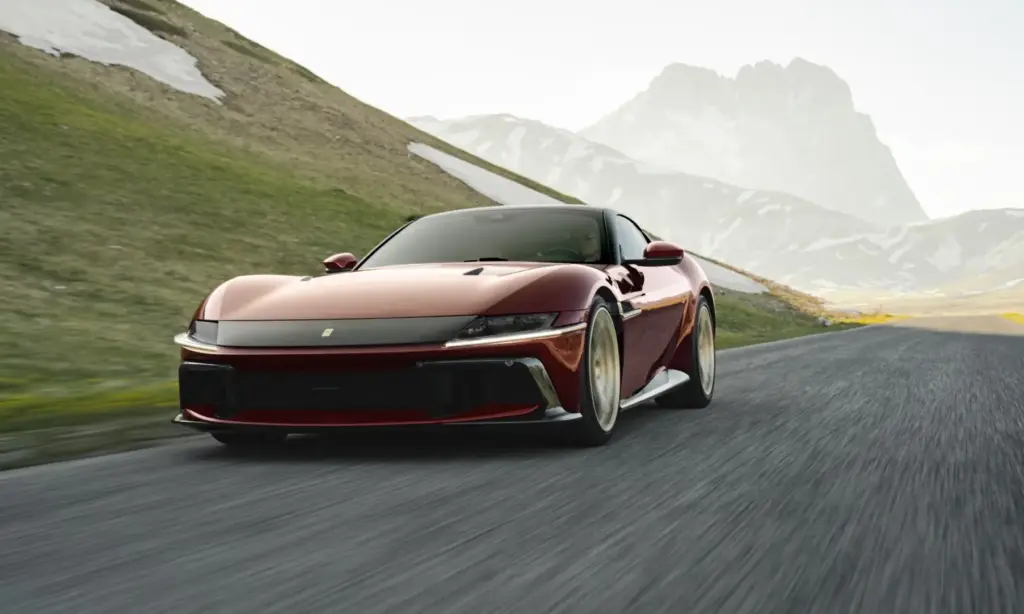
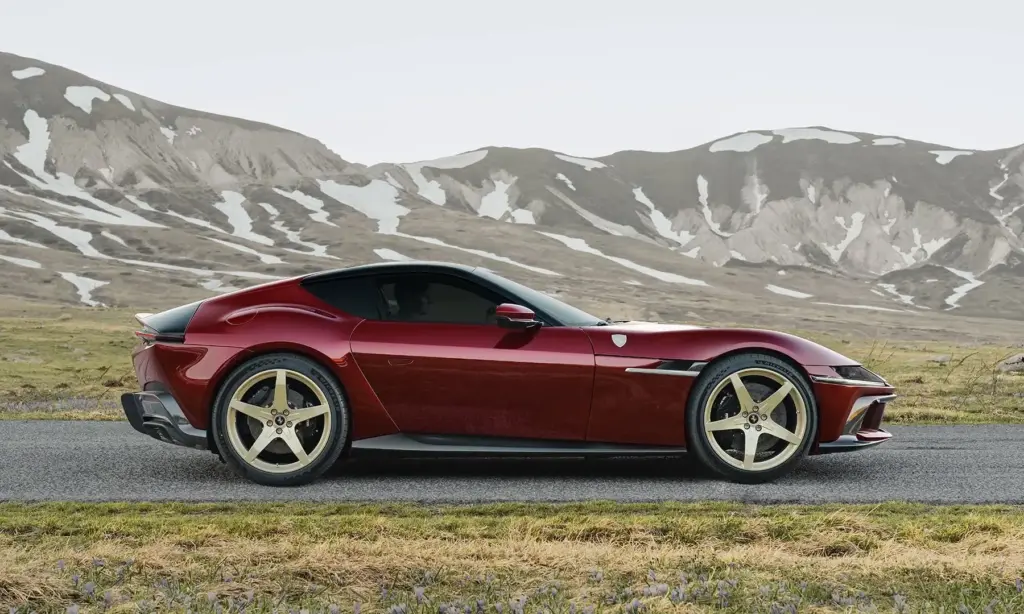


Ferrari has made the almost impossible. It’s made a car that is a manual AND an automatic, using some really clever digital trickery. Instead of bolting a token manual lever onto a modern grand tourer and calling it heritage, Maranello has built a system that makes the driver work again. The result is the 12Cilindri Manuale, a limited special series GT that tries to recover the physical theatre of old Ferrari GTs and embrcing modern transmission tech.
It is an old-fashioned idea executed with very modern hardware. The car keeps the 12Cilindri’s high-revving twelve-cylinder engine, but the interface has been revised from the pedals up. Ferrari has even dropped the steering-wheel paddles from the equation.
Ferrari says the by-wire system was created to restore the interplay between accelerator, clutch, and gearlever that defined its older front-engined GTs from the 1950s, ’60s, and ’70s. Those cars were not faster in the modern sense, but they made the driver an integral part of the machine. The 12Cilindri Manuale is trying to bring that feeling back without losing the usability expected of a current Ferrari.
Manuale By Wire
The headline here is Ferrari’s Manuale By-Wire system, developed entirely in Maranello. The company pairs its ubiquitous eight-speed DCT hardware with new control architecture that gives the driver a manual lever and clutch pedal, while the underlying transmission management stays electronic. Mechanically, the inputs convert into signals. Subjectively, Ferrari wants it to feel like a classic manual car with proper mechanical feel.
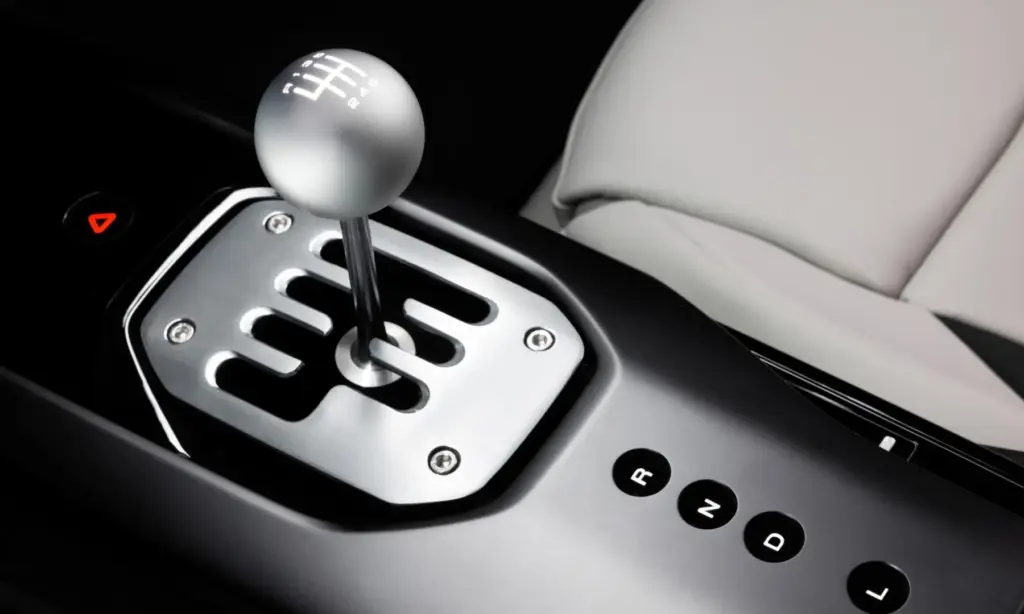
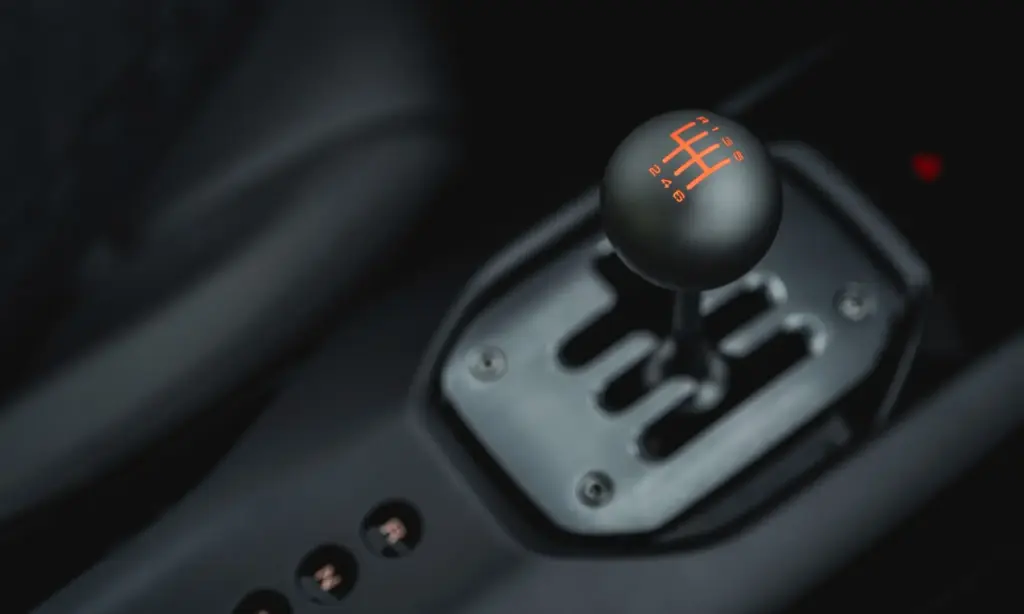
The gear lever is not just for show. Ferrari has built a compact solid-machined module with sensors and kinematic hardware tuned to mimic the loads a Ferrari manual gearbox used to throw back at the driver during synchronisation, engagement, and disengagement.
It clicks, it loads, it varies in force. The mechanism can physically stop you if you try an illegal shift without the clutch or select the wrong gear. Ferrari has even worked on the acoustic character of the parts so the sound reinforces the mechanical impression.
The clutch pedal follows the same logic. Ferrari has completely redesigned the three-pedal layout and given the pedal its own position sensor, while hydraulic actuation handles the DCT clutch itself. Underfoot, the company says the pedal builds load in the same sort of curve you would expect from a mechanically linked manual box. The trick is an analogue preload spring, cam, and roller working with the digital sensor so the pedal does not feel dead or artificial. You still have to coordinate the engine, transmission, and your left foot properly. Miss it, and the car will respond with the same kind of jerk or stall old-school drivers know well.
A V12 manual
Ferrari says the naturally aspirated V12 is an obvious candidate because it spins to 9 500 r/min and has the sort of top-end character that rewards gear choice. A turbo engine with fat mid-range torque would flatten the whole exercise.


The 12Cilindri Manuale can run in proper manual mode through six gears, while still keeping automatic operation available when convenience is preferred. In manual use, the driver works the clutch and lever directly. In auto, the system can still be pre-selected via the lever, and the instrument cluster shows how the rev counter will respond. Ferrari has also built the transition logic so the car can swap cleanly between modes, with coasting management that allows it to roll down to idle smoothly instead of clumsily snapping in and out of lock-up.
The cabin
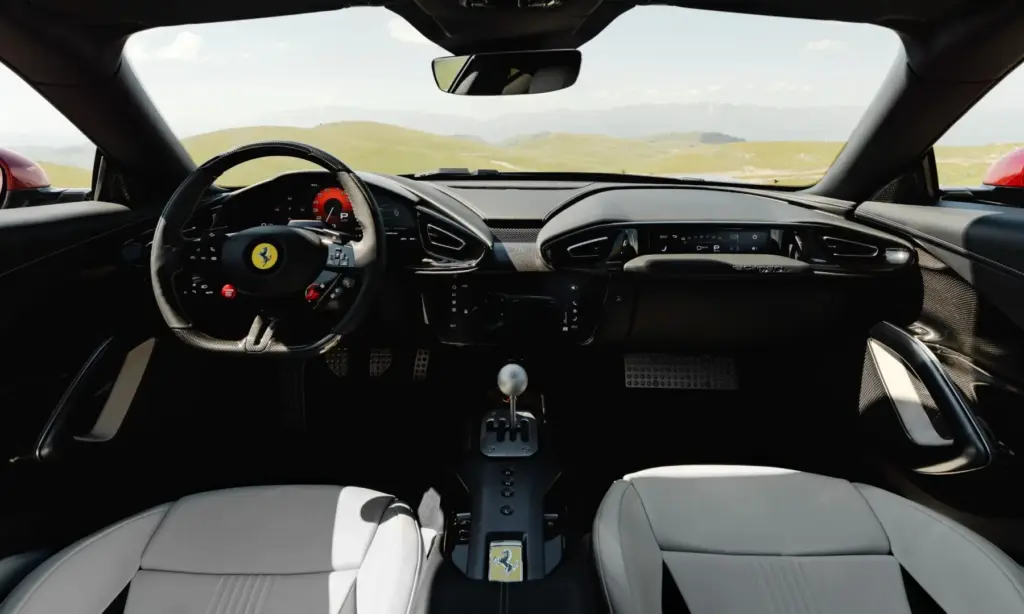
Inside, Ferrari has made the hardware visible and obvious rather than hiding it. The centre tunnel has been reworked for both manual and automatic driving, with the gear lever, selector knob, shift gate, and pedal layout all redesigned to suit the new interface. The gate itself uses the classic six-speed H-pattern, with reverse at the top left. The round aluminium knob carries a backlit display that shows the six forward gears and the active mode.
Ferrari says the console, leather trim, and the new metal components were developed to sit together cleanly rather than looking like an aftermarket tribute act. A steel plate with an anodised aluminium tuning-fork sculpture houses the control panel and key storage.
The pedal box is part of the show as well. Its triangular arrangement between steering wheel and seat is there to make the driver’s physical movements feel deliberate, and to keep heel-and-toe work part of the car’s appeal. That alone will be enough to make some owners grin and others swear.
Limited to 1 499 cars
Ferrari will build just 1 499 examples of the 12Cilindri Manuale. The number is not random. Maranello says it refers back to the 1 499 cc displacement of its first twelve-cylinder engine from 1947. In a market where many supercars flatten the driver into a passenger with a steering wheel, Ferrari has decided to go the other way. The 12Cilindri Manuale is a digital system dressed as an analogue ritual.
![Czech Police Ferrari 458 Is New Pursuit Vehicle [w/video]](https://doubleapex.co.za/wp-content/uploads/2022/07/Czech-Police-Ferrari-458-300x180.webp)

![Sun-seeking Ferrari 296 GTS Unveiled [w/video]](https://doubleapex.co.za/wp-content/uploads/2022/04/Ferrari-296-GTS-300x180.webp)
![Ferrari 499P Endurance Racer Debuts [w/video]](https://doubleapex.co.za/wp-content/uploads/2022/10/FERRARI_LMH_09_alternative-300x180.webp)
![Ferrari SF90 Stradale [w/video]](https://doubleapex.co.za/wp-content/uploads/Ferrari-SF90-Stradale-front-300x180.webp)
![Ferrari Amalfi Spider Drops Its Top in Time for (Euro) Summer [w/video]](https://doubleapex.co.za/wp-content/uploads/2026/03/Ferrari-Amalfi-Spider-300x180.webp)
![Ferrari 812 Competizione Twins Debut [w/video]](https://doubleapex.co.za/wp-content/uploads/2021/04/Ferrari-812-Competizione-pair-300x180.webp)
![Rimac vs Ferrari In A Hypercar Drag Race [w/video]](https://doubleapex.co.za/wp-content/uploads/2021/06/Hypercar-Drag-Race-1-300x180.webp)
![Novitec Ferrari 812 GTS Unveiled [w/video]](https://doubleapex.co.za/wp-content/uploads/2021/02/Novitec-Ferrari-812-GTS-300x180.webp)

Have your say
Got thoughts on this?
No feedback yet on Ferrari 12Cilindri Manuale Blends Analogue Feel With Digital Wizardry. Kick the conversation off.
Free. Email link only — no password.