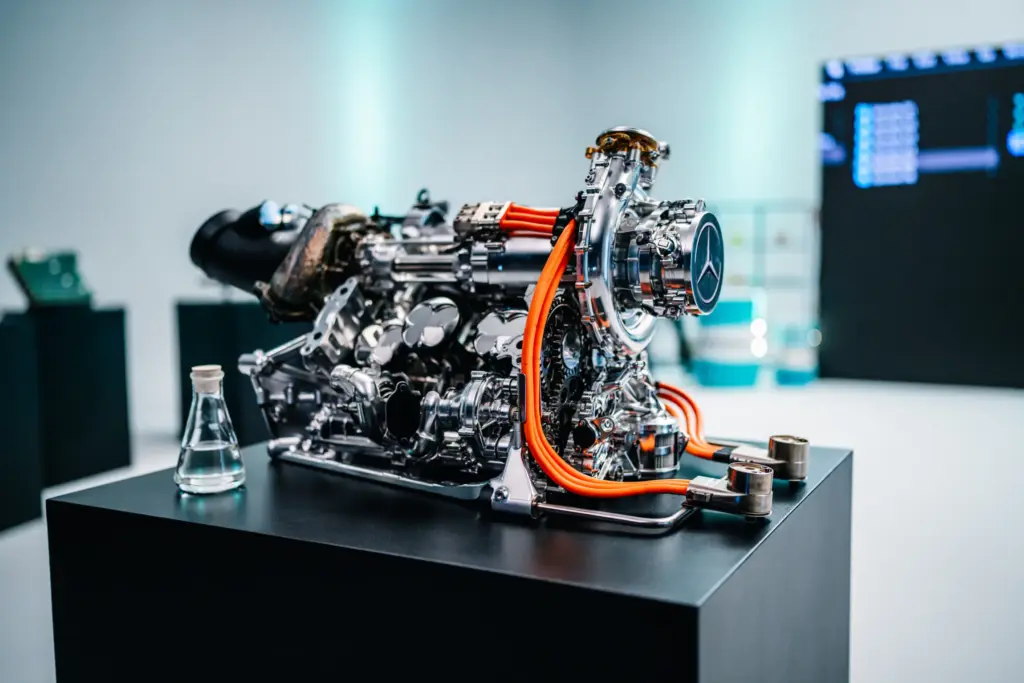


Regular Formula One contributor, Graham Duxbury, takes a look at which teams got the new-engine regs right and who is struggling
Discussions surrounding Formula One’s revolutionary 2026 regulations have focused on batteries, software integration and sophisticated energy management. With electrical power now accounting for about 40 per cent of a power unit’s total output – depending on circuit-specific rules – many fans have concluded that F1 has become an energy management competition as much as an engineering one.
Follow Double Apex on Instagram and Facebook where we share more car content.
Petrol Power
However, beneath the headlines another battle is unfolding – one centred on the internal combustion engine (ICE). While energy recovery systems determine how effectively teams harvest and deploy electrical power, outright combustion efficiency and reliability remain equally critical.
The FIA’s Additional Development and Upgrade Opportunities (ADUO) framework has highlighted just how important the conventional ICE is, even in F1’s most electrified era. The current competitive picture suggests that three engine manufacturers have emerged as the principal protagonists: Mercedes, Red Bull Powertrains-Ford and Ferrari.
Still On Top
Mercedes entered the new era with perhaps the most complete package. The German manufacturer’s power unit has demonstrated outstanding integration between its combustion engine, electrical systems and control software, helping power multiple customer teams while underpinning an impressive run of early-season victories.
Although the FIA’s ADUO assessment surprisingly concluded that Mercedes still trails Red Bull in pure ICE performance, Mercedes’ overall package has been exceptionally efficient in converting available power into lap time.
This apparent contradiction illustrates one of the curiosities of the ADUO regulations which were designed to prevent a single manufacturer from dominating an entire rules cycle. Rather than measuring complete power-unit performance, the FIA evaluates only internal combustion engine output using parameters such as torque delivery and engine speed.
Electrical deployment, battery efficiency and software optimisation are deliberately excluded from the ADUO calculation.
A New Power Player
In this light, the biggest revelation has arguably been Red Bull Powertrains’ remarkable F1 debut. Designing and building its first complete F1 power unit in-house. represents one of F1’s boldest engineering gambles and, thus far, one that appears to be paying the most dividends.

This achievement owes much to Red Bull Powertrains’ technical collaboration with Ford. Contrary to popular perception, Ford’s role extends beyond branding with the American manufacturer contributing expertise on a number of fronts including manufacturing processes and simulation tools.
Horse Power
Ferrari occupies an intriguing position. The Scuderia possesses one of the strongest chassis packages on the grid but has been granted ADUO development opportunities because its ICE reportedly fell more than four percent behind the Red Bull benchmark during the FIA’s first assessment period. As a result, additional upgrade allowances could make Ferrari the biggest beneficiary of the ADUO catch-up mechanism in the second half of the 2026 season.
Falling Behind
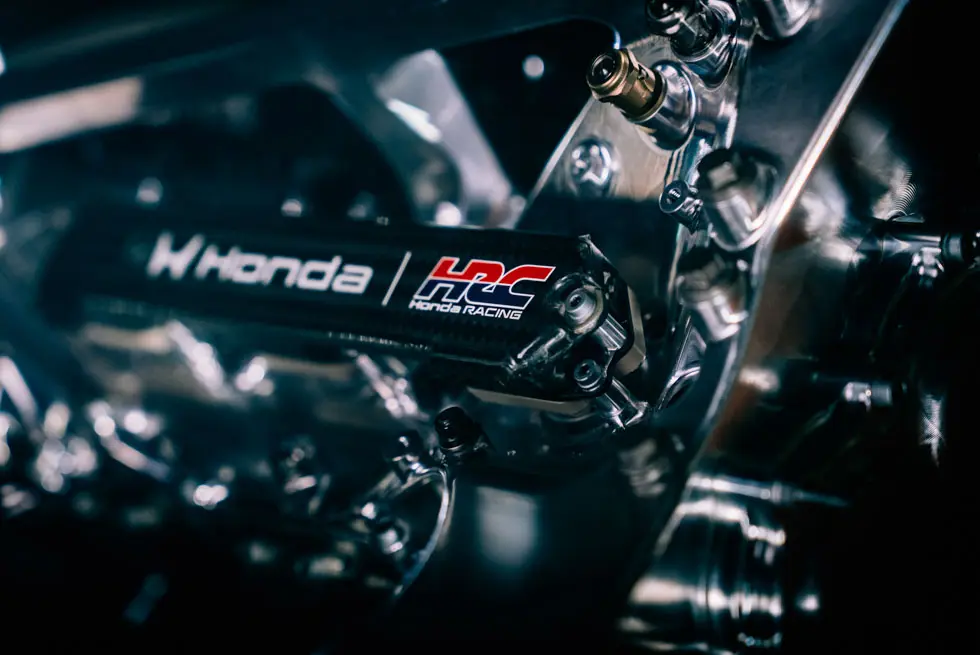
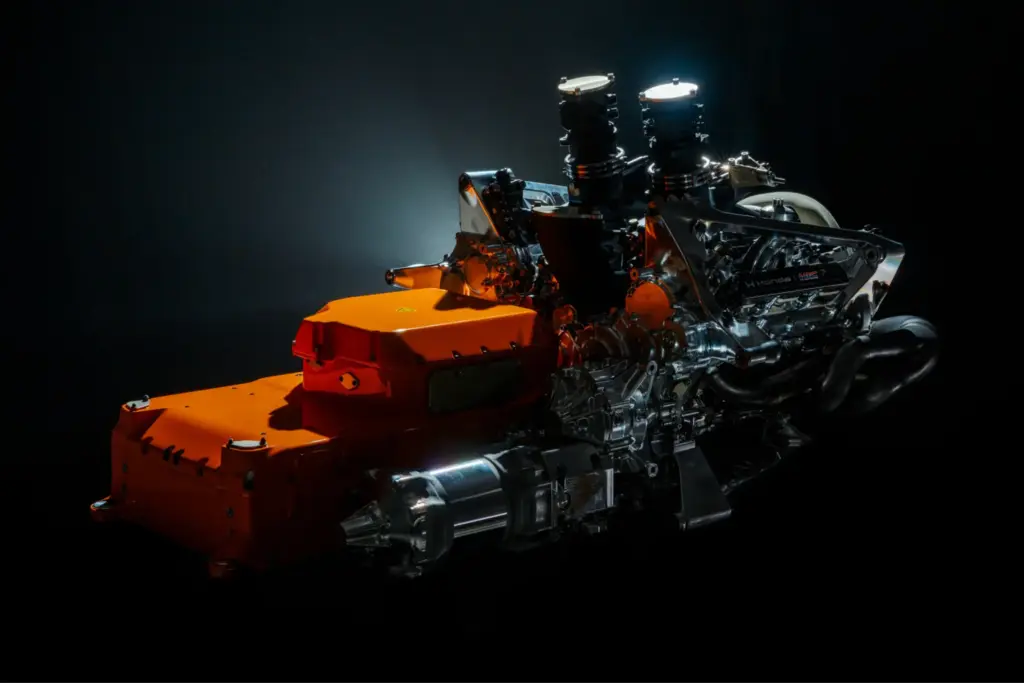
The greatest disappointment has undoubtedly been Aston Martin. The Silverstone-based team invested heavily ahead of the new regulations, attracting leading technical figures, constructing a state-of-the-art factory and becoming Honda’s exclusive works partner. Expectations were enormous.
Instead, Honda’s return as Aston Martin’s sole supplier has proved far more difficult than anticipated. The manufacturer has reportedly qualified for multiple ADUO upgrade opportunities, indicating that both combustion performance and overall integration remain some distance behind the leading benchmark. For a project designed around championship ambitions, the learning curve has been steeper than expected.
Another Impressive ‘Rookie’
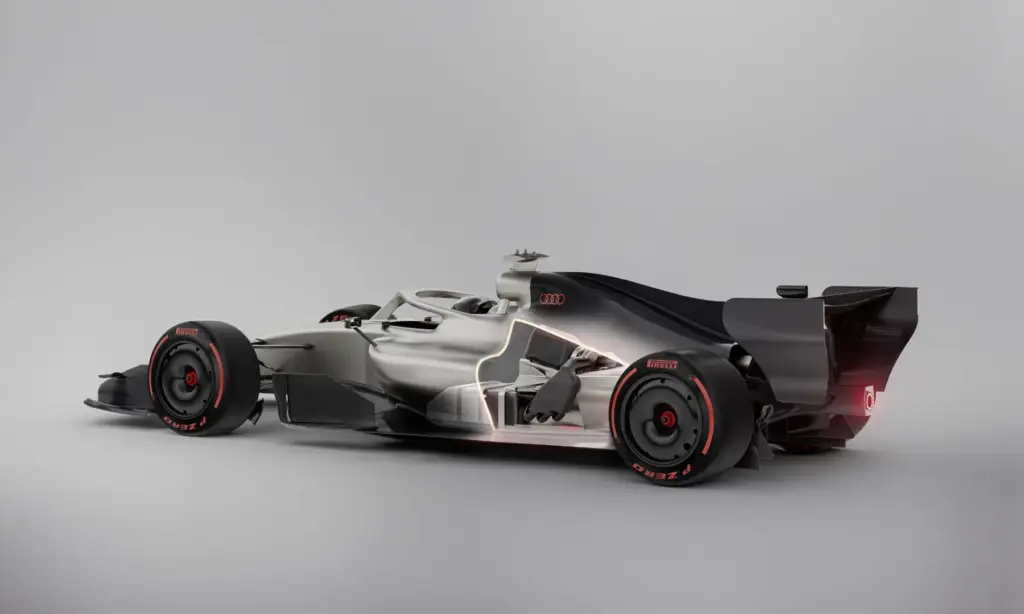
Among the newcomers, Audi represents perhaps the most fascinating long-term proposition. Audi has entered F1 as a full works manufacturer, designing both chassis and power unit under one roof. That level of integration reflects the philosophy employed successfully by Mercedes and Ferrari over many years.
While Audi’s first-generation engine inevitably faces a steep development curve, the manufacturer has committed enormous engineering resources to establishing itself as a genuine championship contender over the coming seasons.
American Challenge
Cadillac’s arrival in F1 as a potential engine manufacturer follows a very different strategy. Rather than introducing its own ICE immediately, the American marque has wisely chosen to begin life using Ferrari customer power units while concentrating on building operational capability, technical expertise and organisational strength. It is a pragmatic approach that should allow Cadillac to establish competitive foundations before contemplating a future works engine programme.
Leveling the Playing Field
Ultimately, F1’s ADUO regulations were designed to prevent a single manufacturer dominating the field. But if the opening half of the 2026 season is any indication, the FIA have created one of the most technically challenging eras in F1 history where victory depends not on the performance of the traditional ICE, but on mastering myriad aspects of the complex and expensive modern hybrid power units.
![2024 Formula One Cars [Gallery]](https://doubleapex.co.za/wp-content/uploads/2024/02/mclaren-mcl38-300x180.webp)


![F1 Showcase Cape Town [Gallery]](https://doubleapex.co.za/wp-content/uploads/650A0092-e1559500310829-300x180.webp)



![Driving Masterclass with Valtteri Bottas [video]](https://doubleapex.co.za/wp-content/uploads/Driving-Masterclass-with-Valtteri-Bottas-2-300x180.webp)

Have your say
Got thoughts on this?
No feedback yet on Power Plays: The Winners and Losers in F1’s New Engine…. Kick the conversation off.
Free. Email link only — no password.