
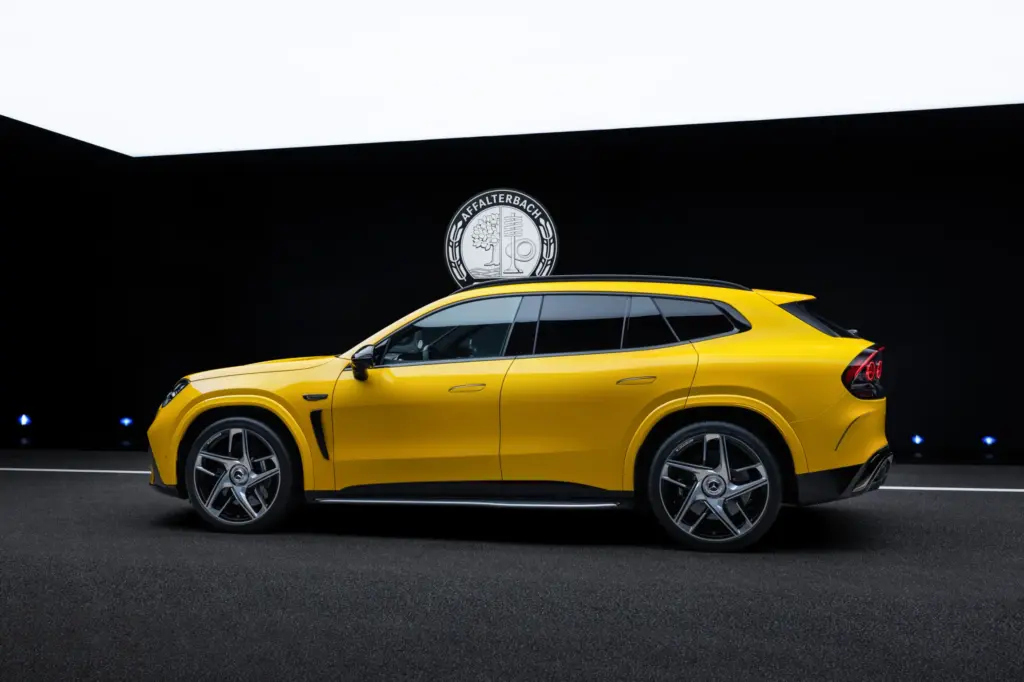


Mercedes-AMG has spent nearly six decades building its reputation on fast sedans engines that you can feel in your chest and exhaust notes that announce their arrival from three blocks away. Now, with its first ground-up full-size SUV, the brand is asking a BEEG question: will fans accept a full AMG SUV and one without an internal combustion engine?
The Mercedes-AMG GT SUV arrives as the second production on the AMG.EA architecture, a platform purpose-built for electric performance rather than adapted from existing Mercedes underpinnings. AMG’s previous electrified efforts, however rapid, carried the compromises of shared foundations. The GT SUV starts with a clean sheet.
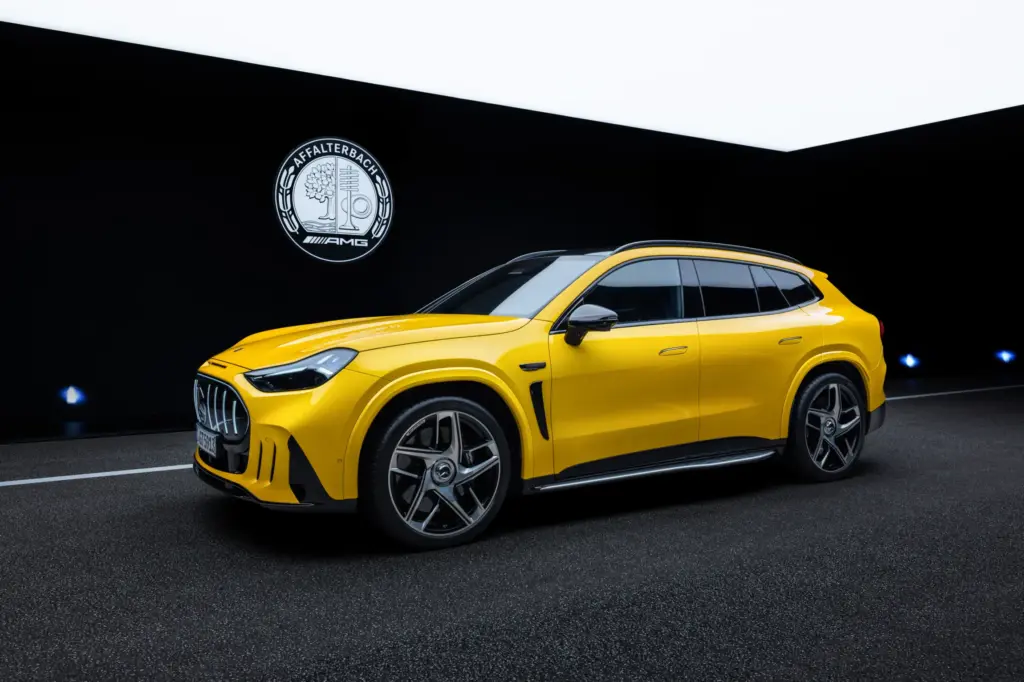
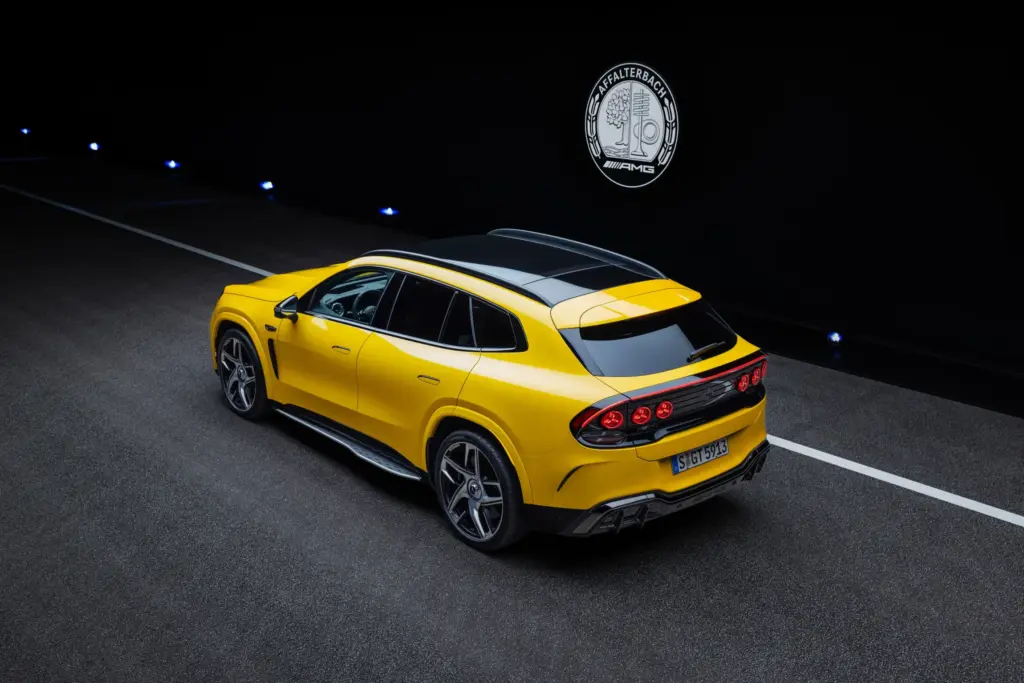
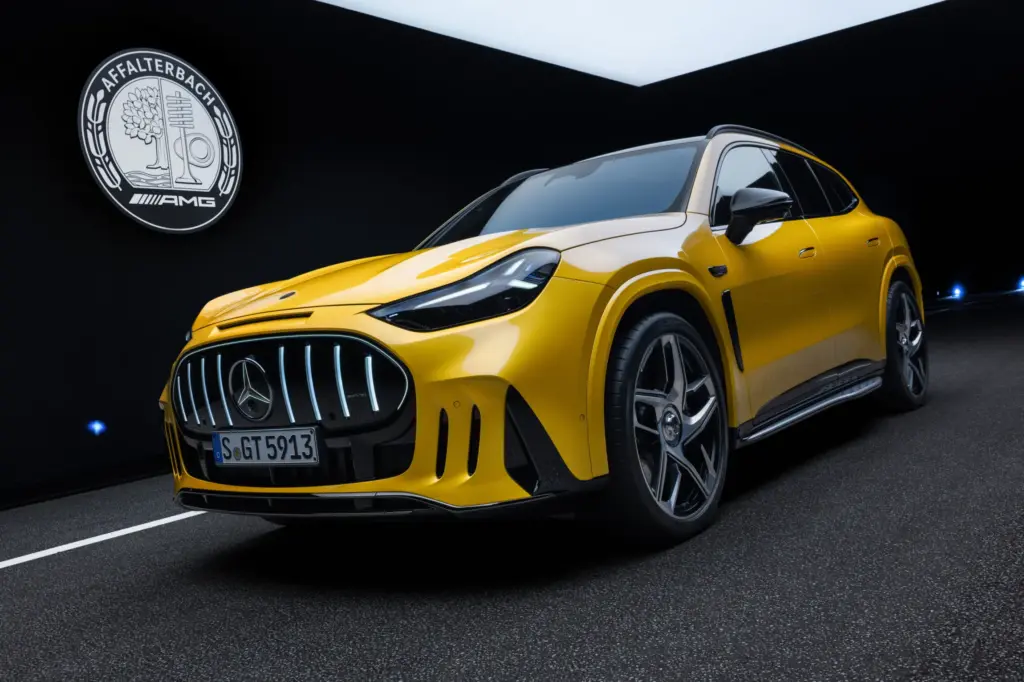
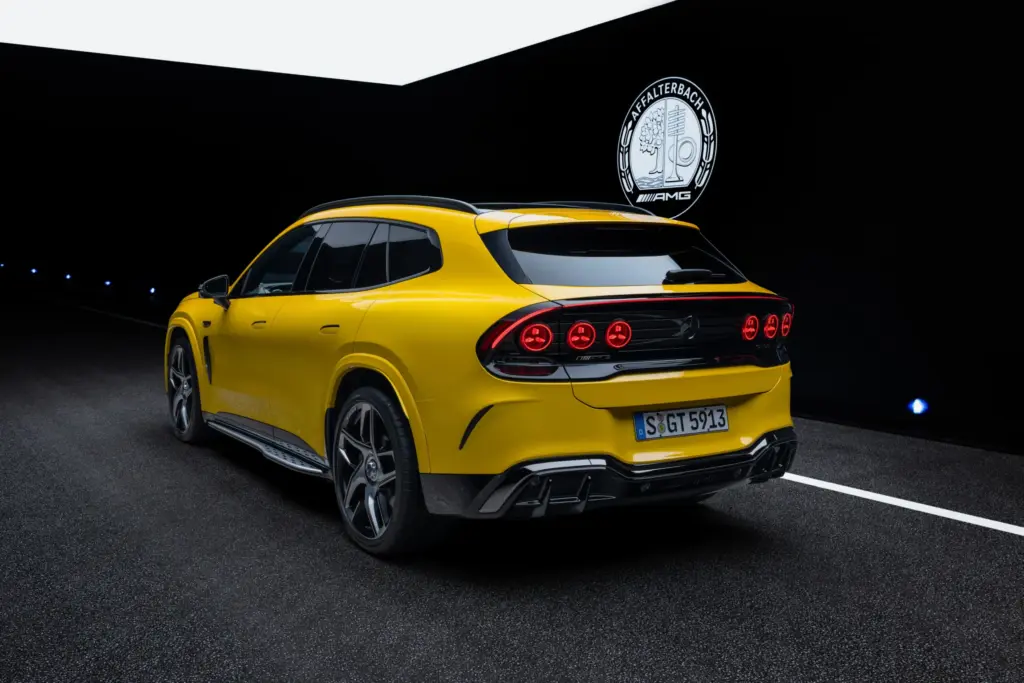
A stretched wheelbase and wide track sit beneath a silhouette so flat and low it seems more shooting brake than family hauler. The steep front end, frameless GT-style side windows, and sloping roofline reduce frontal area and aerodynamic drag. Small exterior mirrors, short overhangs, and pronounced rear shoulders complete a profile that signals intent.
The Body as Architecture
Lightweight construction here is not marketing speak. The body shell combines aluminum, steel, fibre-reinforced composites in a multi-material mix that delivers rigidity without the mass penalty usually accompanying full-size electric platforms. The low-profile silhouette contributes directly to efficiency and dynamic capability, not merely aesthetics.
The high-voltage battery integrates centrally into the structure, housed within a protective safety box engineered to absorb crash forces. This central placement also keeps mass low, contributing to a centre of gravity unusual for a vehicle with this much ground clearance. AMG has essentially built a battery pack that serves double duty as structural element.
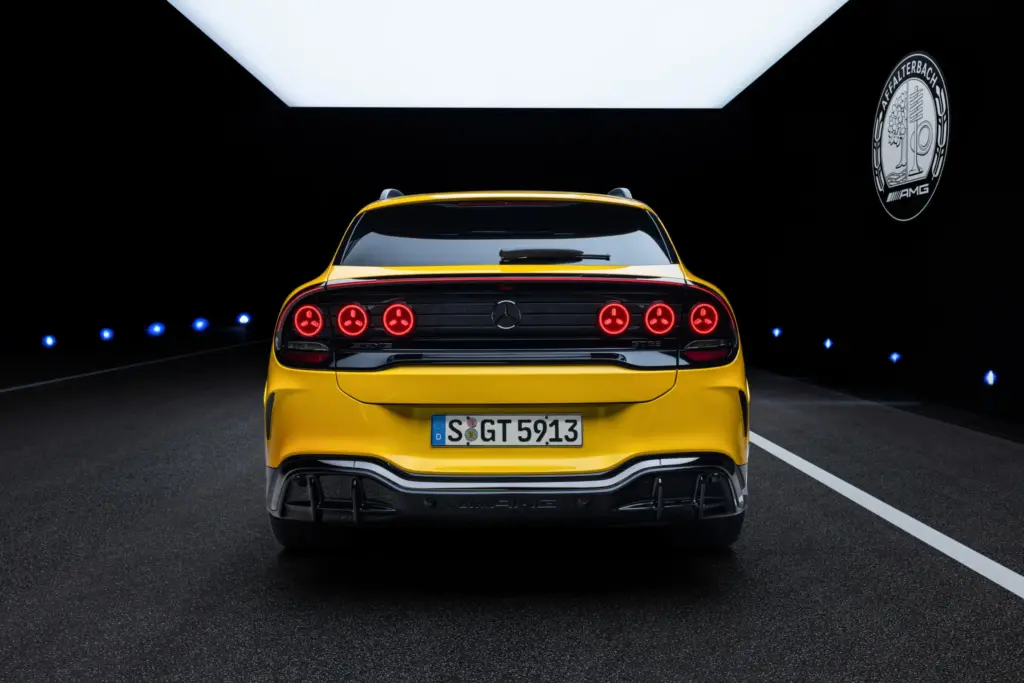
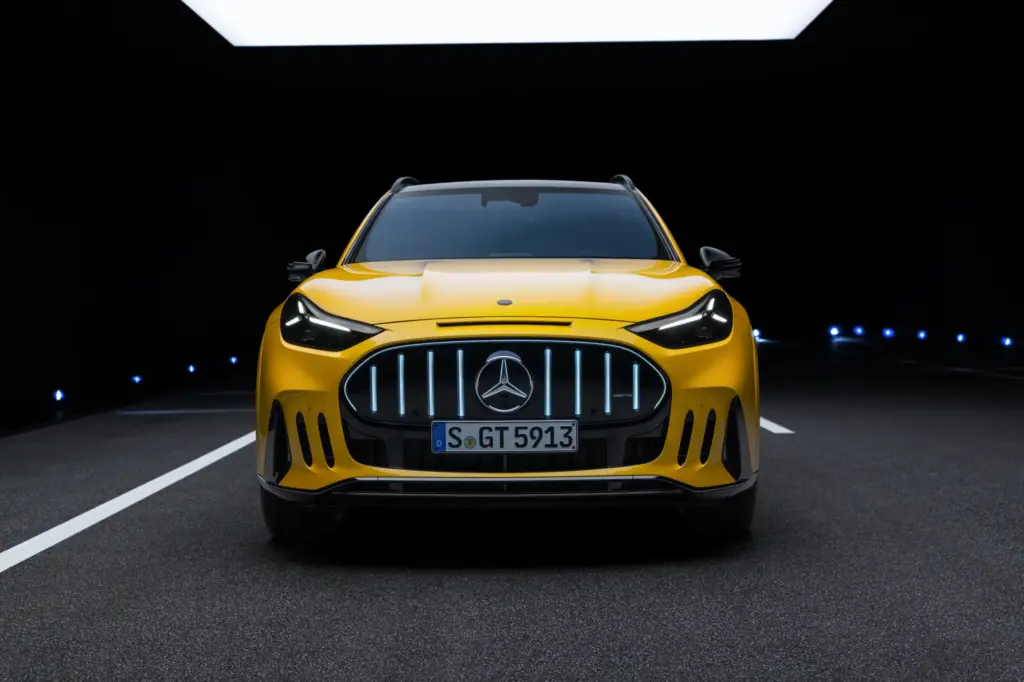
The AMG-specific radiator grille carries metallic vertical struts available with optional illumination, with the Mercedes-Benz star positioned centrally and similarly backlit. Star-shaped daytime running lights mark the front, while six circular turbine-design taillights and an optional light strip define the rear. Power domes and flared fenders over large wheels complete the appearance.
Three Powertrains
The GT SUV launches with a three-tier electric lineup. At the top of the food chain is the AMG GT63 SUV, It has three axial-flow motors producing up to 860 kW and 2 000 N.m of twist action. This is a different category of acceleration entirely, one that redefines what full-size performance means when traction and torque vectoring are managed electrically.
Mercedes says it’ll blast from rest to 100 km/h in a ridiculous 2,7 seconds and will hit 200 in 7,2. Top speed is rated as 270 km/h. Thanks to a 128 kWh battery pack the range is rated at somewhere between 620 and 800 km, depending on the test employed and the spec of the vehicle.
The AMG GT55 SUV offers up to 600 kW and 1 860 N.m, which allows for a 3,1 second blast in the benchmark test, still sufficient to embarrass most dedicated sportscars. It has the same battery back size as its bigger brother, so returns the same range figures.
The AMG GT53 SUV, positioned as the entry point, uses two synchronous motors with one per axle for 400 kW and 800 N.m. The least powerful member of the family does the sprint test in just 4,1 seconds The ‘baby’ of the range has a 106 kWh battery pack with the max range also in the 800-odd km ballpark.
All variants draw from the AMG High Performance Electric Battery, which uses directly cooled cylindrical cells to maintain uniform temperature distribution. The critical advantage is sustained output, allowing repeated hard acceleration, mountain passes, or track sessions that would thermally throttle lesser electric powertrains.
Active Ride
AMG Active Ride Control+ are standard equipment on the GT63 and optional on the GT55. Triple-switchable air springs work with hydraulically controlled dampers and an 8,2-litre pressure accumulator to enable near real-time level adjustments, including speed-dependent lowering that makes the body hunker down at higher velocity.
Active hydraulic elements replace conventional anti-roll bars entirely, controlling pitch and roll through fluid pressure. This is similar to the system used on McLaren sportscars for years. A central pump with regulated valves supplies system pressure, allowing the suspension to actively resist front-end dive under braking and rise under acceleration. The three-stage air springs balance comfort against body roll in ways that passive systems cannot approach.
Active rear-axle steering and fully variable AMG Performance 4Matic+ all-wheel drive complete the dynamic package. The rear-steer system tightens low-speed maneuverability while enhancing high-speed stability, addressing the inherent wheelbase length that otherwise compromises agility in tight South African parking structures or mountain switchbacks.
AMGForce Sport+
The most controversial element may be the AMGForce Sport+ system. This reproduces documented original engine sounds through a process involving over 100 measurements captured with 16 microphones using reference vehicles including the Mercedes-AMG GT R. For the GT63 and GT55, the system generates AMG V8 acoustics; the GT 53 receives AMG six-cylinder tones. You can hear the soundtrack in the video below.
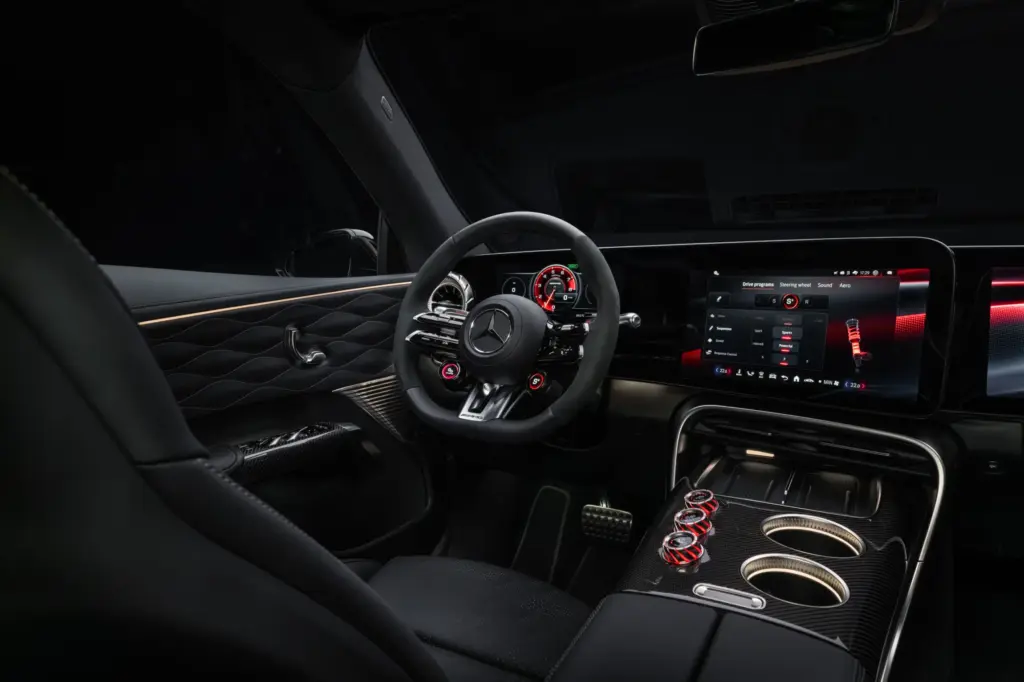
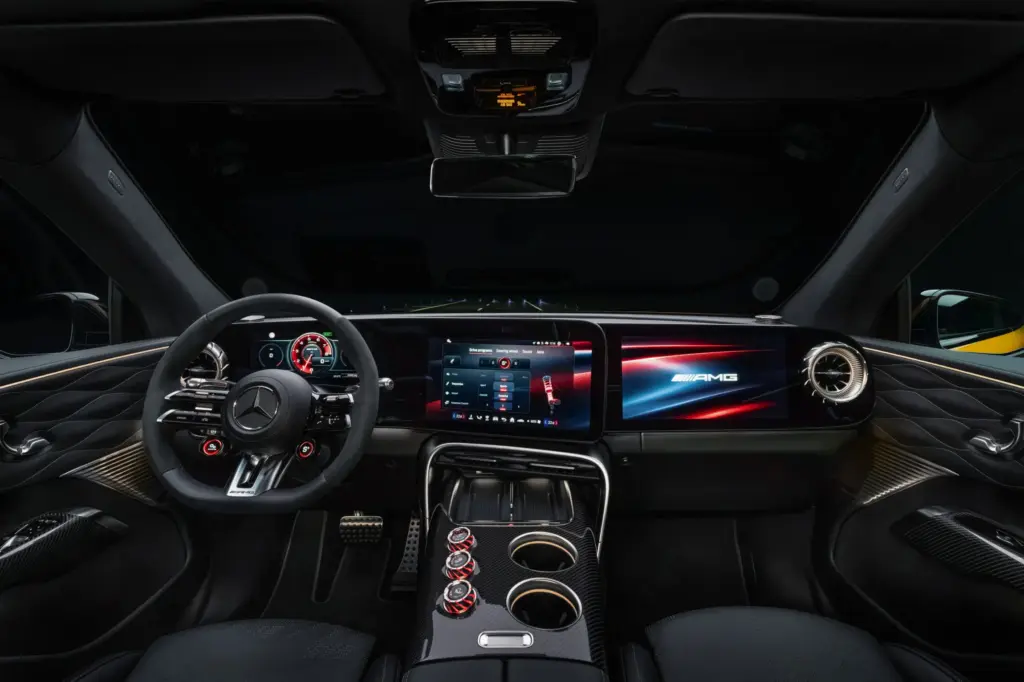
This is not generic synthetic enhancement. The system adapts dynamically to driving style in real time, responding to acceleration, deceleration, and simulated AMG-style gear changes. Manual paddle shifting allows driver engagement with the simulated ratios. A customised driver display integrates with seat shakers that provide haptic feedback synchronized to the audio output – sorta like a 4Dx cinema does.
For drivers who experienced AMG through the raw mechanical violence of the M156 or M177 V8s, the quality of sound reproduction may matter less than what is actually propelling the vehicle.
What This Represents
Performance enthusiasts are already navigating the transition from petrol to electrons. The GT SUV tests whether AMG’s identity can transfer intact to vehicles without combustion. The 59-year history referenced in its development represents an engineering culture built on internal combustion excellence. The AMG.EA platform, the active hydraulic suspension, and the meticulously recorded sound reproduction all demonstrate serious effort at preservation albeit in a new form.
Whether that translation succeeds will be determined not by specification sheets but by ownership experience. The GT SUV must deliver the specific quality that has defined AMG in South African conditions: the ability to cover long distances in absolute comfort, then transform into something genuinely aggressive when the road opens or the track beckons. The hardware suggests capability. The proof will come when these vehicles reach local roads, local surfaces, local driving cultures that have always tested Mercedes-AMG products more severely than European development routes.
For now, the GT SUV stands as the most technically ambitious vehicle yet to wear the Affalterbach badge. Its existence, built from nothing rather than adapted from something, signals commitment beyond compliance.



![Yangwang U9 Track Edition Sets A New EV Top Speed Record [video]](https://doubleapex.co.za/wp-content/uploads/2025/08/Yangwang-U9-Track-Edition-Sets-A-New-EV-Top-Speed-Record-300x180.webp)
![2025 Dakar Stage 7 Results – More Big Names Out [w/videos]](https://doubleapex.co.za/wp-content/uploads/2025/01/Lucas-Moraes-was-unbeatable-on-2025-Dakar-stage-7-300x180.webp)
Have your say
Got thoughts on this?
No feedback yet on AMG Unleashes Its First Ground-Up Electric Performance SUV. Kick the conversation off.
Free. Email link only — no password.