
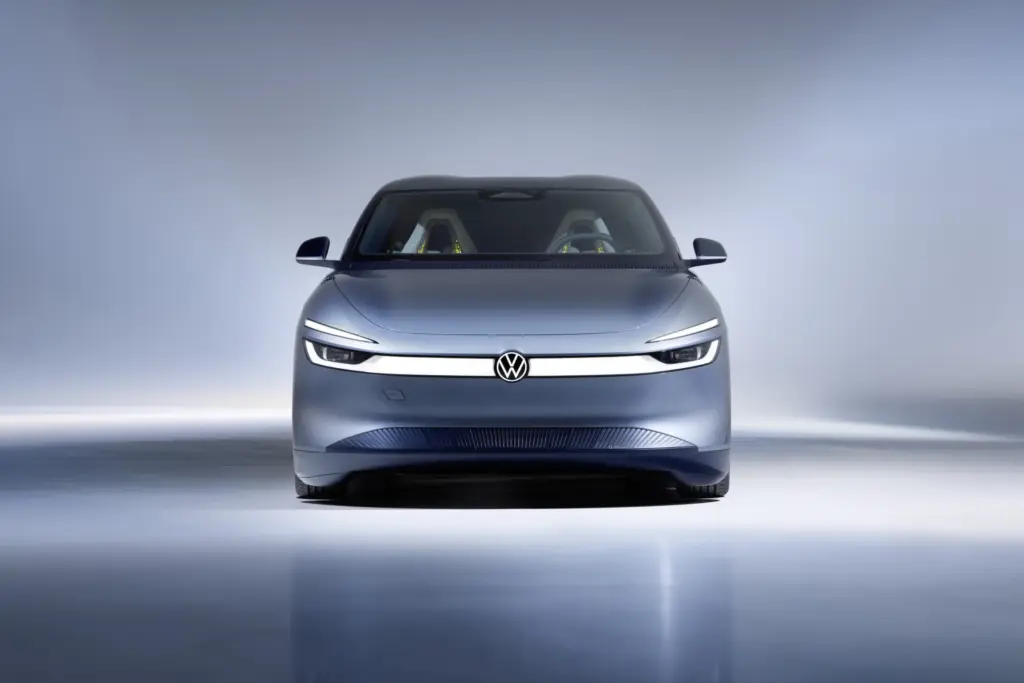
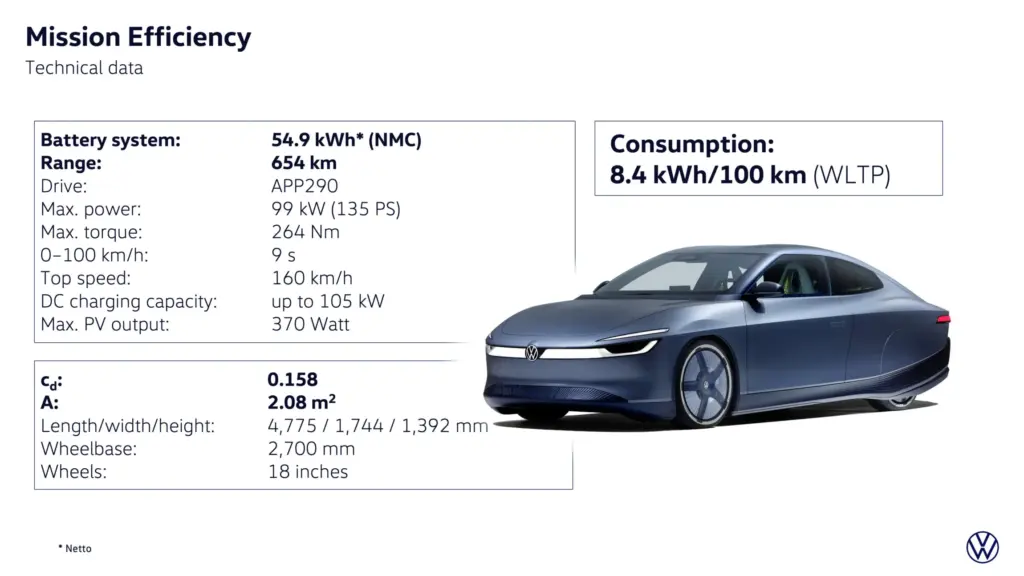

Volkswagen names its engineering concepts like military operations, and Mission Efficiency is just the latest. The aim was to build an electric car that uses less energy than anything else on the road, then prove it with record-setting achivements. A drag coefficient of 0,158. Real-world consumption of 7,51 kWh/100 km across more than 1 200 km of European motorway and back roads. These are certified, documented, and achieved with a powertrain you can already buy in a standard ID. Polo.
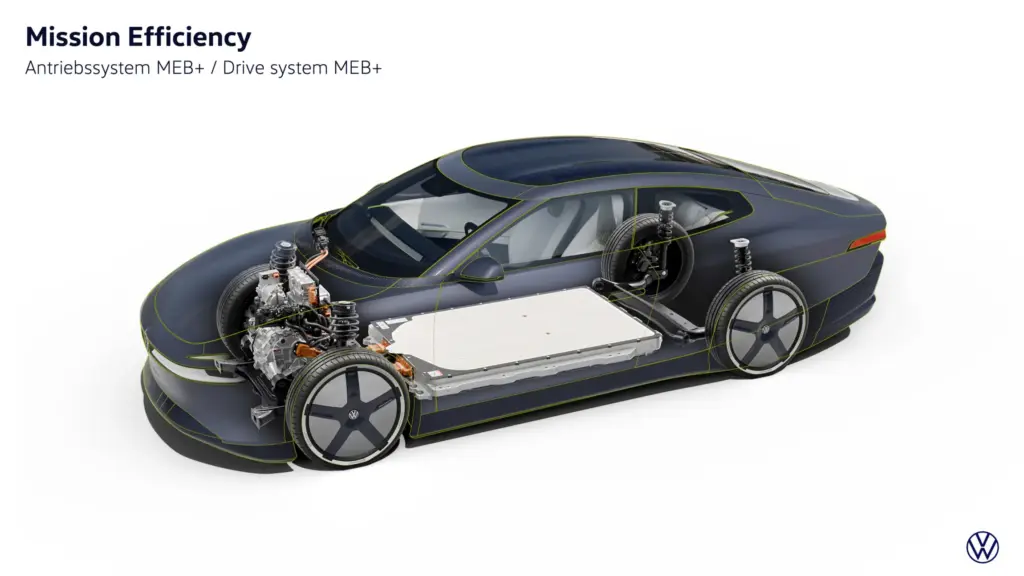
Mission Efficiency is the ideal way to demonstrate what distinguishes Volkswagen in the electric age: technology for the masses – not just for the few. Rather than using specialist technology, the vehicle set its three world records using affordable production technology from the ID. Polo and ID. Cross, based on the MEB+ platform with front-wheel drive. This shows how much potential efficiency we can add to the latest generation of our electric cars. Developed in Wolfsburg and built by Kai Grünitz and his team, the Mission Efficiency is a symbol of German engineering expertise with clear customer benefits
– Thomas Schäfer, CEO of Volkswagen
The Records
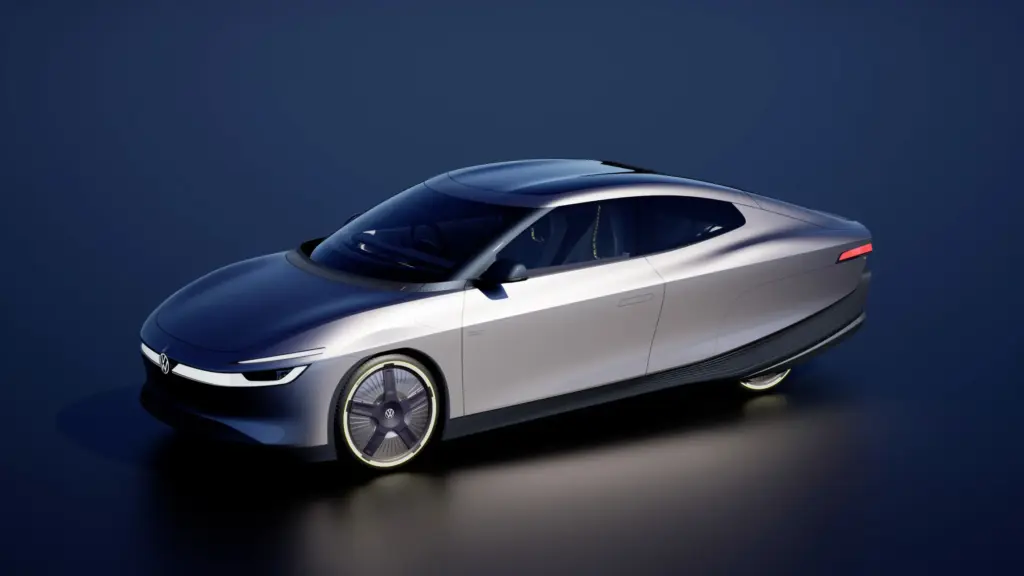
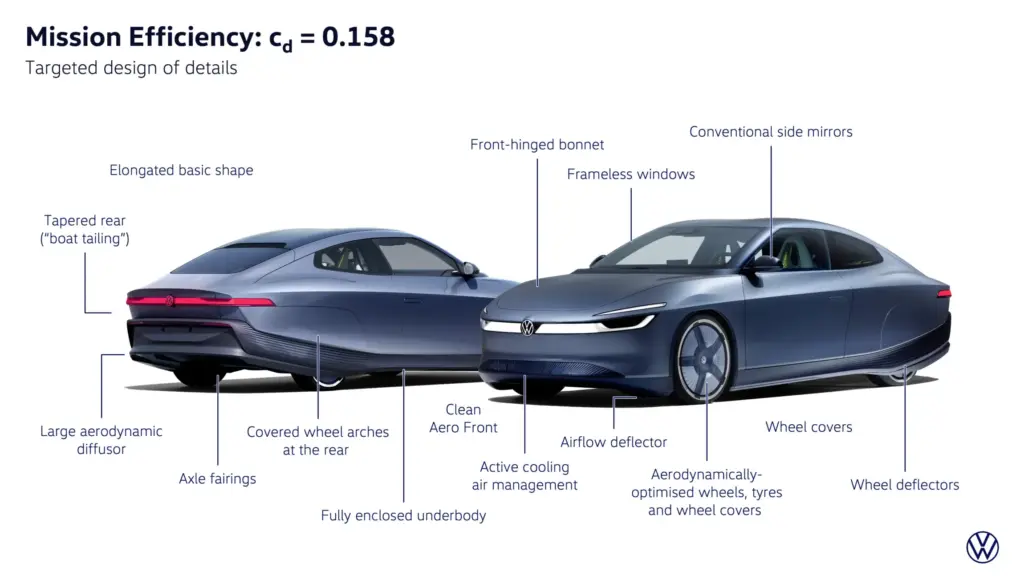
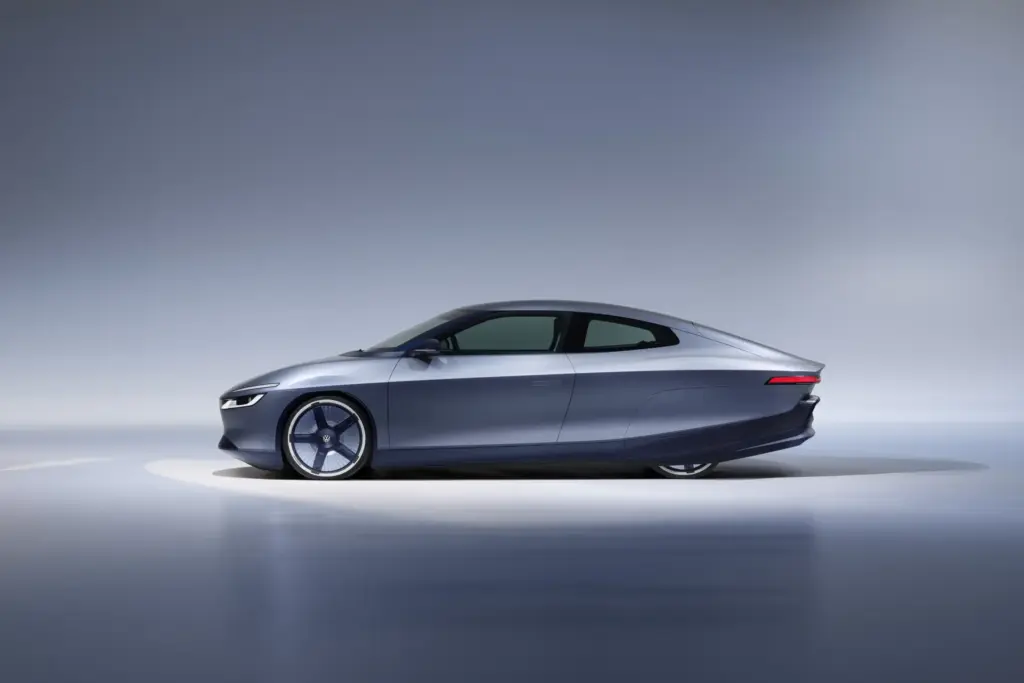
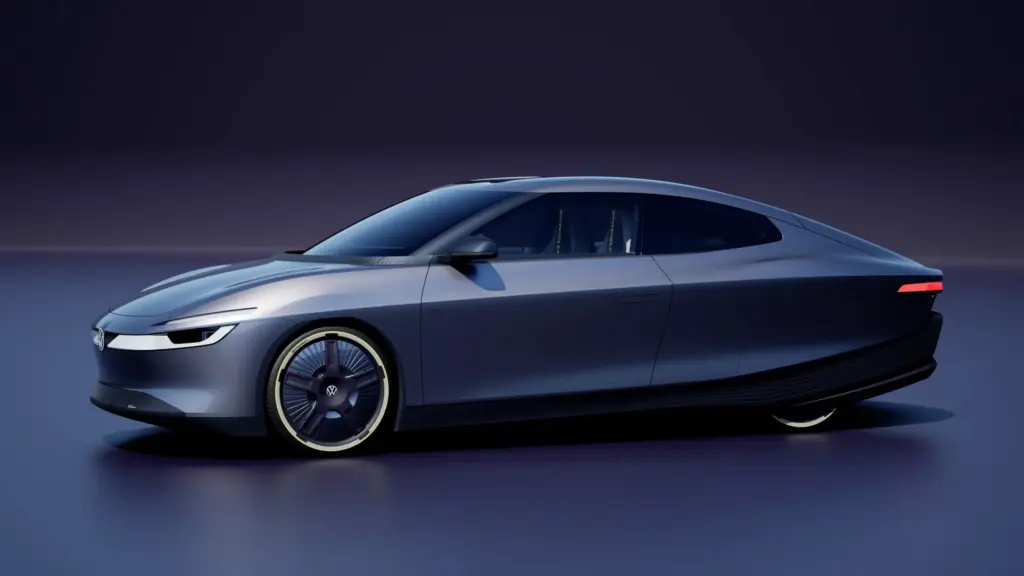
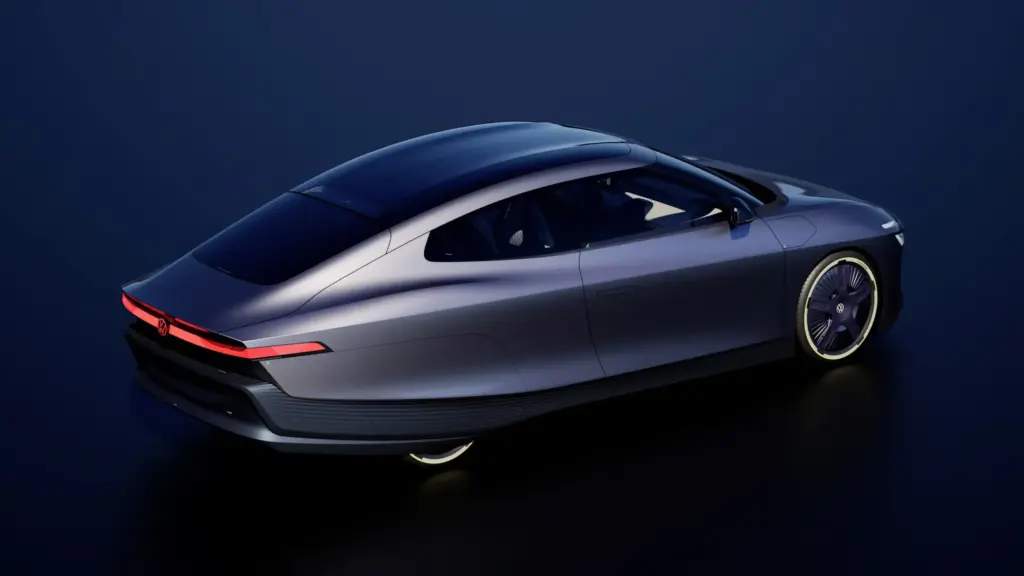
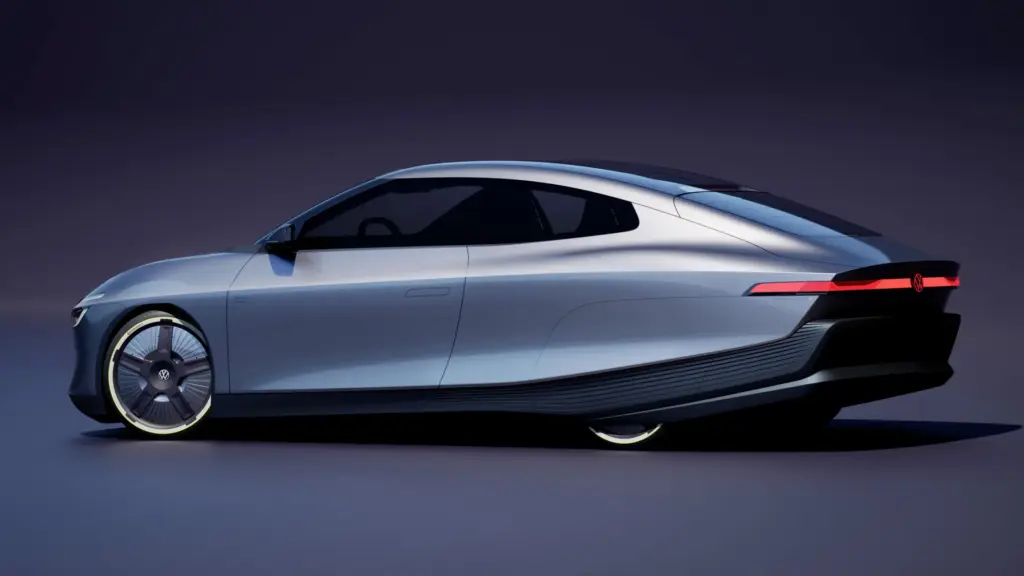
The 0,158 Cd figure stands as the benchmark for any road-approved vehicle, not merely a concept with number plates for show. Combined with a frontal area of 2,08 m², the Mission Efficiency generates air resistance so low that Volkswagen’s engineers had to invent new ways to measure it. The shape is the obvious place to start: a teardrop profile that tapers behind the cabin like an aircraft fuselage, guiding airflow so cleanly that separation points are pushed far rearward.
Active cooling air flaps sit behind the nose, opening only when the thermal load demands it and sealing flush when it does not. The rear wheels are fully clad, eliminating the turbulent wake that normally swirls behind open arches. A smooth underbody pan extends from bumper to bumper with no interruptions for exhaust tunnels or structural members. Even the door handles retract entirely, and the windows sit frameless within their seals. Every protrusion has been interrogated and either removed or reshaped.
The result is felt most acutely at speed. Above 80 km/h, the Mission Efficiency uses in excess of 30 per cent less energy than a standard ID. Polo travelling at the same velocity. At 140 km/h, it matches the Polo’s consumption at 100 km/h.
The second record concerns the ideal trip: 6,48 kWh/100 km at a constant 68 km/h with no gradients and all peripheral consumers switched off. The third is the more useful figure for anyone who actually drives: 7,51 kWh/100 km including charging losses, recorded over an officially monitored 1 278,36 km route from Wolfsburg through Poznań and Olmütz to Vienna. Average speed was 67.72 km/h, with bursts to 138 km/h. The 54,9 kWh battery required one charge. On arrival, 164 km of range remained.
The 99 kW electric motor and the high-voltage battery are not bespoke racing components. They are standard ID. Polo production units, selected because they are “extremely light, very efficient” and because using them proves a point about accessibility. World-beating efficiency does not require exotic materials or unobtainable technology. It requires better integration of what already exists.
Small gains
The wheel package deserves particular attention because wheels account for 25 to 30 per cent of total aerodynamic resistance on a typical vehicle. The Mission Efficiency’s front wheel arches follow the tyre radius with minimal clearance, reducing the turbulent jet that normally escapes around the rotating rubber. Patented rim deflectors on all four wheels prevent air from entering the wheel cavity in the first place, while flat, flow-optimised hubcaps complete the sealing.
Continental collaborated on a concept tyre based on its EcoContact 7, achieving a rolling resistance of 4,9 kg/t. Rolling resistance is the energy you lose simply by having tyres deform against the road surface. Reduce it, and every kilometre travelled uses less energy.
The 370 W photovoltaic system integrated into the glass roof and boot lid adds another layer. It powers onboard consumers directly and can extend real-world range by up to 30 km daily, depending on season, latitude, and weather. In a South African context, with Gauteng and the Northern Cape receiving some of the highest sun coverage globally, that figure might prove useful.
The Interior
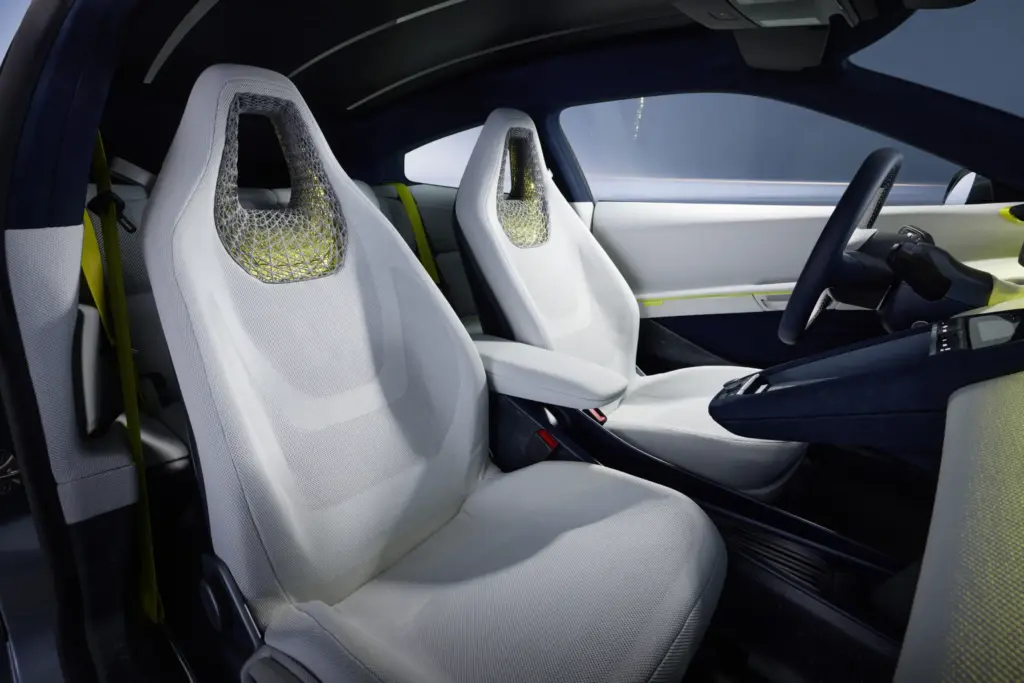
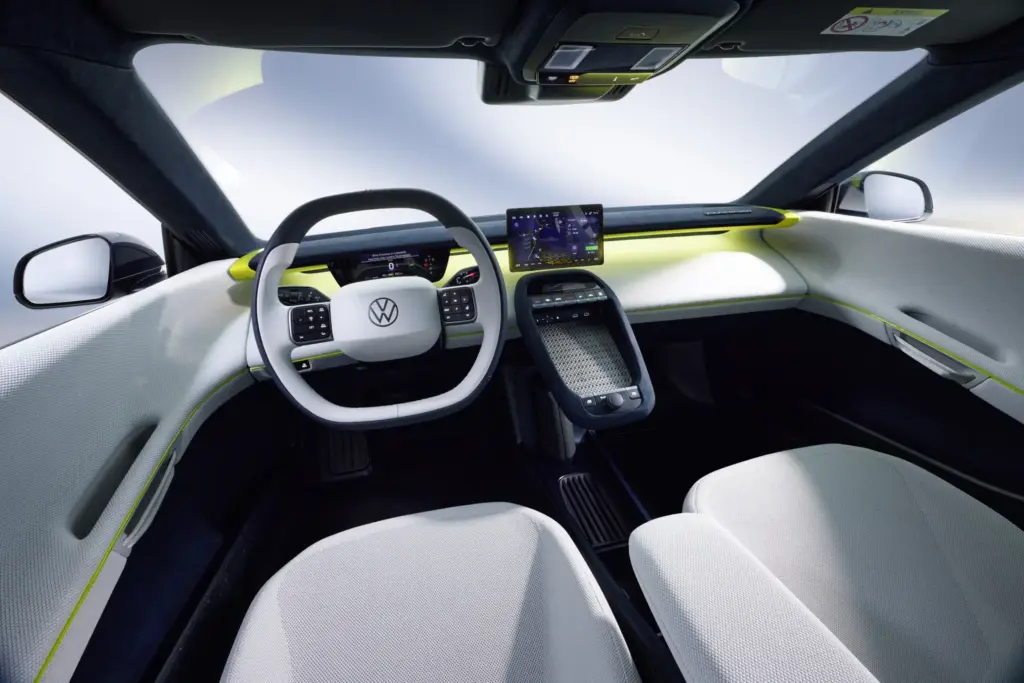
Inside, the weight reduction programme continues with unrelenting discipline. Lightweight paneling replaces conventional trim. A mobile Bluetooth speaker unit substitutes for fixed speakers and their wiring. Most radically, the “bring your own device” concept eliminates the central infotainment screen entirely. Your smartphone or tablet becomes the display, the interface, the navigation system. This philosophy treats the car as hardware and the phone as software, acknowledging that most owners already carry superior computing power in their pockets.
This approach will divide opinion. Enthusiasts who value clean interiors and minimal weight will appreciate this approached. However buyers accustomed to integrated screens and permanent fixtures may feel a bit shortchanged. Whether this reaches production likely depends on trim level and market positioning rather than technical feasibility.
The Road Ahead
Volkswagen’s statement of intent is clear. The company is claiming aerodynamic leadership and backing the claim with independently verified records. More significantly, it is arguing that the path to efficiency runs through integration and intelligence rather than simply scaling battery capacity ever upward. A 54,9 kWh battery achieving genuine 1 200 km range with one recharge is a direct challenge to the industry assumption that buyers need 100 kWh packs and the mass penalty they bring.
For the South African market, where charging infrastructure remains patchy outside major corridors and electricity pricing is a genuine concern for EV adopters, a vehicle that extracts maximum distance from minimum kWh is a the way we need to proceed. It reduces dependency on rapid chargers, lowers running costs in a country where grid power is increasingly expensive, and extends the use case for EVs beyond urban commuting.
Whether the Mission Efficiency’s more extreme features—the teardrop silhouette, the clad rear wheels, the extensive composite construction—reach showrooms in recognisable form remains uncertain. Manufacturing complexity and cost will shape those decisions. But the underlying principle, that production technology already exists to build dramatically more efficient electric vehicles, is now a matter of record rather than speculation.

![EV Hypercars: Part Eight Deus Vayanne [w/video]](https://doubleapex.co.za/wp-content/uploads/2022/04/Deus-Vayanne-300x180.webp)

![All-electric Hyundai RM20e Sportscar Debuts [w/video]](https://doubleapex.co.za/wp-content/uploads/2020/09/Hyundai-RM20e-front-scaled-300x180.webp)
![VW ID.Buggy [w/video]](https://doubleapex.co.za/wp-content/uploads/VW-ID.Buggy_-300x180.webp)
![VW Golf GTI Clubsport 45 Debuts [w/video]](https://doubleapex.co.za/wp-content/uploads/2021/02/VW-Golf-GTI-Clubsport-45-300x180.webp)
![Porsche Taycan is new Formula E Safety Car [w/video]](https://doubleapex.co.za/wp-content/uploads/2022/01/New-Formula-E-Safety-Car-300x180.webp)

Have your say
Got thoughts on this?
No feedback yet on How Volkswagen’s Mission Efficiency Rewrites EV Records. Kick the conversation off.
Free. Email link only — no password.