
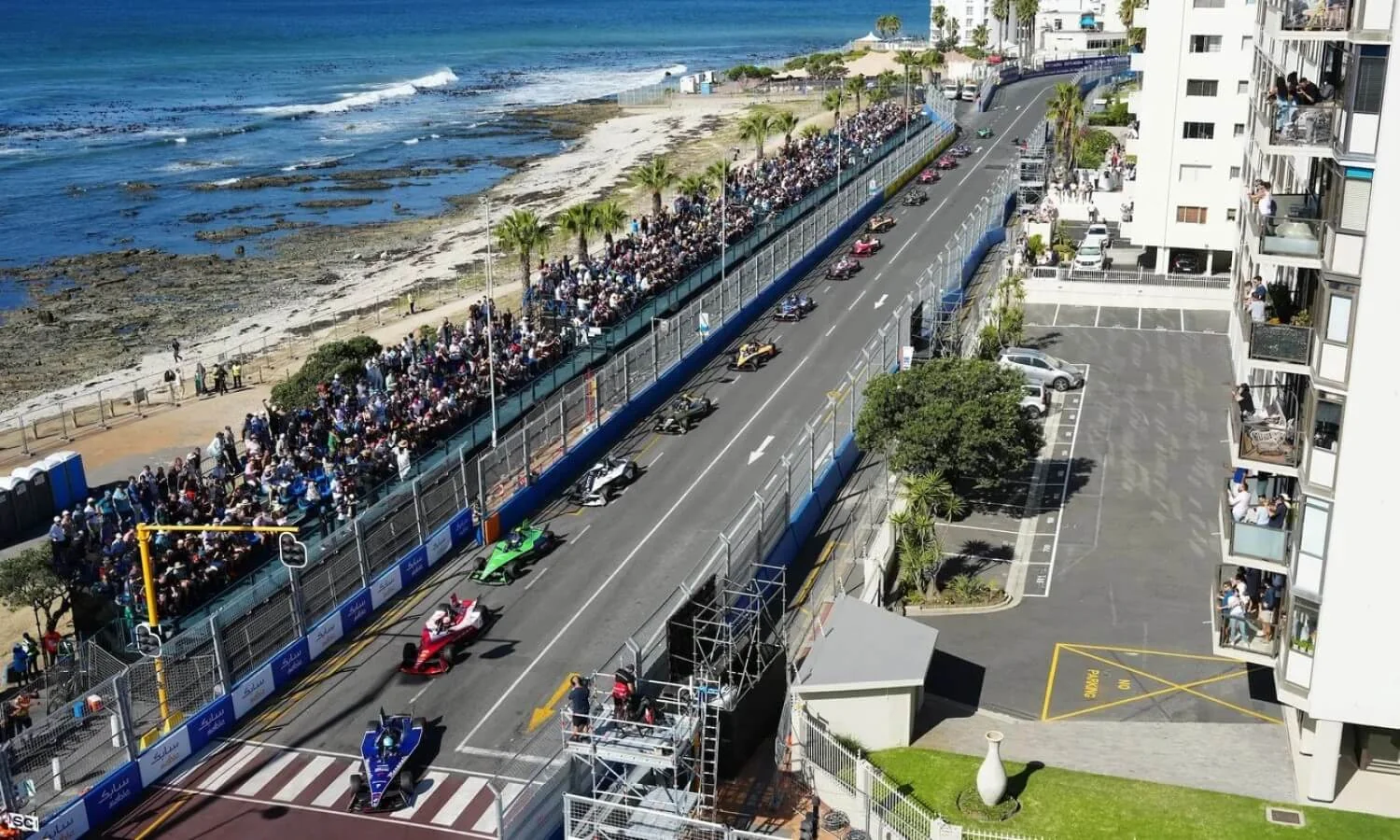

Formula E is trading the chaos of painted kerbs and armco-lined city streets for proper racetracks. This is a consequence of the Gen4 car arriving with enough pace to make the old venues look undersized. When a single-seater electric racer is heading toward 600 kW and active all-wheel drive from lights to flag, the old parade through docklands and downtown grids starts to look a bit problematic.
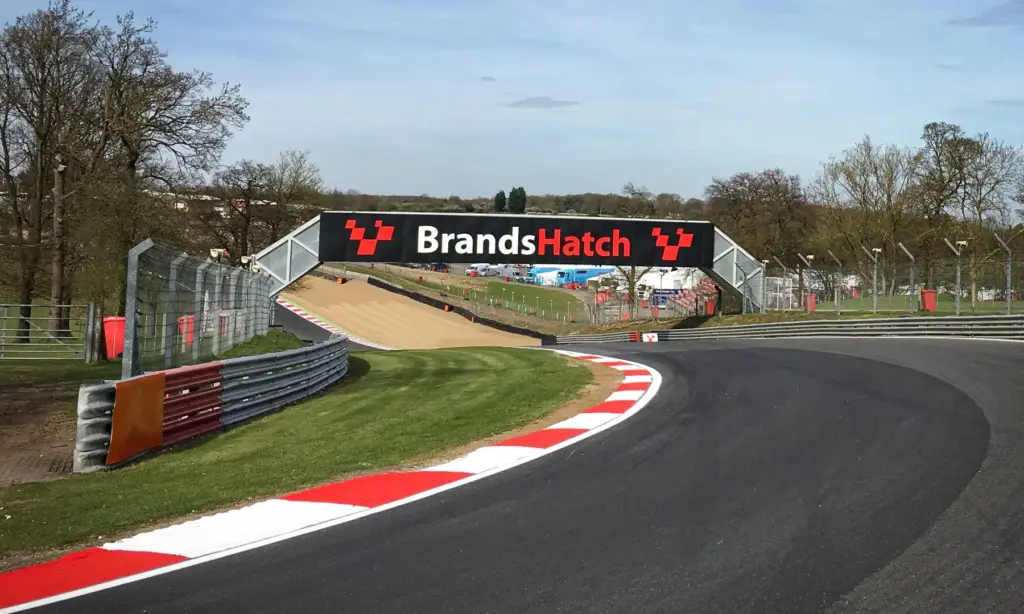
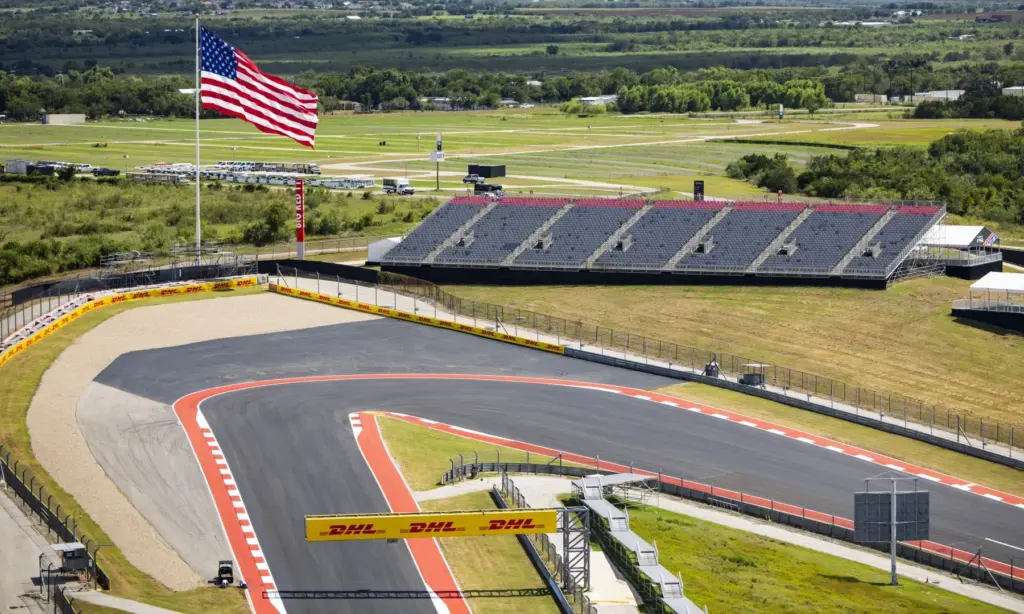
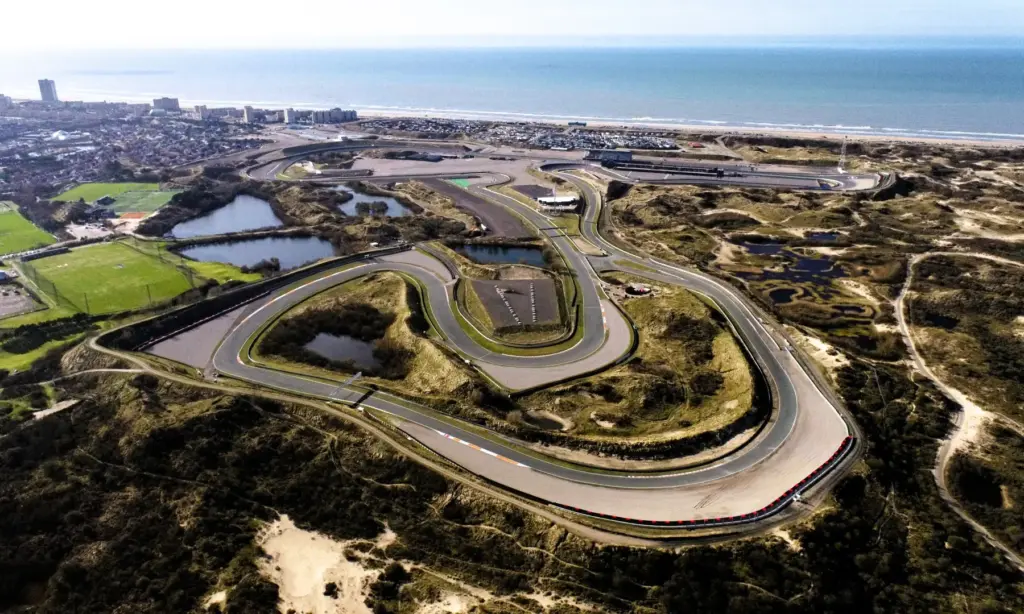
The new calendar is now leaning on permanent circuits with the sort of room, run-off and straights that can unleash serious speed. Brands Hatch, COTA and Zandvoort are not being added for nostalgia. They are being used because Gen4 needs proper tarmac under it.
We are incredibly proud to unveil our biggest and most ambitious calendar to date. Expanding to 21 races across 13 iconic cities is a huge milestone, and welcoming world-renowned tracks like COTA in Austin, Zandvoort, and Brands Hatch provides the ultimate stage to showcase our new Gen4 era. Every stop on this calendar has been chosen to deliver maximum sporting drama. Launching the season with our first-ever opener under the lights in Jeddah to demonstrate the speed of these Gen4 cars sets a spectacular tone, while grouping our races into distinct continental clusters ensures we do so as sustainably as possible. The tracks are faster, the competition is fiercer, and we cannot wait to get this historic season underway
– Alberto Longo, co-founder & chief championship officer
Why the street era has hit a wall
Formula E built its identity on temporary street circuits because that was the point. Electric racing had to be seen in the middle of cities, close to the people it was trying to convert. That formula worked when the cars were slower, narrower and less aggressive under power. Gen4 changes the equation.
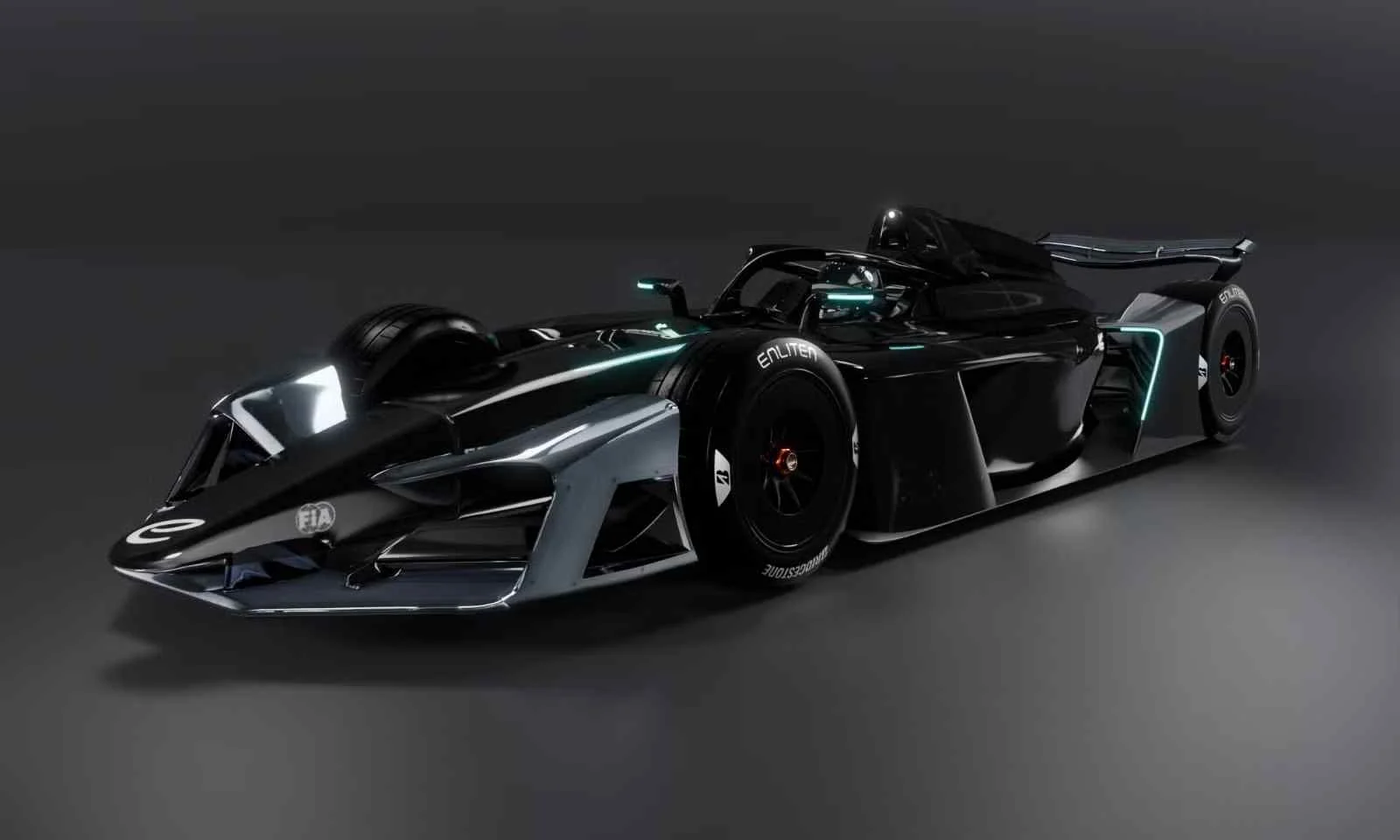
The Gen4 is the most powerful car to participate in the single-seater FIA series. It has 450 kW peak race power. In addition 600 kW is available in attack mode for limited periods of time. As a result the newest car is also the fastest of all time. In addition, the Formula E Gen4 features active all-wheel drive in every phase of the race. The new car has enhanced 700 kW of regenerative braking power, and race energy capacity up to 55 kWh. All these figures represent a significant jump over the Gen3 Evo.
A 600 kW car with active all-wheel drive will launch harder out of slow corners than earlier Formula E machinery ever could. On a tight city track, that means more speed where there is least room to absorb it. Narrow sections, short braking zones and limited run-off do not leave much margin for error. The old circuit model was always a compromise.
Formula E has also been clear that the new car is built for wheel-to-wheel racing, not for tiptoeing through temporary barriers. To make that work at the speeds involved, the series needs tracks with proper safety grading, wider tarmac and space for real racing. Many temporary street venues simply cannot be rebuilt to that standard without stripping away the very thing that made them street circuits in the first place.
New tracks change
Brands Hatch, the Circuit of the Americas and Zandvoort bring a different kind of pressure. They are not just bigger. They ask different questions of the drivers and the engineers.
Brands Hatch gives you blind crests, downhill commitment and the kind of flow that punishes hesitation. COTA brings long straights, heavy braking and the fast Esses that expose aero balance in a way Formula E has rarely had to deal with. Zandvoort adds banking, rhythm and a proper sense of speed that a tight inner-city lap cannot fake.
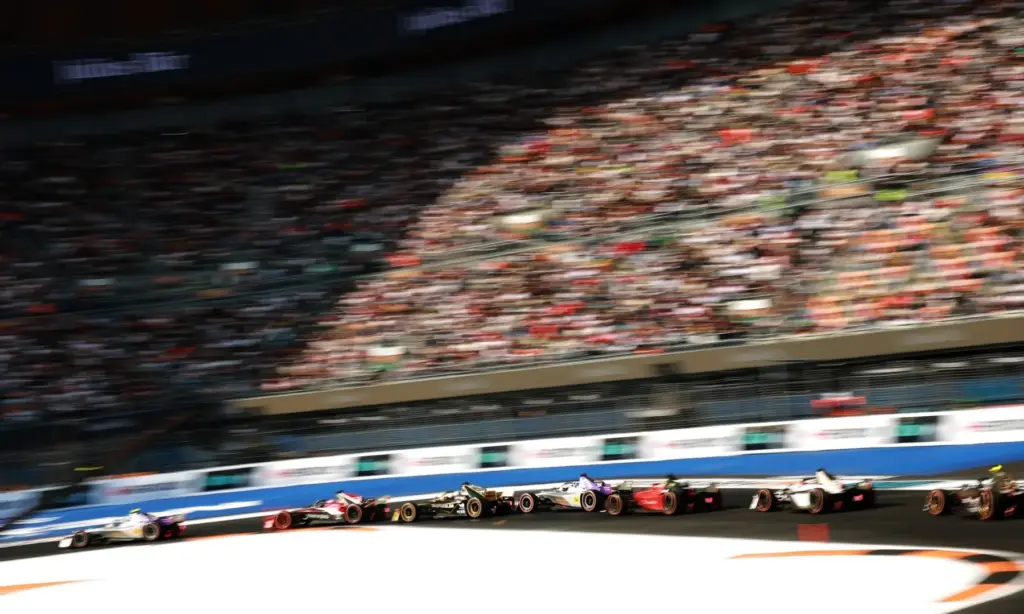
That changes the strategy as well. Energy management will still matter, because this is Formula E, but the conversation will shift from constant conservation to a more conventional mix of pace, tyre use and deployment of power. For fans, that means a different kind of Formula E. Less stop-start opportunism. More proper racing.

The 2026/27 calendar
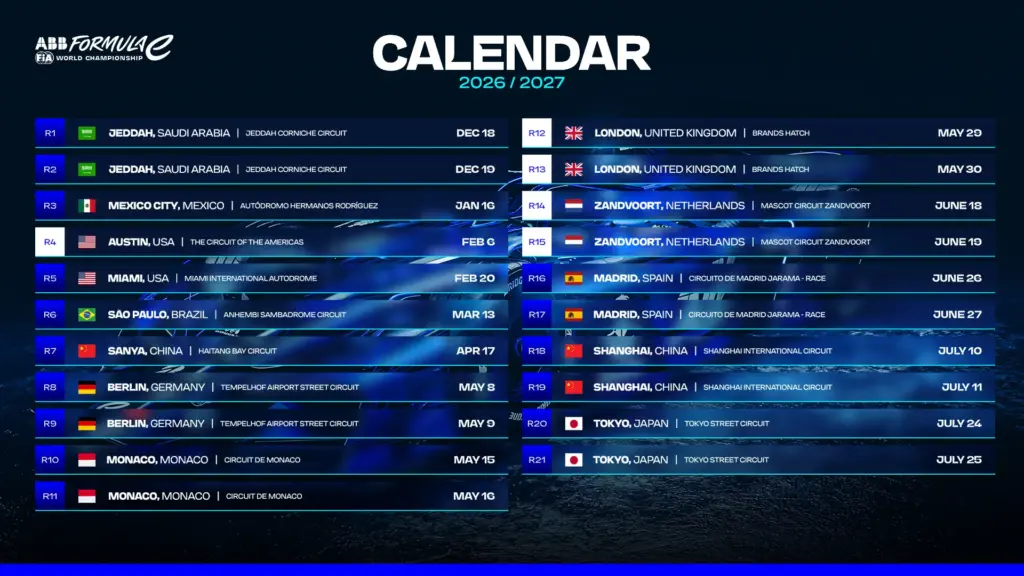
The FIA and Formula E have already signed off the first provisional calendar for the 2026/27 FIA Formula E World Championship, and it is the clearest sign yet that the series is changing shape. The season will run to a record-setting 21 races across 13 cities, the most expansive calendar the championship has put together.
It opens with a double-header under lights at the Jeddah Corniche Circuit on 18 and 19 December 2026. From there the field heads to Mexico City at Autodromo Hermanos Rodriguez on 16 January 2027, then to the first Austin E-Prix at the Circuit of the Americas on 6 February. Miami follows on 20 February at the Miami International Autodrome around Hard Rock Stadium, before Sao Paulo hosts the series on 13 March.
Asia gets its turn at Sanya’s Haitang Bay Circuit on 17 April, then Europe takes over in earnest. Berlin’s Tempelhof Airport Street Circuit gets a double-header on 8 and 9 May, Monaco does the same on 15 and 16 May, and the former London race moves to Brands Hatch on 29 and 30 May. Zandvoort joins the calendar with its own double-header on 18 and 19 June, while Madrid returns to the Circuito de Madrid Jarama on 26 and 27 June.
The season closes at Shanghai’s International Circuit that hosts a double-header on 10 and 11 July 2027, before the finale at the Tokyo Street Circuit on 24 and 25 July. That will also mark the end of the first Gen4 season. Sadly, there is no race scheduled for the African continent, the last being the event held in Cape Town.
A new race weekend format
The 2026 to 2027 season is not only changing where Formula E races. It is also changing how it races on double-header weekends. Alongside the traditional 45-minute E-Prix, the series will add a shorter event called E-Prix Unleashed. The latter is a 30-min blast. One race format will give teams the tactical grind Formula E has always traded on, while the other is designed to let Gen4’s unrestricted pace breathe. Single-header events follow the E-Prix format, while double-header weekends typically feature one of each format.
In addition, there will now be points on offer for qualifying. Qualifying practice session – groups: 1 point for each car advancing to duels. Qualifying practice session – duels: 1 point for each duel win. And a further point is on offer for claiming pole.
New manufacturer
Gen4 also brings new manufacturers into the picture, with Opel joining a line-up that already includes Jaguar, Nissan, Citroen, Lola Cars, Mahindra and Porsche. Porsche will field two works entries plus a customer team next season, which tells you plenty about where the brand thinks the value lies.
Formula E is no longer trying to prove electric racing can exist in cities. It has already done that. Now it wants to prove electric racing can be taken seriously beside the best single-seater series in the world. The move to Brands Hatch, COTA and Zandvoort is not a retreat from the original idea. It is a declaration that the cars have outgrown the streets that made the championship famous.

![Audi RS Q E-tron Dakar Racer Revealed [w/videos]](https://doubleapex.co.za/wp-content/uploads/2021/07/Audi-RS-Q-E-tron-300x180.webp)
![Five Iconic McLaren Formula 1 Cars for Sale [w/video]](https://doubleapex.co.za/wp-content/uploads/2026/10/Five-Iconic-McLaren-Formula-1-cars-for-sale-300x200.webp)
![2021 Dakar Stage 12 [w/video]](https://doubleapex.co.za/wp-content/uploads/2021/01/Stephane-Peterhansel-in-action-during-2021-Dakar-Stage-12-Image-C.Lopez-ASO-300x180.webp)
![24 Hours of Lemons For Beginners [w/video]](https://doubleapex.co.za/wp-content/uploads/2021/04/1-300x180.webp)



Have your say
Got thoughts on this?
No feedback yet on 2026/27 Formula E Calendar – Why the Series Is Swapping…. Kick the conversation off.
Free. Email link only — no password.