
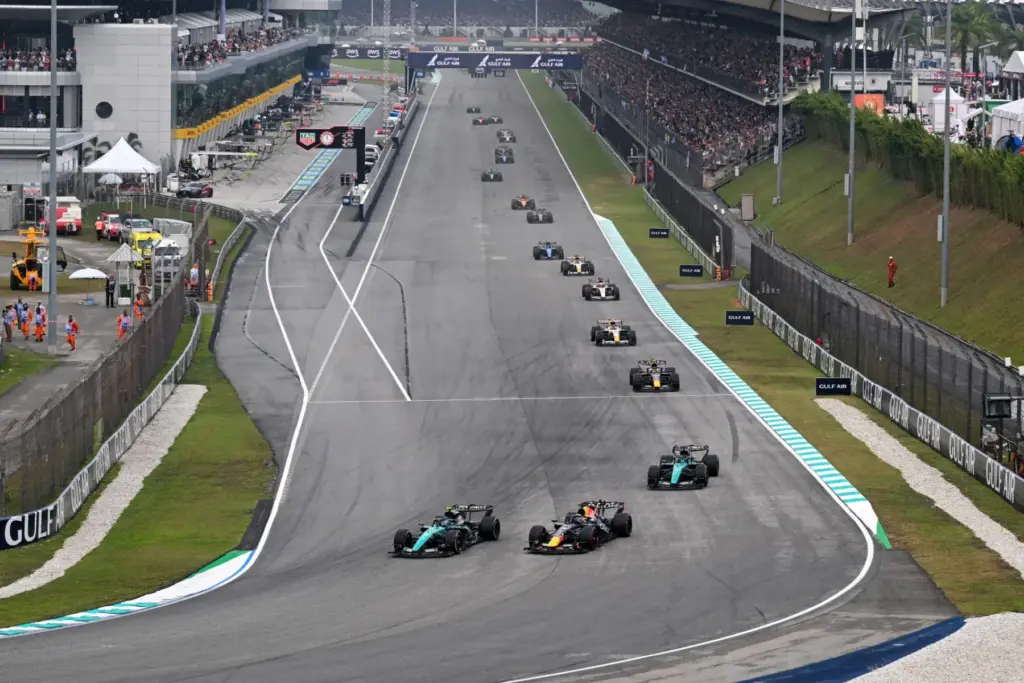


Formula One has always been a contest governed by rules, but the 2026 regulations have taken that principle to another level. The modern F1 power unit is no longer simply an internal-combustion engine supplemented by an energy-recovery system. It is a sophisticated energy-management system in which the FIA regulates not only how much power can be produced, but when, where and for how long that power can be deployed.
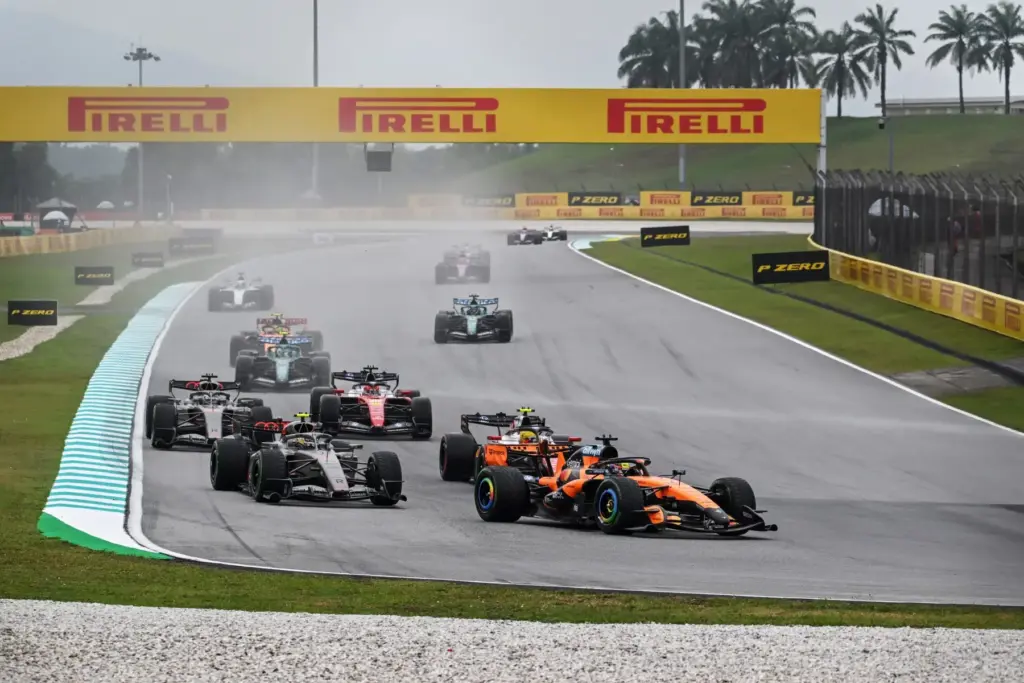
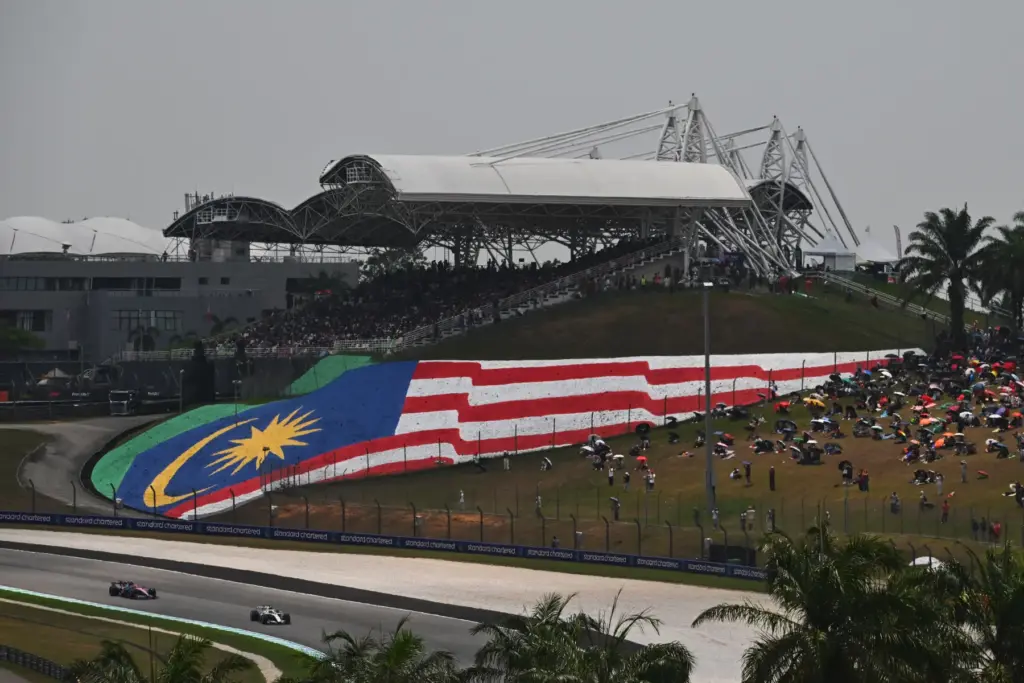
The extraordinary events surrounding the 2026 Bahrain Grand Prix – staged at Malaysia’s Sepang circuit – provided a dramatic demonstration of just how dependent the new-generation cars have become on power management software.
Follow Double Apex on Instagram and Facebook where we share more car content.
Electrified
In terms of the 2026 regulations, the internal combustion engine is now limited to around 400 kW, while up to 350 kW of electrical power can be delivered when available and applicable. In other words, the FIA does not simply give teams 350kW and allow them to use it whenever they wish. It also defines how much power (electrical energy) can be recovered and when recovery is possible.
Significantly, the rules not only establish energy limits for different phases of a GP weekend but also identify particular circuit sectors where alternative power curves apply. At Sepang, for example, the FIA specified maximum recharge allowances of 8.5 megajoules per lap in the race when the Overtake mode was not active and 9.0MJ when it was. It also specified a maximum recharge allowance of 7,5 MJ in qualifying and 9,0 MJ during free practice.
During practice, teams have greater freedom to experiment with energy harvesting and deployment strategies. Qualifying is different because the objective is a single maximum-performance lap. The regulations have therefore been adjusted during the season to reduce excessive harvesting and so-called ‘super clipping’ – harvesting electrical energy towards the end of a straight while remaining on full throttle.
Reducing recharge
From the Miami GP earlier in the year onwards, the FIA reduced the maximum qualifying recharge allowance from 8 MJ to 7 MJ, while increasing peak ‘superclip’ power from 250 kW to 350 kW. The intention was to reduce the amount of time drivers had to spend managing energy and to encourage more continuous flat-out running.
Race deployment is even more complicated: The battery can deliver up to 350 kW in specified acceleration and overtaking zones, but is limited to 250 kW in other parts of the lap. The ‘boost’ option provides the driver with an additional means of accessing available electrical energy while the ‘overtake’ system gives a pursuing driver additional energy when appropriate detection criteria are met.
Boost can provide up to an additional 150 kW, while Overtake does not add a fixed amount of power but gives the attacking car access to the battery’s maximum 350 kW output together with an additional 0,5 MJ of electrical energy. To put it another way, the driver is not simply pressing the accelerator and receiving whatever power the engine can produce. The FIA-defined software architecture is constantly calculating what power is permissible according to speed, location, energy state, mode and a number of other parameters.
Rain chaos
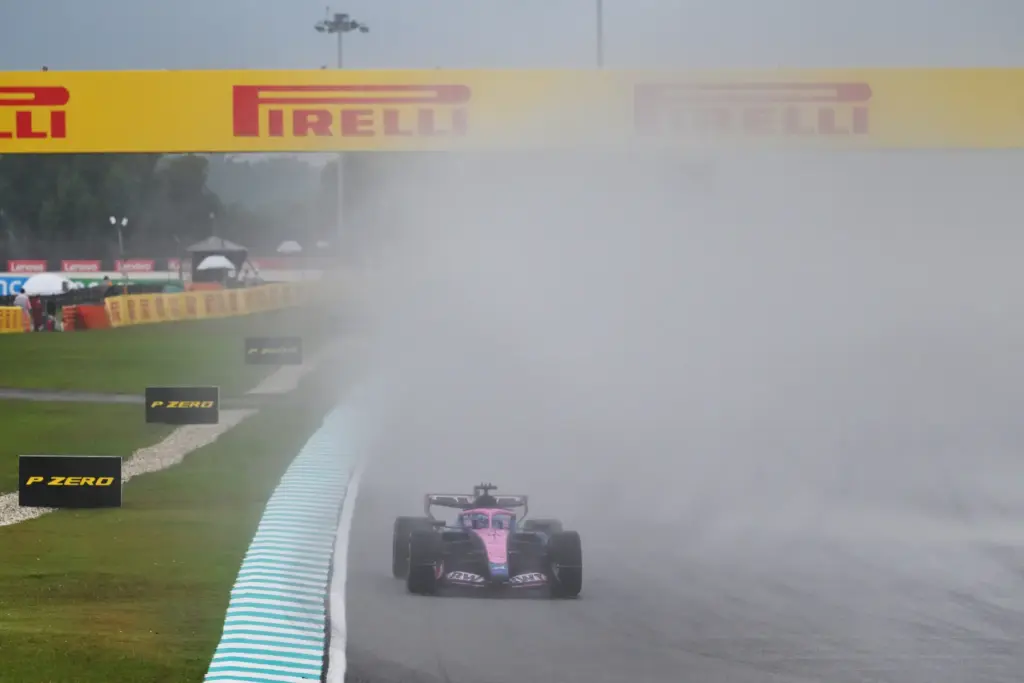
In Malaysia, the race had already been delayed by heavy rain when the cars eventually ventured onto the track for their formation laps. Several drivers then reported that their cars had suddenly lost power. Some cars virtually ground to a halt. The FIA subsequently identified an ‘unprecedented combination’ of low engine speed, low-grip conditions, wet-weather energy-management settings and the configuration of Sepang’s sectors as the cause.
The circumstances were particularly unusual. Running slowly behind the Safety Car in heavy rain meant the engines were operating at exceptionally low revs. At the same time, the wet-weather energy-management strategy that drivers were given imposed restrictive electrical deployment limits. The consequence was an unexpected feedback loop: low grip produced low speeds; low speeds affected the strategy; the software then prevented the expected redeployment of electrical power; and the cars were unable to accelerate normally.
Software patch
The FIA’s emergency solution was equally revealing. The FIA removed the energy-limit constraint in the affected sectors – effectively overriding the software restrictions associated with a 250 kW wet-weather power limitation. Teams could then load the revised parameters into their cars and restart the procedure.
This represents a significant development in F1. The governing body effectively had to issue an emergency software patch before the race could safely proceed. At Sepang, F1 discovered that the battle is no longer simply between engines, aerodynamics and drivers. It is also between algorithms.










Have your say
Got thoughts on this?
No feedback yet on F1’s Energy Equation: Resolving the Power Management Mystery. Kick the conversation off.
Free. Email link only — no password.