
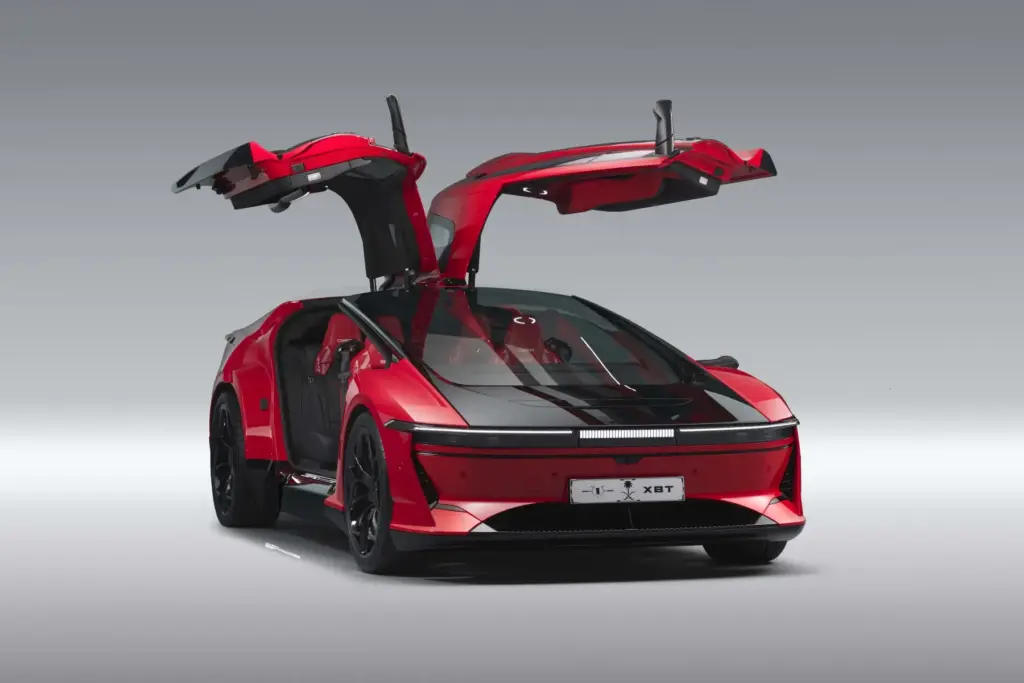

A desert kingdom built on crude wants to sell you an electric car. Seems odd doesn’t it? This is not just any electric car, but one massive power, doors that open like a falcons’s wings, and enough screen acreage to make a cinema seem inadequate. The Ceer Exobot is a deliberate overreach, not a tentative first step into electrification.
Saudi Arabia’s Public Investment Fund has spent four years incubating Ceer Motors in near-silence. The project carries Crown Prince Mohammed bin Salman’s direct approval, which means it carries the weight of national ambition. The kingdom wants seven distinct models on the road by 2030.
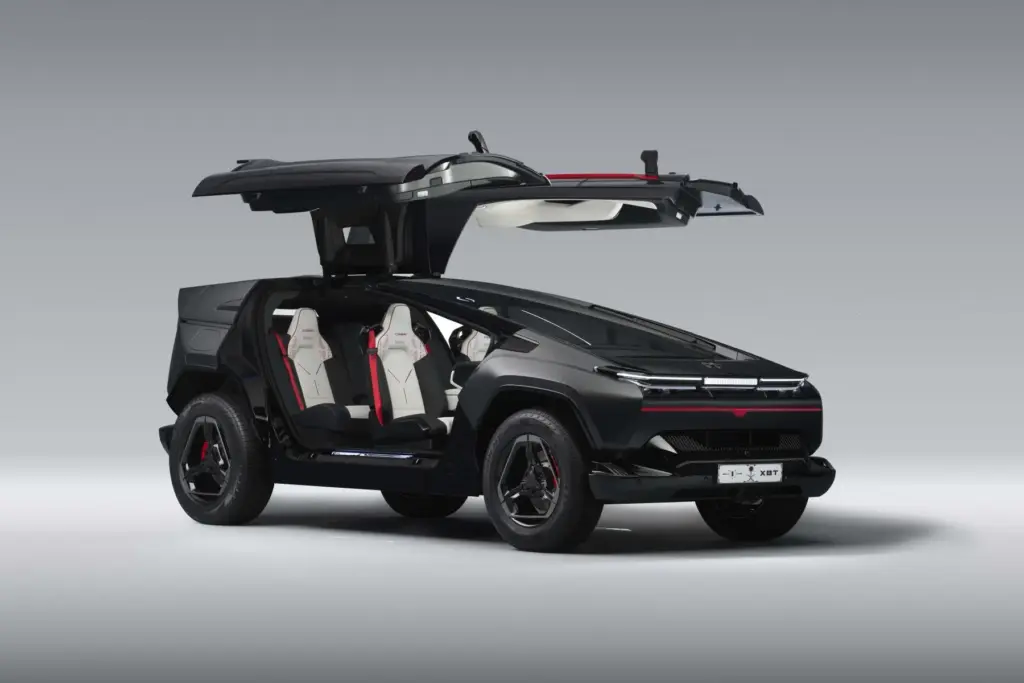
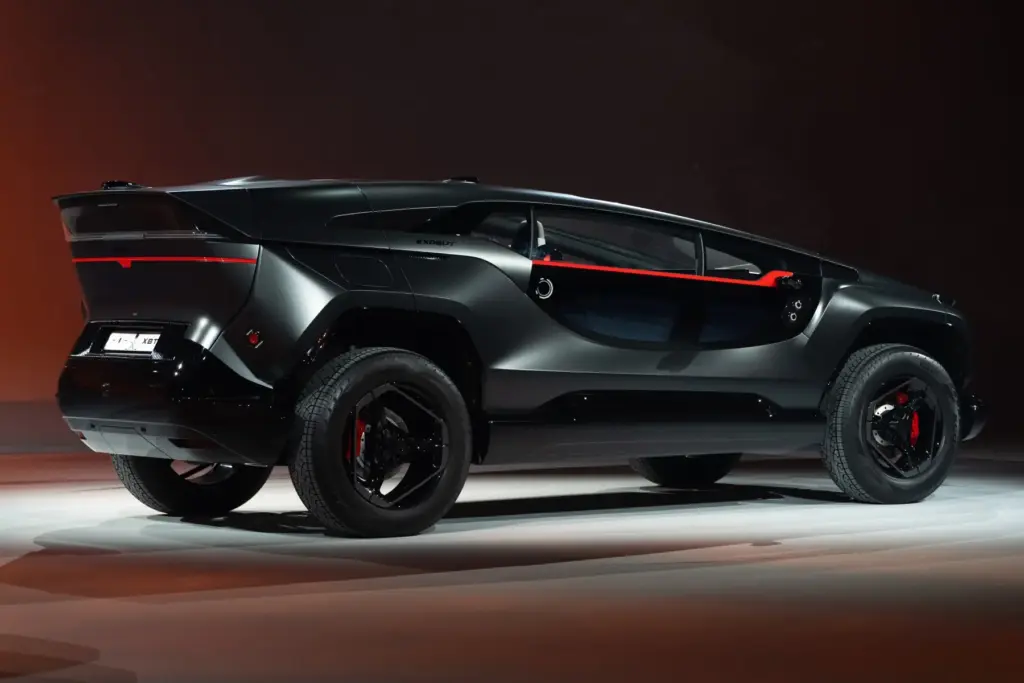
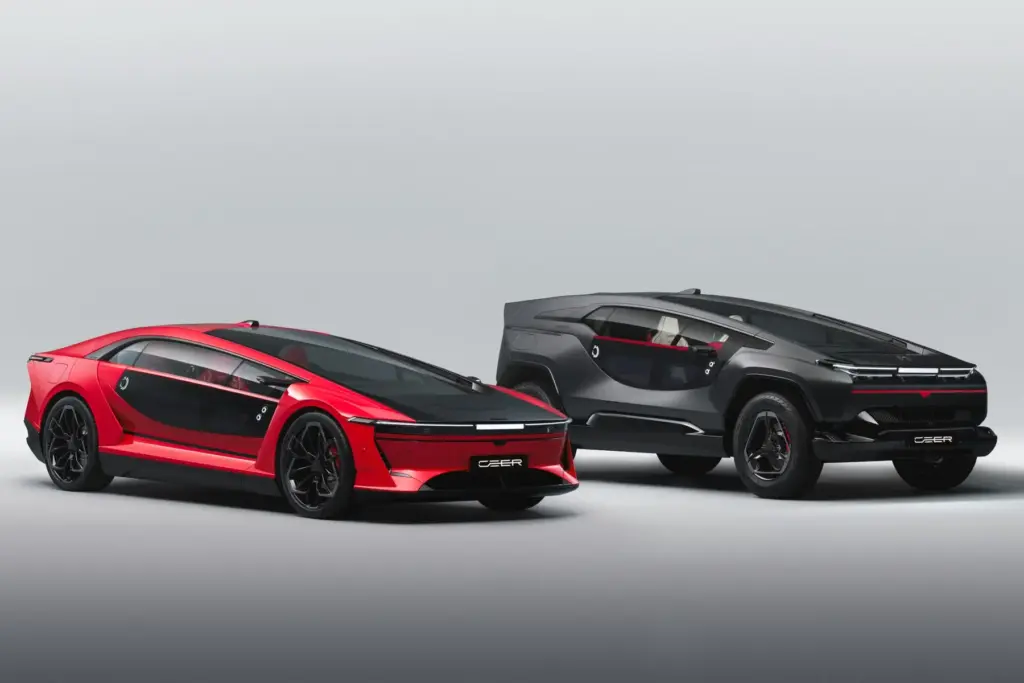
The first two, a sedan and an SUV (pictured) sharing the Exobot nameplate, are scheduled to enter production next year with customer deliveries following in 2027.
The Design Language
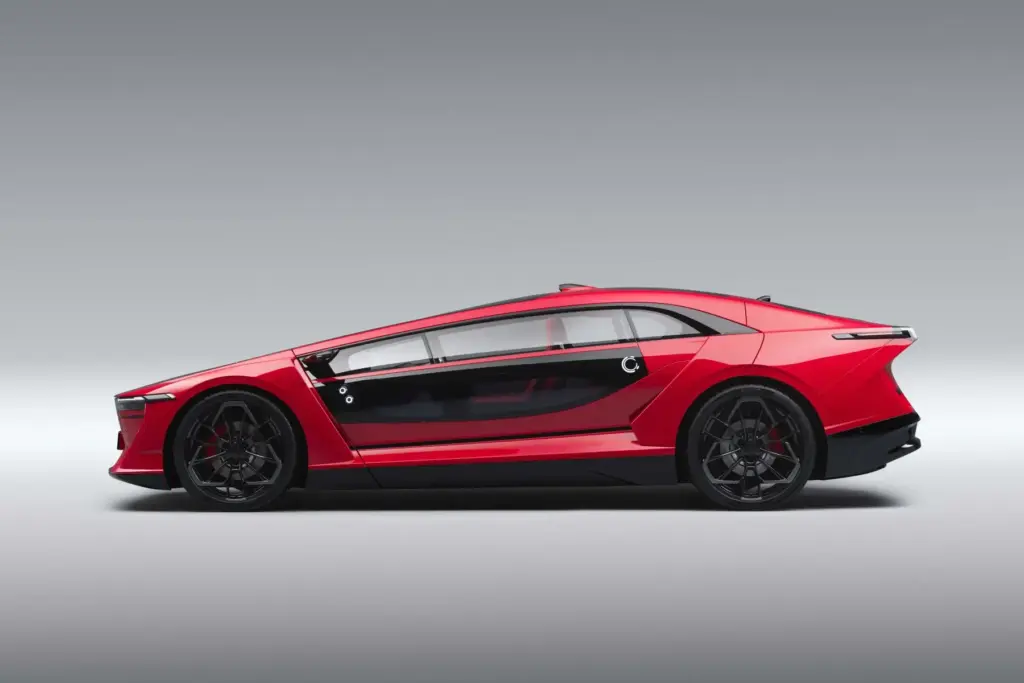
Robert Melville shaped the Exobot’s proportions; his CV reads like a highlights reel of modern performance iconography: McLaren P1, 720S, Range Rover Evoque. The vehicles he has penned tend toward the theatrical, and the Exobot continues that tradition without apology. They are cyberpunk and Cybertruck in general execution.
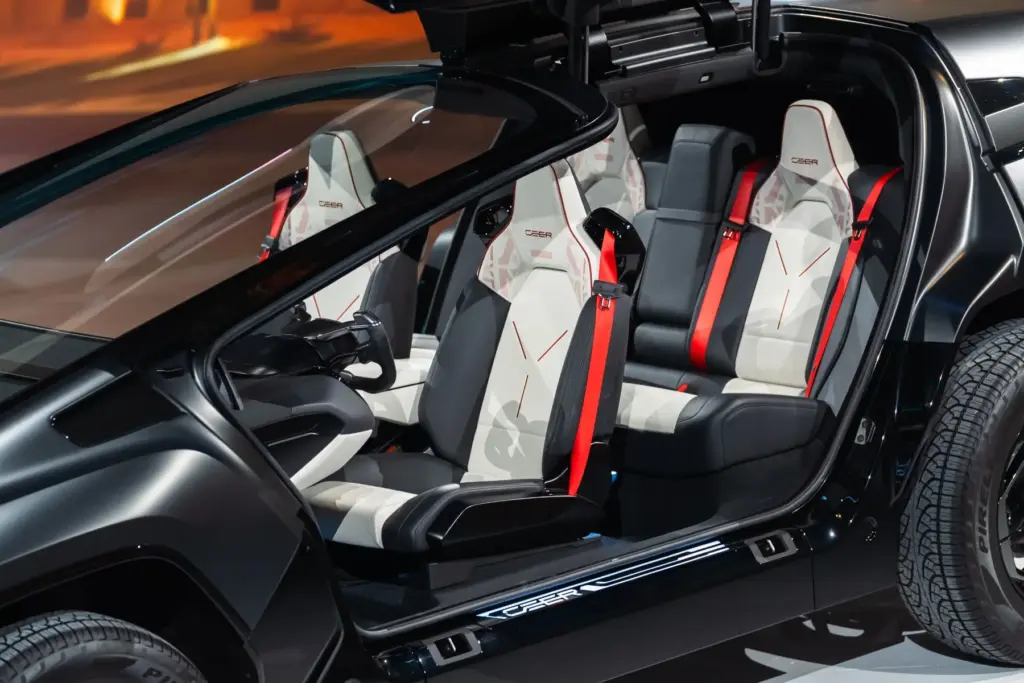
Both sedan and SUV stretch past five metres in length and two metres in width. The windscreen alone spans 2,4 metres, which Ceer claims as a production-car record. A glass canopy that removes the boundary between cabin and landscape, turning the landscape into a panoramic view for all occupants.
The doors are where Melville’s team truly abandoned restraint. Dubbed “Shahin Wings” after the peregrine falcon native to the region, they hinge from the roof and extend nearly three metres. Lower glass panels switch between transparent and opaque states, a neat party trick. Thirty-two individual light elements punctuate the front and rear facias. This is a reference to 1932 and the founding of the Kingdom.
Performance
Standard Exobot variants deploy a tri-motor all-wheel-drive architecture rated at 634 kW and 1 000 N.m of torque. The sedan reaches 100 km/h in 2,6 seconds; the SUV trails by three tenths. These figures already place the Exobot in conversation with established hyper-EVs from Rimac and Tesla’s Plaid stable. Ceer has confirmed a more extreme tier. Future variants will extract even more power from similar powertrains
Terminal velocities are pegged at 230 km/h for the sedan and 210 km/h for the taller body. A 112 kWh battery pack feeds 800-volt architecture capable of 10-to-80 percent charging in under half an hour. NEDC range claims of 670 km for the sedan and 560 km for the SUV.
Air suspension, rear-wheel steering, and steer-by-wire complete the mechanical specification. Ceer has licensed technology from BMW for its core systems, while Foxconn, the Taiwanese electronics giant and Ceer’s joint-venture partner alongside the PIF, developed the electrical architecture.
Cabin
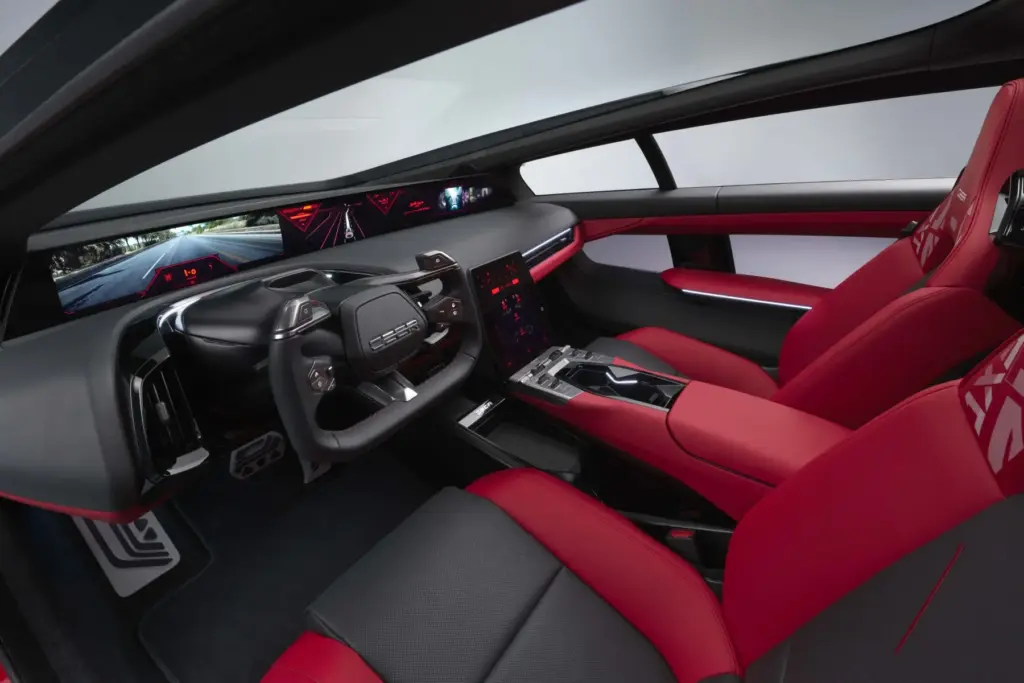
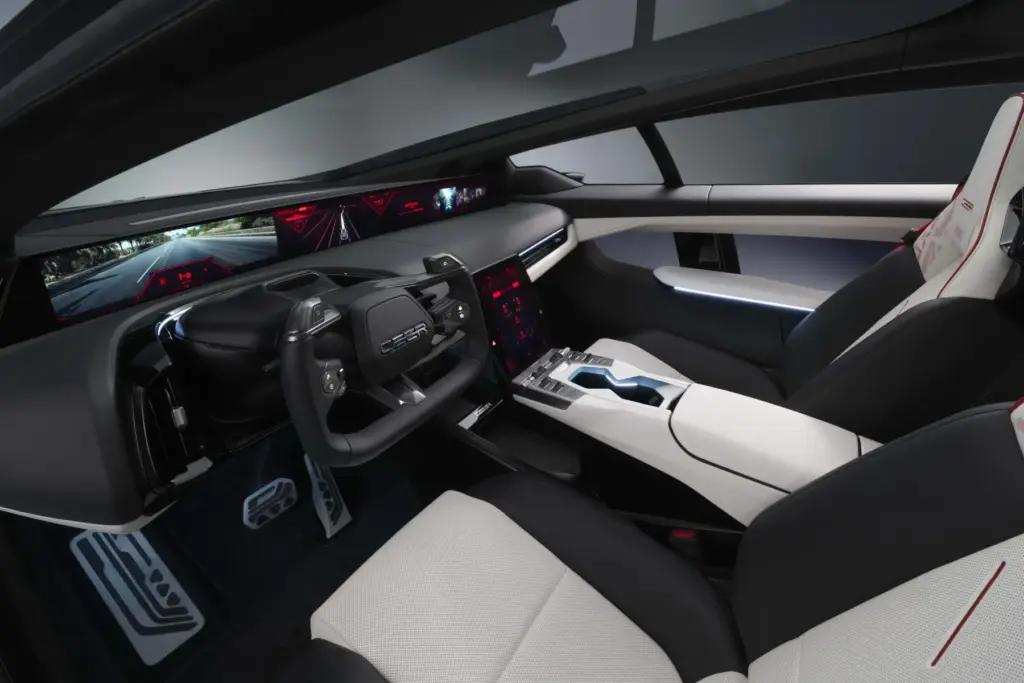
The interior treatment matches the exterior’s outlandish appearance. A 48-inch curved 8K display spans the entire dashboard width, pillar to pillar, with a 10,4-inch central touchscreen nested below it and eight-inch screens provided for rear passengers. The driver grips a steering yoke with physical controls, a choice that nods toward aviation.
An AI voice assistant handles natural-language commands, and a companion app manages remote climate pre-conditioning, charging status, and automated parking. The ‘Halo Cooling’ system deserves particular attention for anyone who has opened a parked car in Durban or Upington in midsummer. Ceer claims it can pull cabin temperature from 65°C to 32°C in ten minutes. This is survival technology for a vehicle conceived in a climate where asphalt temperatures can exceed 70°C.
What This Project Represents
The Exobot is easy to dismiss as a vanity project, another sovereign-wealth fund burning petrodollars on automotive theatre. That misses the structural intent. Saudi Arabia’s Vision 2030 explicitly targets economic diversification away from hydrocarbon dependency. Building cars is how nations signal industrial maturity: Japan in the 1960s, South Korea in the 1980s, China in the 2000s. Each was initially mocked, then grudgingly acknowledged, then competitively feared.
Ceer enters at a different inflection point. The internal-combustion era established decades of incumbent advantage that new players found difficult to overcome. Electrification has reset those barriers. Battery supply chains, software integration, and manufacturing automation matter more than century-old engine expertise. Saudi Arabia is betting that the shift to electrons creates an entry window that oil could not.
Whether the Exobot succeeds as a product, as a brand, or as an industrial anchor remains genuinely uncertain. The specifications are impressive on paper. The partnerships with BMW and Foxconn provide credible technical basis. But automotive history is littered with well-funded entrants that misunderstood the gap between building a car and building a car company.







Have your say
Got thoughts on this?
No feedback yet on Saudi Arabia’s Ceer Exobot Is a Powerful Electric Statement. Kick the conversation off.
Free. Email link only — no password.