
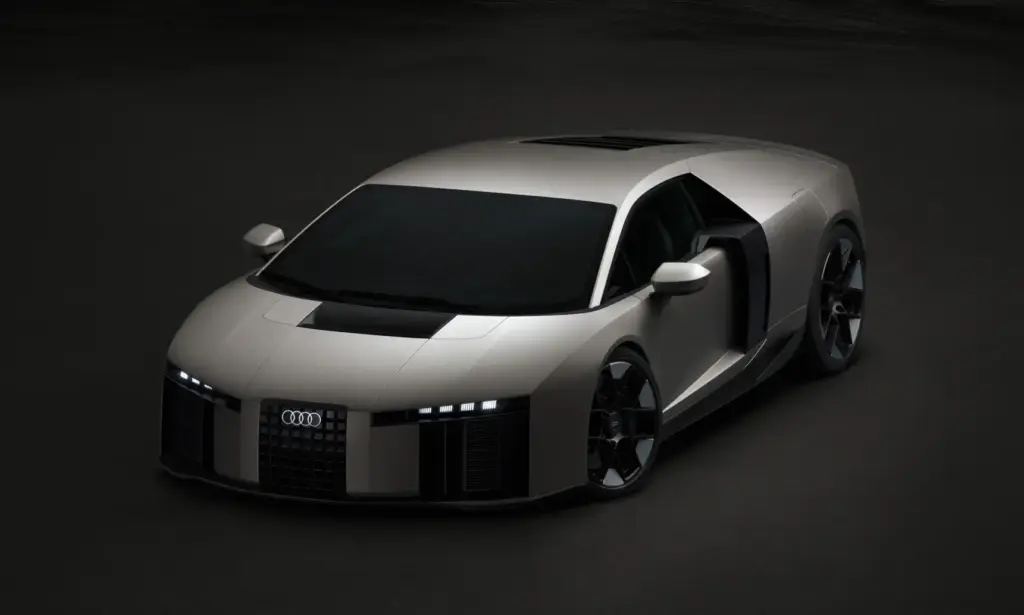
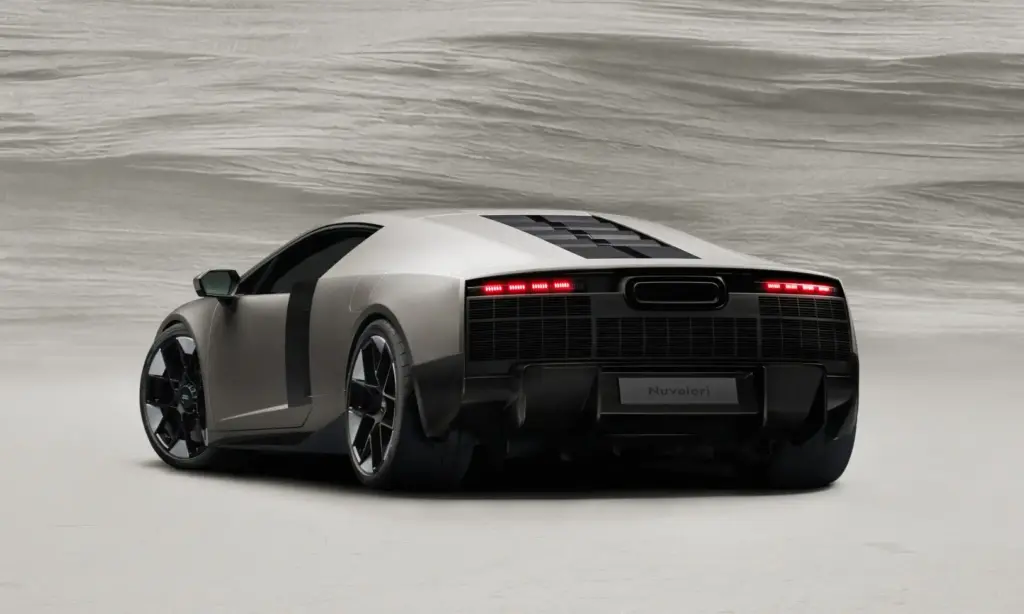
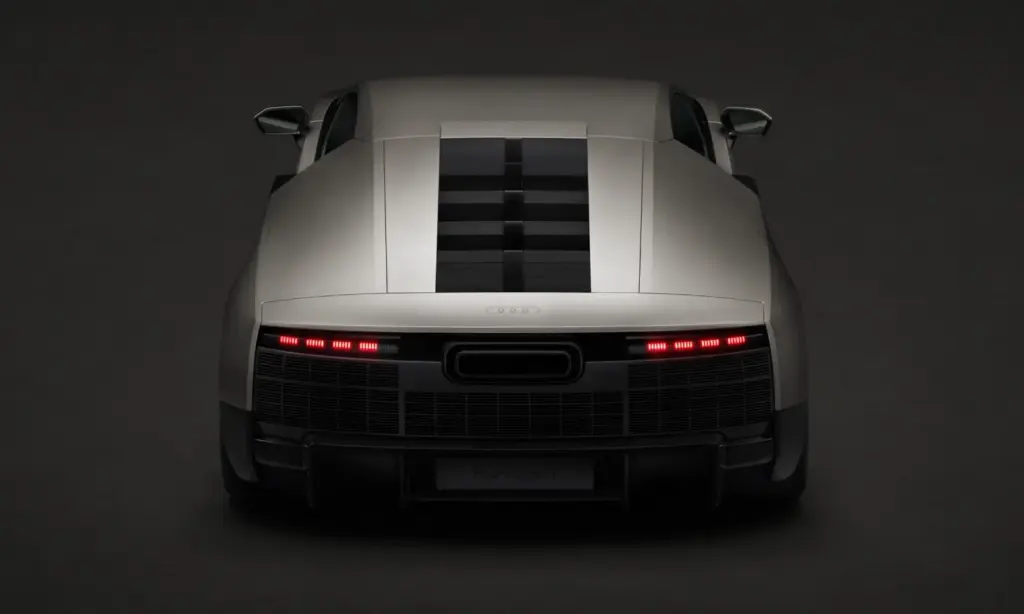

Audi has unveiled a brand-new supercar, called the Nuvolari. The Nuvolari is the clearest sign yet that Ingolstadt wants firm up the links between its Formula 1 program and future products made for the road.
It is the brand’s first production supercar and the first model to wear Audi’s new design philosophy from nose to tail. The Nuvolari, named after famed Italian racer, Tazio, is headed for production with just 499 example available worldwide.
The Audi Nuvolari is a statement for the future of Audi, for a new form of performance, and for ‘Vorsprung durch Technik’ in the age of electrification. In times of fundamental change, we are making bold strategic decisions,” says CEO Gernot Döllner. The Audi Nuvolari brings pure emotion and performance to the road. It also reveals how we are taking ‘Vorsprung durch Technik’ into a new era.
– Audi CEO Gernot Döllner
A new shape for Audi
The Nuvolari sits on an Audi Space Frame, similar to that used for the R8. The exterior skin uses carbon fibre reinforced polymer almost everywhere, and this is the first production Audi to pair ASF architecture with a carbon body. The aim is low mass, high rigidity, sharp responses.
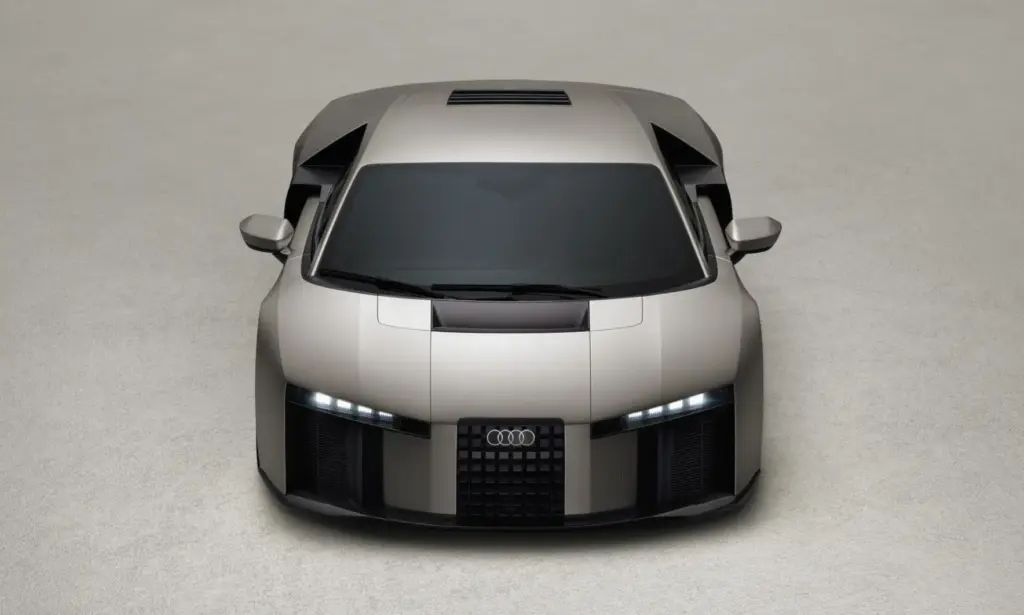
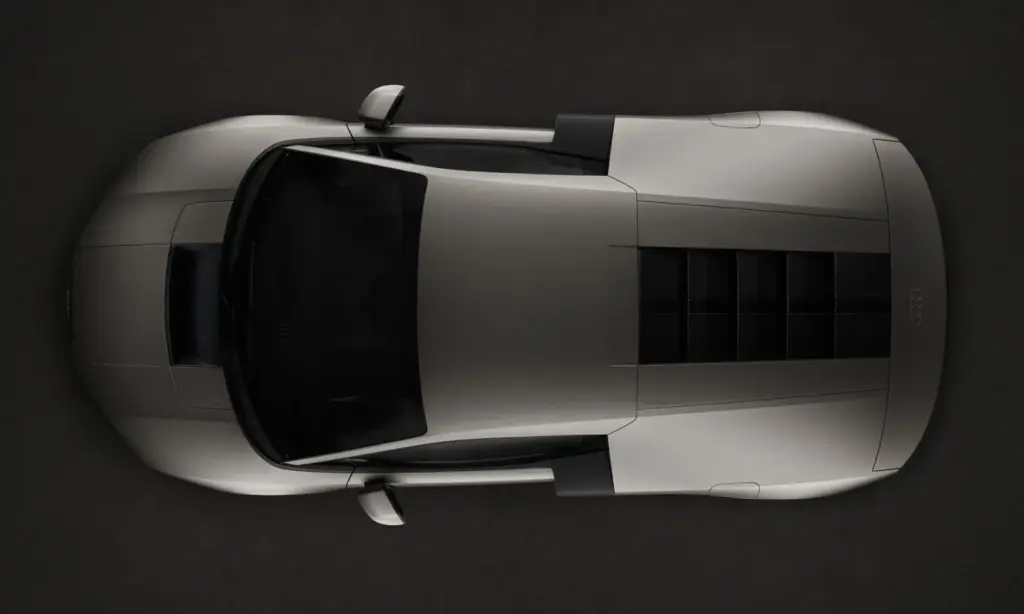
The body has a single-volume, almost sculpted stance, helped by the mid-engine packaging. It looks planted, dense and purpose-built. Audi’s new Titanium finish gives the Nuvolari technical look.
Audi says the carbon-fibre components were developed with Formula 1 techniques, including prepreg autoclave curing, where carbon is laid up by hand, then baked under high pressure and temperature. The upside is structural strength, tight tolerances and the kind of surface quality you can spot from a few metres away.
The door structures are complex, the vertical frame elements are carefully aligned to guide air toward the concealed S-duct, and heat-sensitive zones use special materials that can take the temperature while still looking like they belong on a show car. Forged centre-lock wheels make their debut in Audi’s production line-up too.
Aero with a job to do
The Nuvolari’s front splitter, intakes, vented nose and rear diffuser all work as part of one system, and Audi’s Formula 1 drivers were involved in tuning the details.
The front end uses a vented S-duct to help front-axle aerodynamics, reduce lift at speed and feed cooling air to the powertrain and brakes. The intakes ahead of the wheels manage thermal load for both the combustion engine and the hybrid hardware. At the back, is a deployable wing.
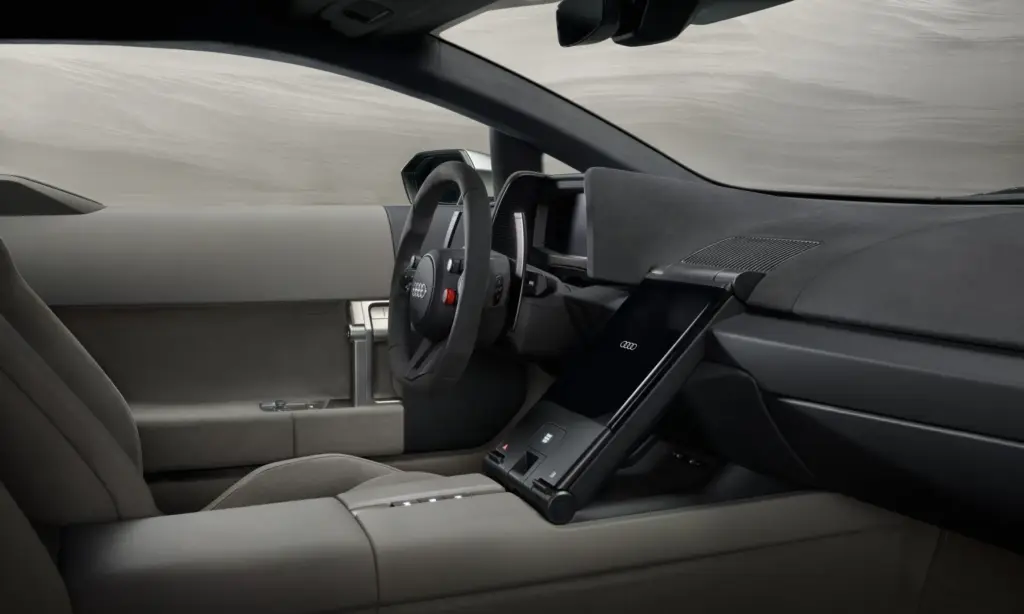
It has three positions: Closed, Low Downforce and High Downforce. In Closed mode it tucks away to clean up drag. In Dynamic, Dynamic+ and Track, it works automatically. On straights it settles into the low-drag setting for speed and stability, while a manual DRS button on the steering wheel lets the driver trim drag even further.
Under braking and in corners, it shifts to high downforce, and Audi says the full aero concept can generate more than 400 kg of load depending on the conditions. The wing can also be adjusted with a rotary control on the steering wheel in every mode except E-Hybrid.
Hybrid force with a motorsport edge
The powertrain is probably the car’s most interesting aspect. Total system output is 736 kW, or 1 001 hp (identical to the original Veyron), and it comes from a twin-turbocharged 4,0-litre V8 plus three axial flux electric motors and a 7,3 kWh lithium-ion battery. This makes it the most powerful Audi road car, ever.
Audi claims 0 to 100 km/h in 2,6 seconds, 0 to 200 km/h in 6,8 and a top speed of more than 350 km/h. That last stat makes it the fastest Audi road car ever made.
The petrol engine alone makes 588 kW and 730 N.m, and Audi says it will spin to 10 000 r/min. (Temerario, is that you?) The electric side consists of two 110 kW motors on the front axle; helping with torque vectoring. A third 110 kW motor sits between the mid-mounted V8 and the transmission.
The result is a quattro system that Audi describes as predictive ride technology, which is a more exact way of saying it looks at the road before the driver fully realises what is about to happen. Steering angle, yaw rate, acceleration and grip are all fed into the control logic. If a corner looks messy, the system can shift torque, intervene with the brakes and adjust aero load before the car runs out of composure… or road.
There are four modes, E-Hybrid, Balanced, Dynamic and Dynamic+, plus Track for the serious stuff. Wet, Dry, Race and TC Off settings let the driver tune how much help remains on tap. In E-Hybrid, the car can run on electric power for short urban stints. In Track, the whole thing becomes more more aggressive.
Braking ba… good
The Nuvolari uses brake-by-wire logic that blends hydraulic braking with electric recuperation, and the pedal is deliberately isolated from the actual wheel braking force so the feel stays consistent. That matters when the car is doing three different jobs at once, slowing itself, recharging itself and keeping its balance.
The front axle gets ten-piston fixed calipers with 420 mm discs. The rear uses four-piston calipers and 410 mm discs. The discs themselves come straight from Formula 1 thinking, with a long-fibre carbon structure built to survive brutal heat without losing shape or friction consistency. Audi says the cooling design improves heat dissipation by up to 21 percent compared with conventional carbon-ceramic systems.
![Brabus 900 Rocket R Is A Turbo S On Steroids [w/video]](https://doubleapex.co.za/wp-content/uploads/2023/07/Untitled-300x180.webp)

![Off-Road Dodge Viper [video]](https://doubleapex.co.za/wp-content/uploads/2024/06/Off-road-Dodge-Viper-V10-1-300x180.webp)

![Race for Glory: The Showdown that Redefined Rallying [video]](https://doubleapex.co.za/wp-content/uploads/2023/12/Race-for-Glory-300x180.webp)
![Spec Miata Race Ended In A Dead Heat [w/video]](https://doubleapex.co.za/wp-content/uploads/2023/10/Spec-Miata-race-ends-in-dead-heat-1-300x180.webp)


Have your say
Got thoughts on this?
No feedback yet on Audi’s Nuvolari Supercar is Retro-Futuristic Replacement for the R8. Kick the conversation off.
Free. Email link only — no password.