
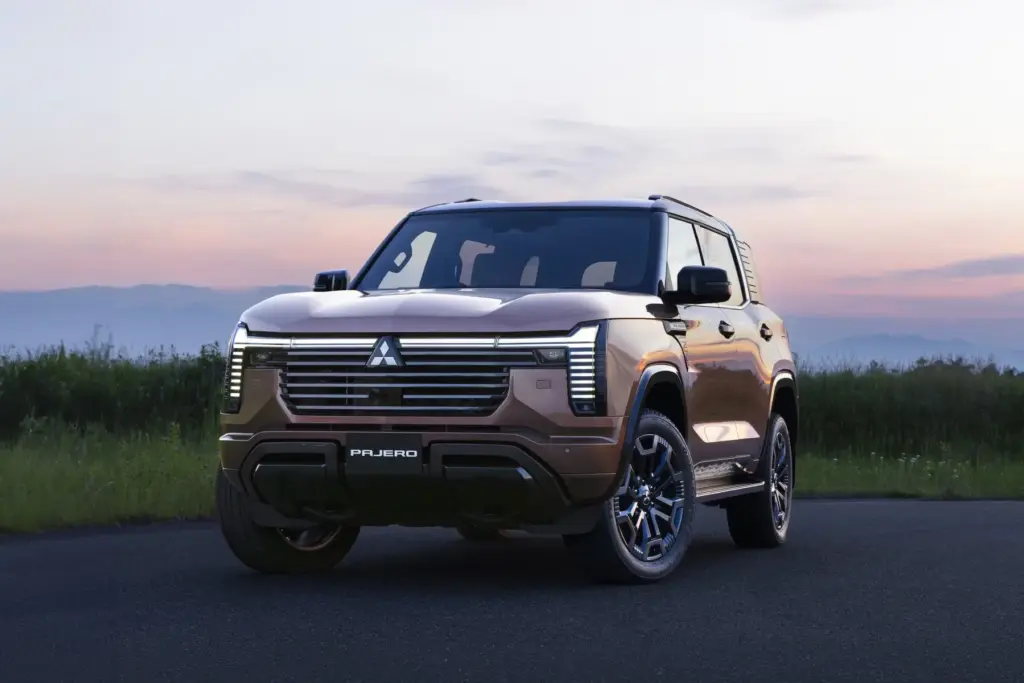
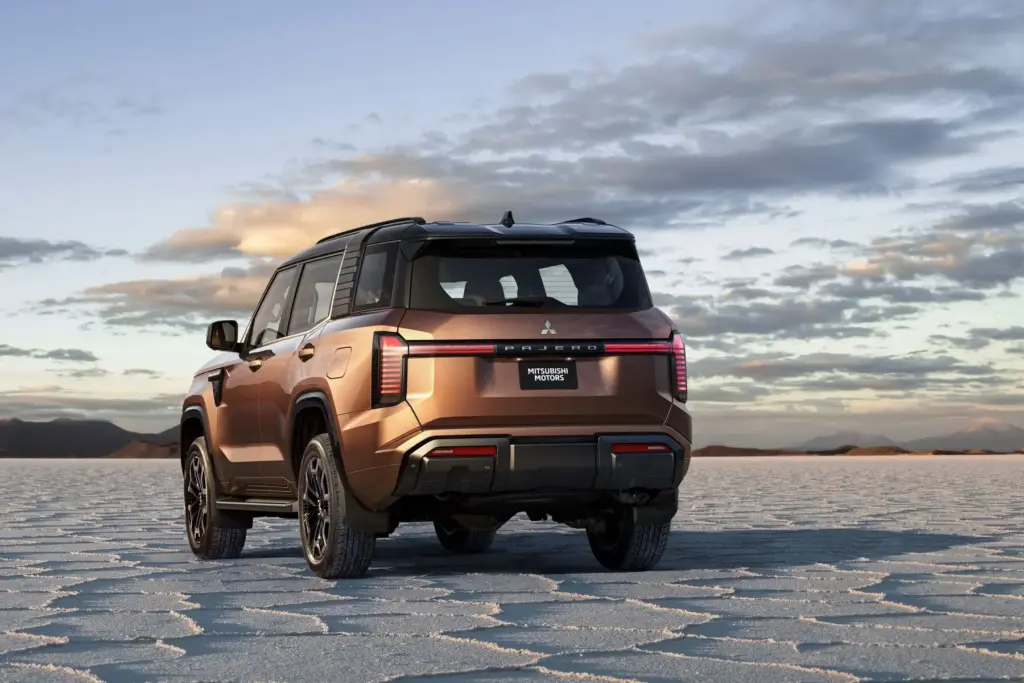

Three years after the last Pajero rolled off the line, Mitsubishi has brought back the nameplate that once dominated the gravel roads the world over. The fifth-generation Pajero is a ladder-frame, low-range, proper 4×4 that happens to wear a cabin fit for a flagship.
A brief hiatus
Mitsubishi killed the Pajero globally in 2021 after 3,29 million units were sold across four generations. A large number of those were sold here as the badge has a loyal following ion SA. The fourth generation had grown long in the tooth, and the market was flooding with unibody SUVs that looked rugged on a Sandton dealership floor but would weep at the first sight of a washed-out drift in the Northern Cape. Mitsubishi discovered, or perhaps remembered, that the Pajero’s core audience never stopped wanting the real thing. They simply stopped buying the old thing.
The new model will be introduced in over 100 markets, and South Africa figures prominently in that rollout. Here, the Pajero built its reputation through ownership, not marketing. You saw them at the Botswana border, loaded with roof tents and jerry cans. You saw them at school runs in Pretoria, still wearing their original paint after two decades.
New look
Mitsubishi calls the design language ‘Grand Charisma,’ which sounds like something dreamed up in a Tokyo boardroom. The proportions remain upright and squared-off, a direct inheritance from the 1982 original. Horizontal lines dominate the profile. The C-pillar references the first generation’s external roll bar, and the hexagonal element at the rear reinterprets the old externally-mounted spare wheel. The T-shaped headlight signature is distinctive and a far cry from the predecessor.
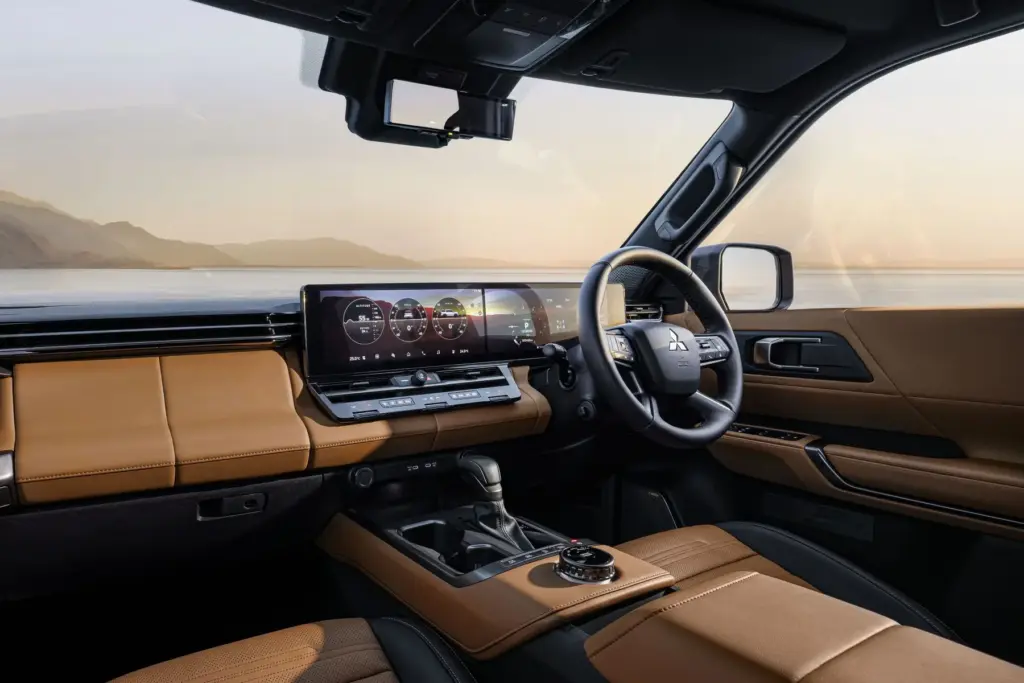
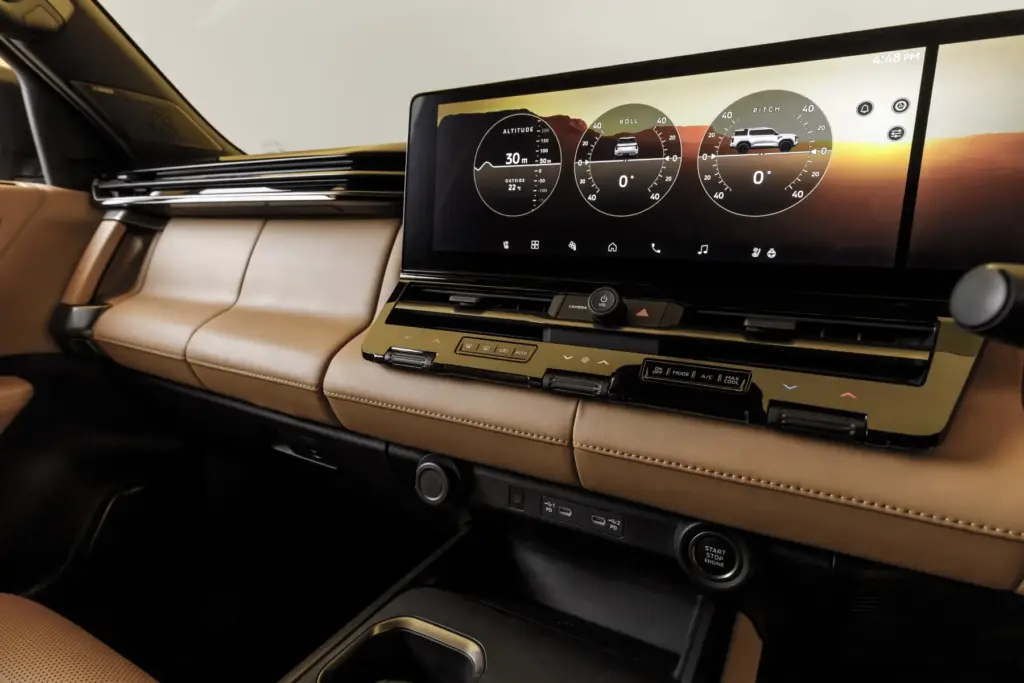
Inside, the horizontal dashboard theme continues, but the execution is unrecognisable from any previous Pajero. A monolithic display houses twin 14,3-inch screens with graphics that echo the triple-meter cluster of early models. The display shows altitude, compass heading, temperature, pitch and roll angles, and Active Yaw Control status.
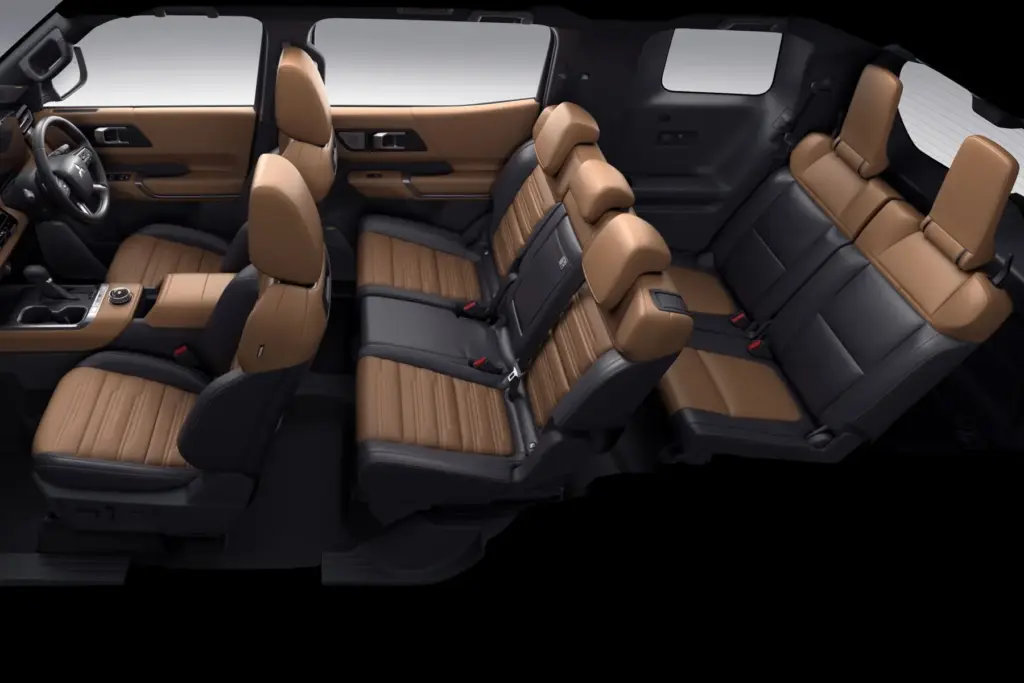
The infotainment system generates visual effects matched to each drive mode. Wireless smartphone connectivity is standard, and the Yamaha co-developed Dynamic Sound Ultimate system runs 12 speakers through dual amplifiers. Kimekomi-inspired stitching appears on the instrument panel and door trims. Mitsubishi claims you can hold a normal conversation at highway speeds, which suggests comprehensive sound deadening. Thanks to generous proportions its offers seating for up to seven occupants.

Hardy underneath
The chassis remains a ladder frame, now with expanded high-tensile steel use for weight reduction and increased rigidity. The front suspension is independent double-wishbone; the rear is a newly developed five-link set-up with rigid axle. Strengthened body mounts suppress vibration on corrugated surfaces.
Power comes from a specially developed 2,4-litre four-cylinder with a single variable-geometry turbocharger, producing a healthy 150 kW/480 N.m. A new eight-speed automatic handles shifting duties. Super-Select 4WD-II returns with four selectable modes: 2H, 4H, 4HLc, and 4LLc. Super-All Wheel Control integrates Active Yaw Control, Active Stability and Traction Control, and ABS. Seven drive modes cover Normal, Eco, Gravel, Snow, Mud, Sand, and Rock.
In addition to the hardware there is 230 mm of ground clearance, 30,4-degree approach angle, 22,6-degree ramp breakover, and 25.8-degree departure angle. A 3D Multi Around Monitor processes roughly 30 frames per second from four cameras, overlaying the feed on a 3D vehicle model for real-time obstacle placement.


Have your say
Got thoughts on this?
No feedback yet on Mitsubishi’s New Pajero Aims to Reclaim Its Off-Road Crown. Kick the conversation off.
Free. Email link only — no password.