

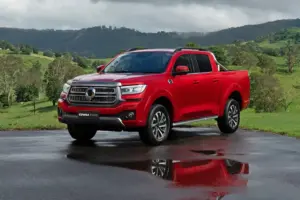
GWM covers the SA new-car space pretty well. It has bakkies, small crossovers, small SUVs as well as large luxury SUVs. This week the local subsidiary, which has been active in SA for about 20 years, introduced the all-new H7 to the mix. The previous version was launched here just two years ago. But since a replacement was available from HQ, the newer model has replaced its short-lived predecessor.
Follow Double Apex on Instagram and Facebook where we share more car content.
Chunky appearance
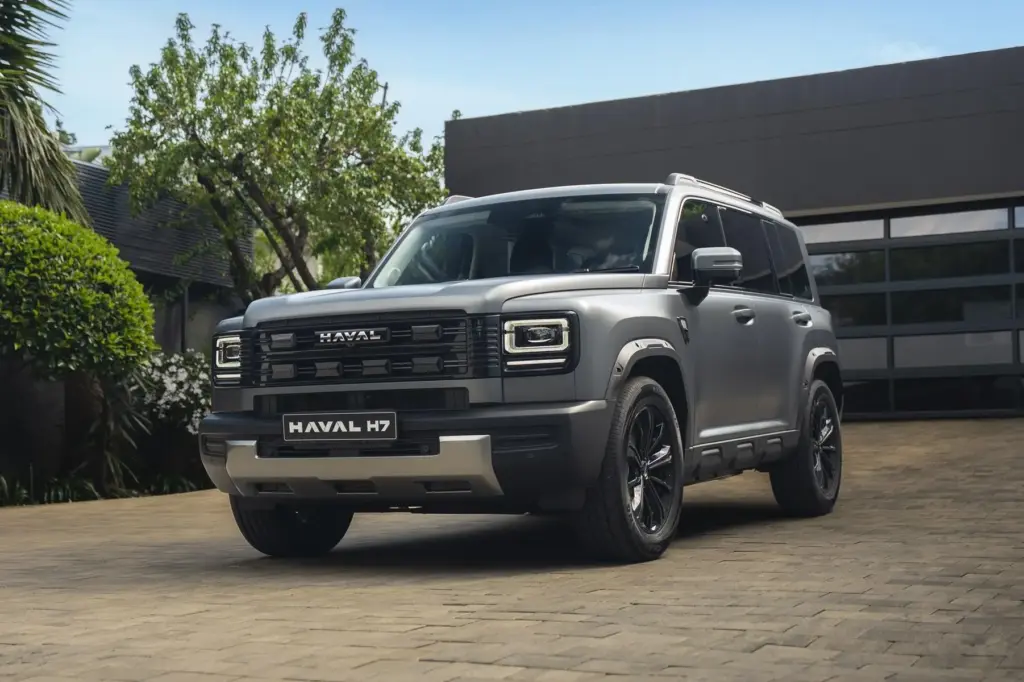
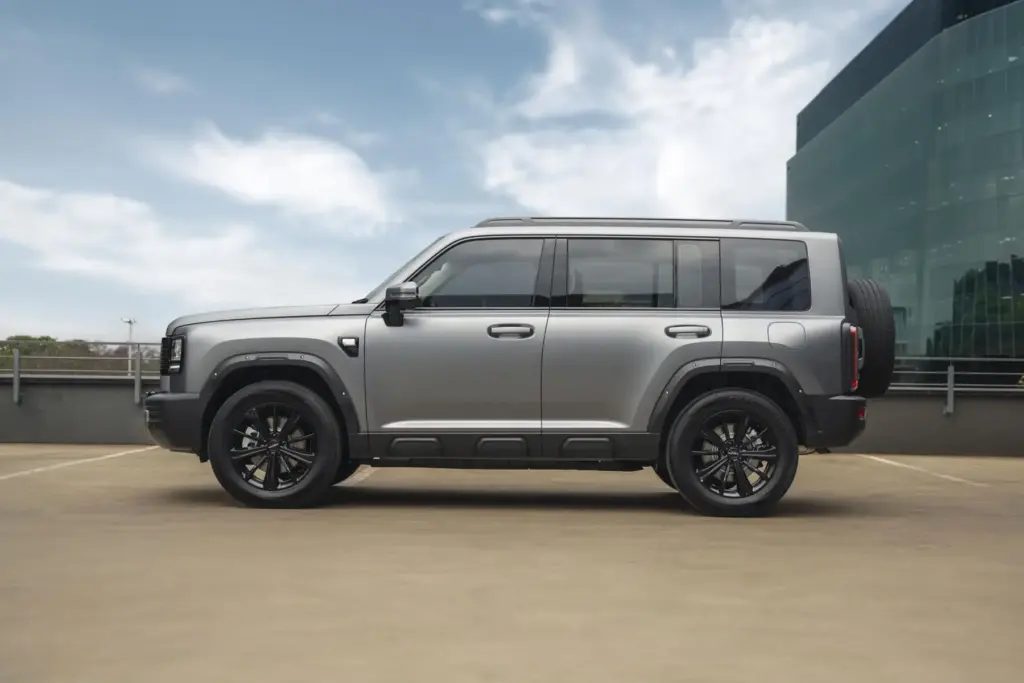
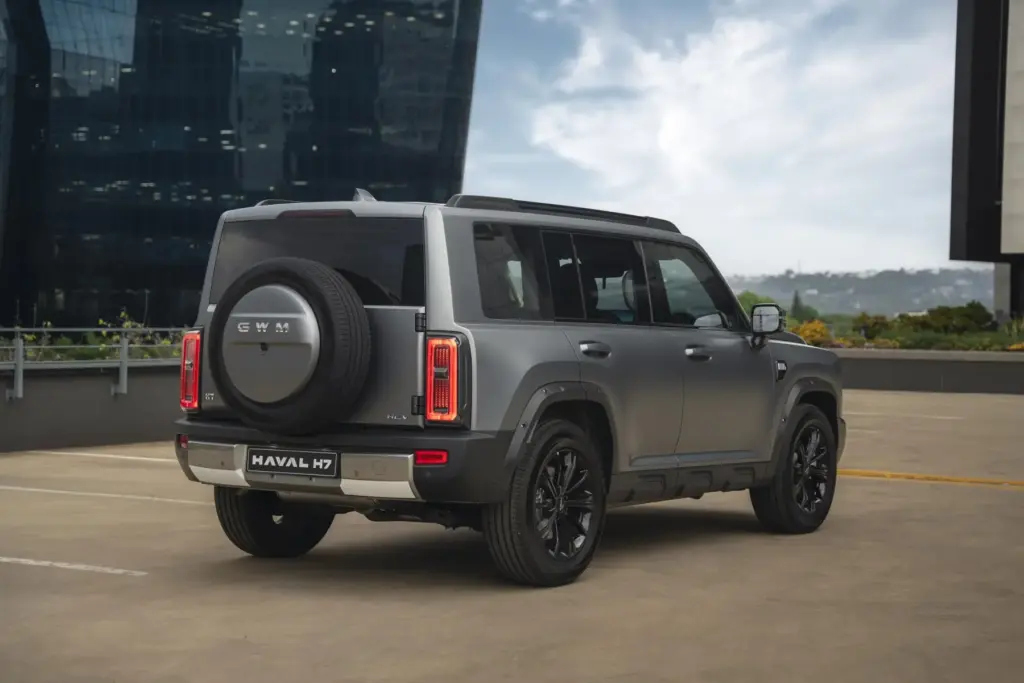
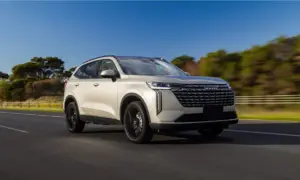
The latest H7 arrives with fresh new looks. Its new aesthetic is one that is chunky and squared off. It’s chunkiness is set off by dark 19-inch alloys which, on large tyres, help create 210 mm of ground clearance. The appearance may not suit everyone’s tastes. It falls on the Mercedes G-wagen/Suzuki Jimny/Toyota Prado end of the sleekness scale, that is to say it isn’t. If you ever looked at one of those cars and thought, “that’s cool” this the H7 will suit you. The latest H7 is 4 800 mm from bumper to bumper, almost 100 mm more than its predecessor. It also has a wheelbase of over 2,7 metres, which provides plenty of legroom for all occupants.
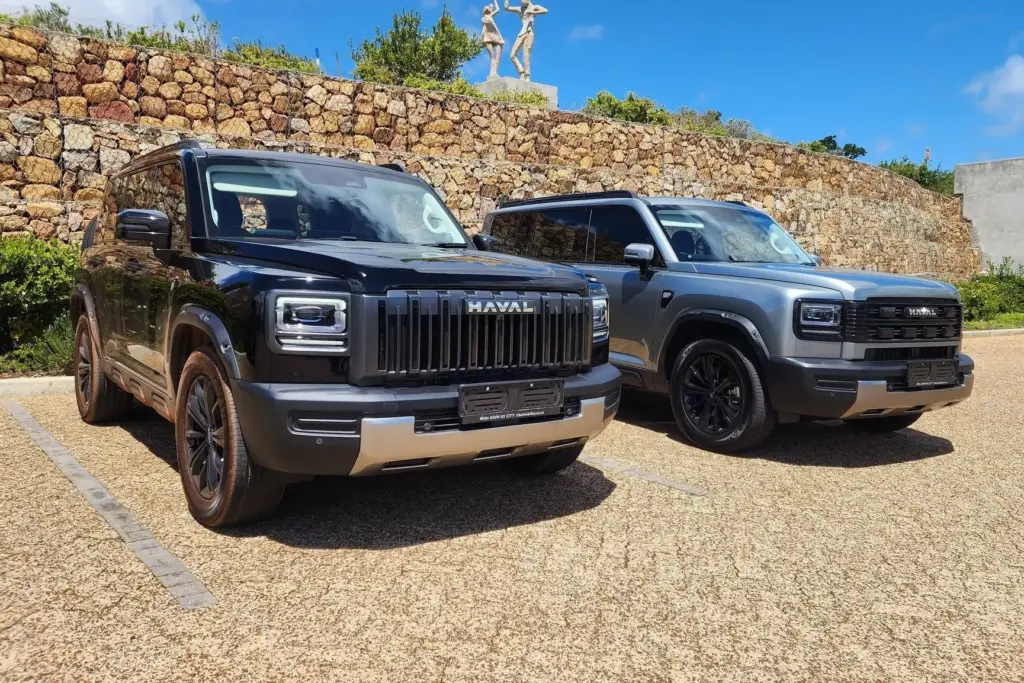
Squared off headlamps are a more modern take of those found on, say, an old Land Rover Defender. LED tech is used for the front and rear light units. Oh, GWM designers have added an interesting touch to the exterior styling. There are two grille styles. Vertical slats denote pure ICE versions while the alternate look is used on hybrid-powered variants (more in a bit).
High perceived quality inside
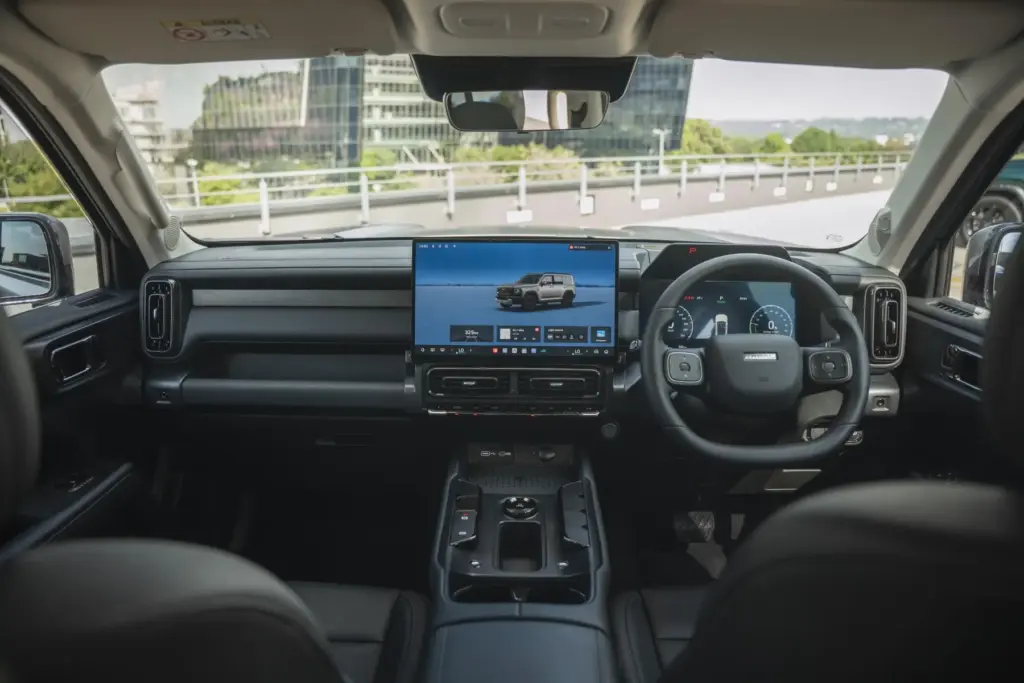
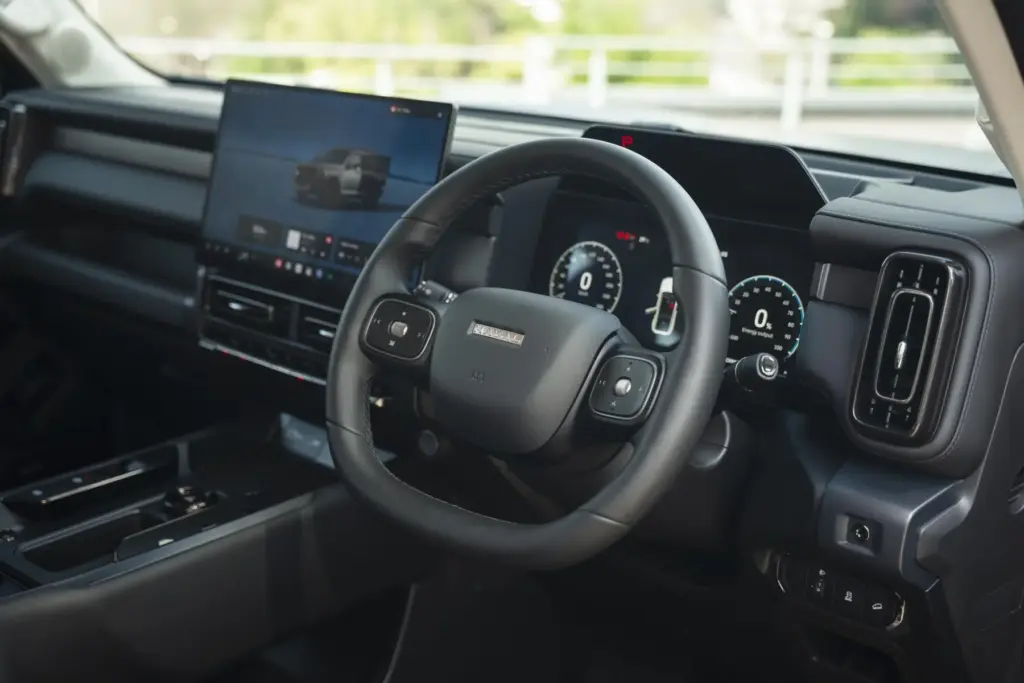
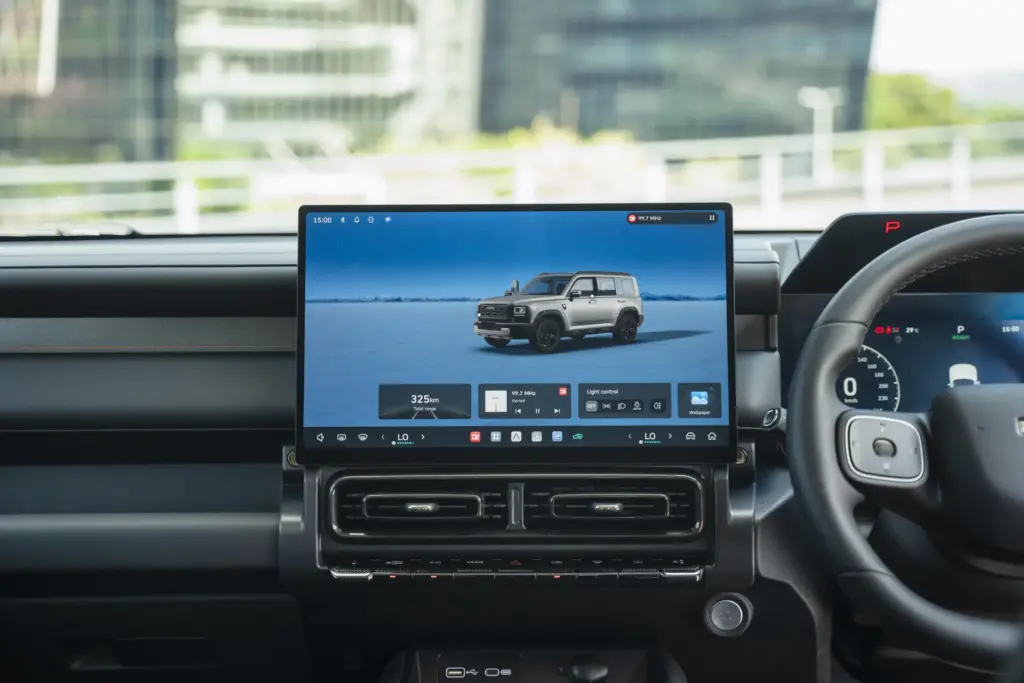
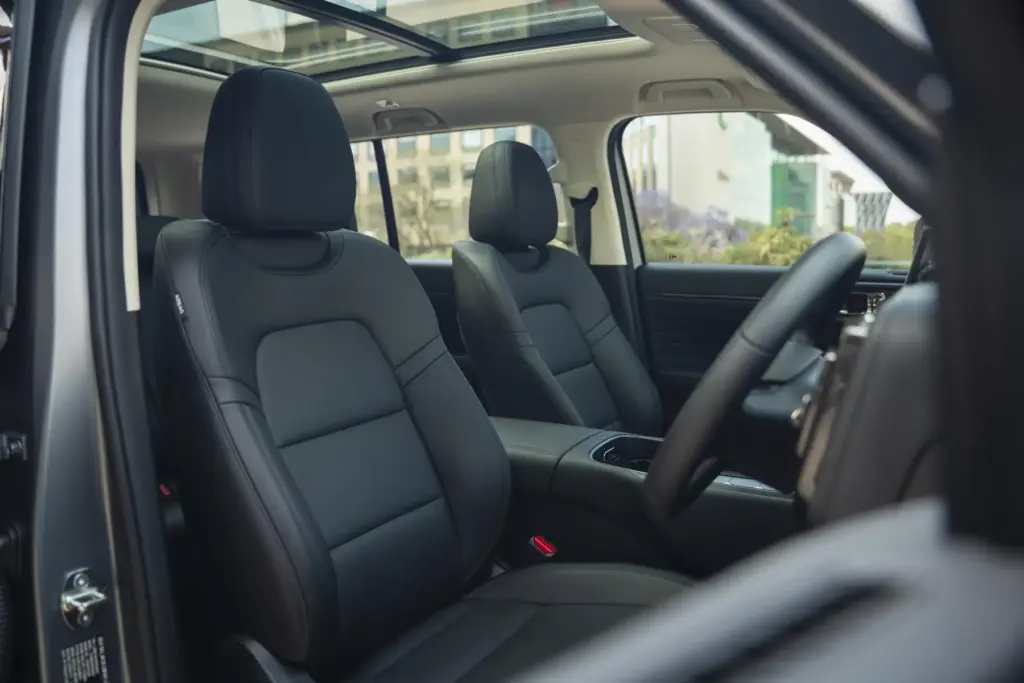
The H7 impressed us with its interior fit, finish and quality of materials. Everything feels of a premium quality and with double glazed front windows and front windscreen, the cabin stays extremely quiet. From the pics you’d have noted the now, near standard, dual digital screens. We are pleased to see that the screen ahead of the driver is quite large, large than in most other cars from China. In higher-spec derivatives there is also a heads-up display. The central screen handle almost all other duties, but GWM has left some physical buttons in place, which we appreciate.
Standard fare across range includes dual-zone climate control, keyless start, synthetic leather seats with electric adjustment for the driver’s chair. There is also voice activation for a multitude of functions, which helps one not have to dive into the touchscreen menus. Other items include front and rear parking sensors along with a rear-facing camera and a 360-degree view. Adapative cruise control, multiple airbags and a host of other passive and active safety features bolster the spec sheet.
Three powertrains, six options
As mentioned earlier, there are three powertrain options, namely a turbocharged petrol, hybrid electric vehicle (HEV) and plug-in hybrid electric vehicle (PHEV). The 2,0-litre turbopetrol opens up the range. This engine produces 170 kW/380 N.m. Buyers can choose to have this engine with two- or four-wheel drive. Choose the former and the quoted fuel consumption on 8,0 L/100 km. The latter returns 8,8.
In the middle of the range is a 1,5-litre turbocharged hybrid engine that combines with an electric motor and a 1,53 kWh battery pack to deliver peak outputs of 182 kW/540 N.m. This version is only available in front-wheel drive guise and in Super Luxury trim. GWM says it has a fuel consumption figure of 5,3 L/100km.

At the top of the range is a 1,5-litre turbopetrol that is also mated with an electric drive component. GWM offers this powertrain in two power levels. The 2WD derivative offers 240 kW/540 N.m (5,3L/100 km) while the 4WD version has 280 kW/670 N.m (5,7L/100 km). Both offer an electric only range thanks to a large battery pack. The 2WD has 130 km of EV-range while the AWD has 115 km.
Off-road credentials are bolstered by the aforementioned ground clearance. 4WD version use a BorgWarner driveline that automatically shifts power where needed. There is also an electronic rear diff-lock and a bunch of preset off-road modes.
Behind the wheel
At the national media ride-and-drive event we got to experience the GWM H7 from behind the wheel and as passenger. Our immediate take away is that this feels like a premium product. It has impressive NVH (noise, vibration and harshness) suppression. On the open road there was a noticeable lack of wind noise around the mirrors and front pillars. While the full-size spare tyre will be appreciated by most owners, we feel that it does limit rearward visibility.
We did get to try out each of the powertrains on offer. It is the petrol that feels the peppiest of the lot, perhaps because it weighs a bit less than its siblings, or the fact that you can rev it out to get better performance. The two hybrid-powered variants feel a little more subdued, especially when already at speed. They’d be far more impressive in stop-start traffic, where hybrids typically excel.
Summary
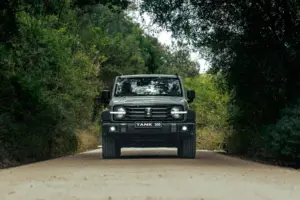
GWM SA is making no secret of the fact that the H7 is targeting the likes of the Jetour T2, a car that you see in abundance on local roads. The H7’s unibody construction means that it doesn’t tread on the toes of its more rugged Tank sibling, or the likes of the Toyota Fortuner. Other rivals, certainly in the same price bracket, include the VW Tiguan, Honda CR-V and and Hyundai Tucson. As you can see below, pricing is very competitive, which means we are like to see the GWM fleet on SA roads grow even further.
Haval H7 Pricing:
- 2,0T Super Luxury 4×2 R 554 900
- 2,0T Ultra Luxury 4×2 R 594 900
- 2,0T Ultra Luxury 4×4 R 654 900
- 1,5T HEV Super Luxury 4×2 R 624 900
- 1,5T PHEV Super Luxury 4×2 R 734 900
- 1,5T PHEV Ultra Luxury 4×4 R 794 900






Have your say
Got thoughts on this?
No feedback yet on GWM SA Adds New Haval H7 to its Range. Kick the conversation off.
Free. Email link only — no password.